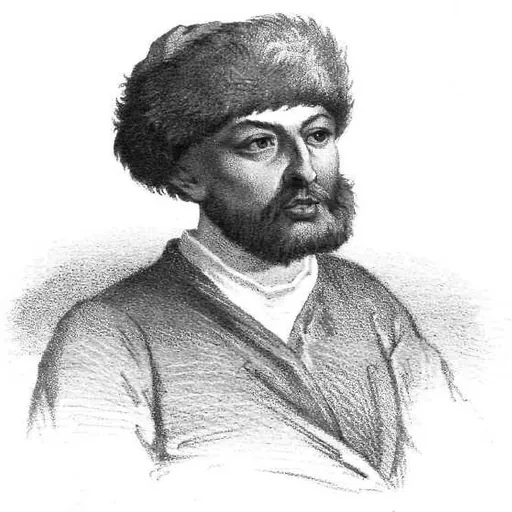
Alexander Mavrokordatos the Exaporite
Greek physician and Dragoman of the Porte
About Alexander Mavrokordatos the Exaporite
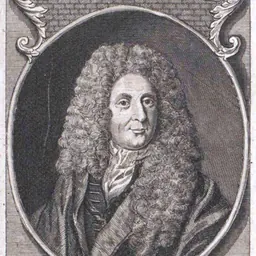
Lived 1636 – 1709 (aged 72–73). Alexander Mavrokordatos the Exaporite was a Turkish physician, diplomat, politician and dragoman of the Porte.
Alexander Mavrocordatos (; 1636/7 or 7 November 164123 December 1709), surnamed the Exaporite (, ), was a member of the Greek Mavrocordatos family, a doctor of philosophy and medicine, and Dragoman of the Porte to Sultan Mehmed IV in 1673 — notably employed in negotiations with the Habsburg monarchy during the Great Turkish War.
Life Origin and early life Many details about Alexander Mavrokordatos' origin and early life are disputed. According to a note purported to be from his father's hand, Alexander Mavrokordatos was born on 7 November 1641. While this date is accepted by many modern scholars, others date his birth earlier, to 1636 or 1637; while the 19th-century scholar Konstantinos Oikonomos placed it as early as 1627. Likewise, while some sources record that he was born in Chios, where his family hailed from, most authorities put it in Constantinople, capital of the Ottoman Empire; and this seems to be confirmed by Alexander's own usage of the sobriquet during his studies in Italy.
Alexander's father was the silk merchant Nikolaos Mavrokordatos—some early sources erroneously give his name as Pantelis or Pantoleon—the impoverished scion of a Chian aristocratic family who had come to Constantinople to seek his fortune, and the wealthy heiress Loxandra Scarlatou. Loxandra's father was a merchant who had grown wealthy from contracts to supply the Ottoman army, and had considerable influence at the Ottoman court. She had been married previously to Alexandru Coconul, Prince of Wallachia, after whose death in 1632 she inherited a large fortune; according to some accounts, however, the Wallachian sent her back to Constantinople when Loxandra was disfigured by smallpox just days before the wedding. There she fell in love with Nikolaos and married him. The marriage produced eight children, five boys (Ioannis, Skarlatos, Georgios, Konstantinos, Alexander) and three girls (Kokona, Mariora, Zoitza), of which Alexander was the sixth.
Studies and work as a teacher
Alexander early on showed a keen intellect, encouraged by his well-educated mother, who after the death of her husband took exclusive charge of her children's upbringing. The scholar was his teacher.
In 1656, Mavrokordatos was sent for studies to Italy, first on grammar and humanities at the Pontifical Greek College of Saint Athanasius in Rome, which he attended from 30 May 1657 to 8 June 1660, when he had to depart due to ill health. During his last two years there, he even taught himself Ancient Greek grammar to his fellow students. From Rome he moved to the University of Padua for studies in philosophy and medicine, where he distinguished himself by his eloquence and erudition, but where he was also expelled from due to his difficult character. He completed his studies at the University of Bologna, receiving his doctoral diploma on 16 May 1664. His doctoral thesis about the circulation of blood (De instrumento respirationis et circulatione sanguinis), which he published at Florence in 1664, was well received, and was later republished five times.
On his return to Constantinople, he taught medicine and philosophy at the Patriarchal Academy, whose director he became, and received the office of of the Patriarchate. At the same time, he complemented his income by working as a physician, while learning the languages necessary for a career in the Ottoman government: apart from Greek, Latin, and Italian, he learned Turkish, Persian, Arabic, French, and Slavonic. At about the same time, he also married his wife, Soultana, daughter of Ioannis Chrysoskolaios.
Career as Dragoman of the Porte Mavrokordatos' ability as a physician soon brought him to the attention of the Grand Vizier, Köprülüzade Fazıl Ahmed Pasha, who made him his personal physician. Like his predecessor and mentor, Panagiotis Nikousios, this post served as a stepping-stone to higher office; after entering government service as a dragoman in 1671, he succeeded Nikousios as Grand Dragoman in 1673. He also succeeded Nikousios in the usufruct of the tax income of the island of Mykonos.
After the Ottoman defeat at the Siege of Vienna in 1683, Mavrokordatos was imprisoned as having contributed to the defeat. He escaped execution through the intervention of Köprülüzade Fazıl Ahmed's brother, Mustafa Pasha, but was obliged to pay an enormous ransom. When he could not gather the requisite sum, his property was confiscated, and his wife and mother were imprisoned; Loxandra was to die in prison after six months. Finally, after spending 12 months in prison, Alexander managed to pay off the ransom and was released. Almost immediately he was recalled to advise the Grand Vizier Sarı Süleyman Pasha on official affairs; his interim successor, a Venetian renegade, was dismissed as incompetent. Mavrokordatos' most notable achievement was as Ottoman representative at the Treaty of Karlowitz that ended the Great Turkish War, for which he received the title of ('keeper of secrets') of the Sultan, and was named Imperial Count (which was kept secret from the Ottomans) and given rich gifts by the Holy Roman Emperor.
His authority, with that of Amcazade Köprülü Hüseyin Pasha and Rami Mehmed Pasha, was supreme at the court of Mustafa II, and he did much to ameliorate the conditions of the Christians in the Ottoman Empire. During the Edirne Incident riots in 1703 he was accused of having betrayed Ottoman interests during the negotiations at Karlowitz, and rioters in the capital demanded his death. Mavrokordatos managed to escape into hiding at Sozopol, but his property was confiscated, but he was able to return to Constantinople and his office after the accession of Ahmed III.
Death and succession Mavrocordatos' eldest son, Nicholas Mavrocordatos, began deputizing him as Dragoman (variously given as from 1697,
Critical editions (4 vols.)
Correspondence
Family From his marriage with Soultana, Mavrokordatos had five children: Skarlatos, who died at an early age shortly after his marriage Nicholas John Loxandra, married Helen
Don’t just read it —
keep it.
Full-length biographies made to live with: read them, listen on the way to work, watch them tonight.
- E-book
- Audio
- Video
Instant download · yours to keep · every purchase keeps this site free
Important facts
People in Alexander Mavrokordatos the Exaporite's life
Named in this biography and alive at the same time


Related people
Same field, nearest in time



Contemporaries
People whose lives overlapped Alexander Mavrokordatos the Exaporite's




Frequently asked questions
Who was Alexander Mavrokordatos the Exaporite?
Greek physician and Dragoman of the Porte (1636-1709)
When was Alexander Mavrokordatos the Exaporite born?
Alexander Mavrokordatos the Exaporite was born in 1636 in Istanbul.
When did Alexander Mavrokordatos the Exaporite die?
Alexander Mavrokordatos the Exaporite died on 23 December 1709 in Istanbul.
What was Alexander Mavrokordatos the Exaporite's occupation?
Alexander Mavrokordatos the Exaporite was a physician, diplomat, politician and dragoman of the Porte.
What nationality was Alexander Mavrokordatos the Exaporite?
Alexander Mavrokordatos the Exaporite was Turkish.
Sources & further reading
· Wikipedia: Alexander Mavrokordatos the Exaporite
· DBpedia: Alexander Mavrokordatos the Exaporite
Cite this page
APA: Biography.guide. (2026). Alexander Mavrokordatos the Exaporite. https://biography.guide/alexander-mavrokordatos-the-exaporite/
MLA: "Alexander Mavrokordatos the Exaporite." Biography.guide, https://biography.guide/alexander-mavrokordatos-the-exaporite/.
Chicago: "Alexander Mavrokordatos the Exaporite." Biography.guide. https://biography.guide/alexander-mavrokordatos-the-exaporite/.
Data last updated: 2026-09-23 · Spot an error? Report a correction.
Portrait: Wikimedia Commons · author & licence
Page generated 2026-09-27 05:05 UTC