
Alexander Liberman
Magazine editor, publisher, painter, photographer, and sculptor
About Alexander Liberman
Lived 1912 – 1999 (aged 87). Alexander Liberman was a Russian, French and American photographer, sculptor, painter, editor, draftsperson and opinion journalist.
Alexander Semeonovitch Liberman (September 4, 1912 – November 19, 1999) was a Ukrainian-American magazine editor, publisher, painter, photographer, and sculptor. He held senior artistic positions during his 32 years at Condé Nast Publications.
Life and career Liberman was born into a Jewish family in Kyiv. When his father took a post advising the Soviet government, the family moved to Moscow. Life there became difficult, and his father secured permission from Lenin and the Politburo to take his son to London in 1921.
Young Liberman was educated in Ukraine, England, and France, where he took up life as a "White émigré" in Paris.
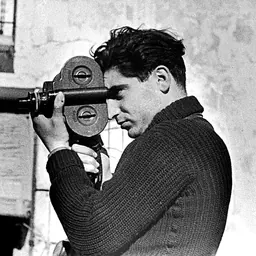
He began his publishing career in Paris in 1933–1936 with the early pictorial magazine Vu, where he worked under Lucien Vogel as art director, then managing editor, working with photographers such as Brassaï, André Kertész, and Robert Capa.
After emigrating to New York in 1941, he began working for Condé Nast Publications, rising to the position of editorial director, which he held from 1962 to 1994.
Only in the 1950s did Liberman take up painting and, later, metal sculpture. His highly recognizable sculptures are assembled from industrial objects (segments of steel I-beams, pipes, drums, and such), often painted in uniform bright colors. In a 1986 interview concerning his formative years as a sculptor and his aesthetic, Liberman said, "I think many works of art are screams, and I identify with screams." His massive work The Way, a x x structure, is made of eighteen salvaged steel oil tanks, and became a signature piece of Laumeier Sculpture Park, and a major landmark of St. Louis, Missouri.
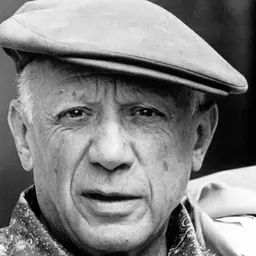
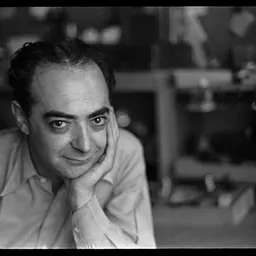
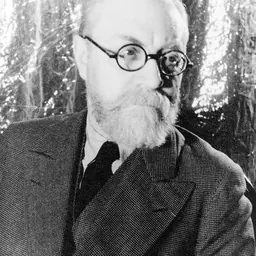
Before finding success in painting and sculpture, Liberman was a photographer. Beginning in 1948, he spent his summers visiting and photographing a generation of modern European artists working in their studios including Georges Braque, Henri Matisse, Maurice Utrillo, Marc Chagall, Marcel Duchamp, Constantin Brancusi, and Pablo Picasso. In 1959 the Museum of Modern Art in New York City exhibited Liberman's photographs of artists and their studios. A year later the images were collected in Liberman's first book, The Artist in his Studio published by Viking Press (Kazanjian and Tomkins, 1993 ).
He was married briefly to Hildegarde Sturm (August 25, 1936), a model and competitive skier. His second wife (since 1942), Tatiana Yacovleff du Plessix Liberman (1906–1991), had been a childhood playmate and baby sitter. In 1941, they escaped together from occupied France, via Lisbon, to New York. She had operated a hat salon in Paris, then designed hats for Henri Bendel in Manhattan. She continued in millinery at Saks Fifth Avenue where she was billed as "Tatiana du Plessix" or "Tatiana of Saks", until the mid-1950s. In 1992, he married Melinda Pechangco, a nurse who had cared for Tatiana during an early illness. His stepdaughter, Francine du Plessix Gray, was a noted author.
Career Liberman started his career as a part-time design assistant to graphic artist A. M. Cassandre in Paris for approximately three months in 1930. He started working as a full-time painter in 1936. Then, he served in the French army in the 1940s but was rejected due to ulcers. Ritual II (1966), Lynden Sculpture Garden, Milwaukee, Wisconsin Orbits (1967), Lynden Sculpture Garden, Milwaukee, Wisconsin Axeltree (1967), Lynden Sculpture Garden, Milwaukee, Wisconsin Temple II (1964–1969), The Governor Nelson A. Rockefeller Empire State Plaza Art Collection, Albany, New York Adonai (1971), Storm King, New York Contact II (1972), Portland, Oregon Gate of Hope (1972), University of Hawaii at Manoa Above, Above (1972), Public Art Saint Paul's Western Sculpture Park Path (1973), Denison University, Granville, Ohio Argo (1974), Milwaukee, Wisconsin Phoenix (1974), Los Angeles County Museum of Art, Los Angeles, California Covenant (1975), University of Pennsylvania, Philadelphia, Pennsylvania Symbol (1978), Rockford, Illinois On High (1979), New Haven, Connecticut The Way (1980), Laumeier Sculpture Park, Greater St. Louis, Missouri Thrust (1980), Stamford, Connecticut Laocoon (1982), Pyramid Hill Sculpture and Art Park, Hamilton, OH Stargazer (1983), San Diego, California Olympic Iliad (1984), Seattle, Washington Faith (1984), Jerusalem, Israel Galaxy (1985), Leadership Square, Oklahoma City, Oklahoma Trope I (1986), Norfolk, Virginia Torre II (1989), Pyramid Hill Sculpture and Art Park, Hamilton, OH Abracadabra (1992), Pyramid Hill Sculpture and Art Park, Hamilton, OH Archway (1997), Museum SAN, Wonju, South Korea
Collections
Liberman's work is held in the following collections: Metropolitan Museum of Art Storm King Art Center Hirshhorn Museum and Sculpture Garden Pyramid Hill Sculpture Park and Museum Tate Gallery Guggenheim Museum Akron Art Museum Frederik Meijer Gardens & Sculpture Park
Don’t just read it —
keep it.
Full-length biographies made to live with: read them, listen on the way to work, watch them tonight.
- E-book
- Audio
- Video
Instant download · yours to keep · every purchase keeps this site free
Important facts
Family & relationships
People in Alexander Liberman's life
Named in this biography and alive at the same time



Related people
Same field, nearest in time


Contemporaries
People whose lives overlapped Alexander Liberman's






Frequently asked questions
Who was Alexander Liberman?
magazine editor, publisher, painter, photographer, and sculptor (1912-1999)
When was Alexander Liberman born?
Alexander Liberman was born on 22 August 1912 in Kyiv.
When did Alexander Liberman die?
Alexander Liberman died on 19 November 1999 in Miami.
What was Alexander Liberman's occupation?
Alexander Liberman was a photographer, sculptor, painter, editor, draftsperson and opinion journalist.
What nationality was Alexander Liberman?
Alexander Liberman was Russian, French and American.
Sources & further reading
· Wikipedia: Alexander Liberman
Cite this page
APA: Biography.guide. (2026). Alexander Liberman. https://biography.guide/alexander-liberman/
MLA: "Alexander Liberman." Biography.guide, https://biography.guide/alexander-liberman/.
Chicago: "Alexander Liberman." Biography.guide. https://biography.guide/alexander-liberman/.
Data last updated: 2026-09-20 · Spot an error? Report a correction.
Page generated 2026-09-27 05:20 UTC