
About Alexander Handyside Ritchie
Lived 1804 – 1870 (aged 66). Alexander Handyside Ritchie was a British sculptor.
Alexander Handyside Ritchie (16 April 1804 – 24 April 1870) was a Scottish sculptor born in Musselburgh.
Life
Ritchie was born in Musselburgh in 1804, the son of James Ritchie, a local brickmaker and ornamental plasterer, and his wife Euphemia. The father in turn was the son of a fisherman and amateur sculptor.
After studying architecture he turned to sculpture. In 1823 he studied under Samuel Joseph at the Edinburgh School of Arts. He briefly also studied anatomy at Dr. John Barclay's Anatomy School in 1822. He studied in Rome under Bertel Thorvaldsen from 1826 to 1830, under the sponsorship of Walter, 5th Duke of Buccleuch. A favourite of Thorvaldsen he was awarded a gold medal under his tutorship. Ritchie trained other sculptors such as John Rhind here.
His brother John Ritchie assisted him on some works, working from the same studio. He also worked with and trained John Rhind, Alexander Munro and George Anderson Lawson.
He was elected an Associate of the Royal Scottish Academy in 1846. In 1854, he moved his studio to Mound Place in the centre of Edinburgh, living nearby at 92 Princes Street. He retired in 1861, but maintained a studio at Coates Place in Edinburgh, where he held a final exhibition in 1862. He returned to his family home at Herkes Loan, Musselburgh and spent his final years in the care of his sister Euphemia.
List of Works
Bust of Sir John Hope (exhibited at RSA 1825) Bust of Thorwaldsen (exhibited at RSA 1830) Bust of Joseph Hume (1830) National Museum of Scotland Monument to Charles Marjoribanks at Coldstream (1836) Bust of the Countess of Lincoln (exhibited at the RA 1837) Statuary on Edinburgh's Central Public Library (1837) (with John) Tablet to Rev. John Patterson, Falkirk Church (1838) Statue of Sir Walter Scott in Selkirk (1839) Ronaldson memorial, East Preston Street Burial Ground, Edinburgh, (c.1840) Statue over entrance of 3 George IV Bridge, Edinburgh, "Caledonia and Her Children" (1840) Statue of Mr Ferguson of Raith at Dirlton, Haddington (1843) Memorial to Rev. David Dickson, at base of the west tower of St. Cuthbert's Church, Edinburgh (1844) Statuary group "Sophropia and Olinda at the Stake" exhibited at Westminster Hall 1844. Statuary on Royal College of Physicians, Queen Street, Edinburgh (1844). Corinthian aedicule bearing a figure of Hygeia flanked by statues of Hippocrates and Aesculapius. Figure of Charles Edward Stuart (Bonny Prince Charlie) (1844) for the inaugural opening of the Scott Monument (1846) Figures on the tympanum of the Commercial Bank, Glasgow (1846) including three figures of children highly praised by the "Art Union". Monumental figures on the head of six corinthian columns at 39 St Andrew Square, Edinburgh (built as the British Linen Bank 1846). In Baalbec fashion, representing Navigation, Commerce, Manufacture, Science, Art and Agriculture. Figures of Eustace de Vescy and William de Mowbray (two signators of Magna Carta for the Chamber of the House of Lords at Westminster Hall under the supervision of John Thomas. (1847) Pedimental sculpture on the Commercial Bank, 14 George Street, Edinburgh (later the Royal Bank of Scotland, latterly "The Dome") (1844–47). Caledonia flanked by Prudence, Agriculture, Commerce, Enterprise, Mechanical Science and Learning. Monument to James Reoch (d.1845) within South Leith Parish Church (1848). Portrait head flanked by Charity and Justice. Restoration of carvings on John Knox's House on the Royal Mile Edinburgh (1850) Statue of Queen Victoria for Holyrood Palace (1851) Monument to John Henry Alexander, actor and theatre owner, Glasgow Necropolis (1851) Lions for Hamilton Mausoleum (1852) Statue of Sir Robert Peel in Montrose (1852) Statue of Dr David Macbeth Moir ("Delta" Moir) on Musselburgh High St (1853) Monument to Colonel James Gardiner, mortally wounded at the Battle of Prestonpans, near Bankton House, Prestonpans (1853) Commission for a "colossal nude statue" for Peter Denny, Provost of Dumbarton resulting in a second trip to Rome to study (1854). Possibly never executed. If existing its location is unknown. Figures of John Knox, Andrew Melville, Alexander Henderson, James Renwick and Ebenezer Erskine plus a glass-covered monument to commemorate the Covenanters, Margaret and Agnes Wilson, all in Valley Cemetery, Stirling (1858) (known as the "Martyr's Monument") Statue of Hugh Miller at Cromarty (1858) Statue of William Wallace at Stirling (1858) Fishermen's Memorial at Dunbar Harbour (1861) Heads of "Time" "Death" and "Eternity" for Hamilton Mausoleum (1863 post-retiral)
Don’t just read it —
keep it.
Full-length biographies made to live with: read them, listen on the way to work, watch them tonight.
- E-book
- Audio
- Video
Instant download · yours to keep · every purchase keeps this site free
Important facts
People in Alexander Handyside Ritchie's life
Named in this biography and alive at the same time
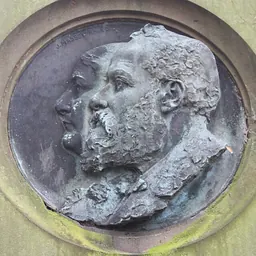

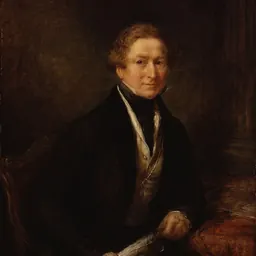

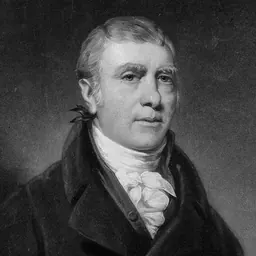

Related people
Same field, nearest in time
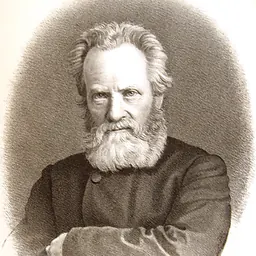

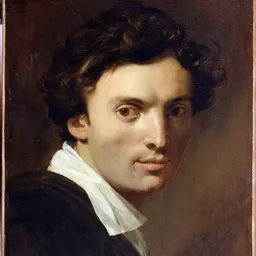
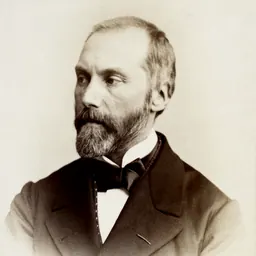

Contemporaries
People whose lives overlapped Alexander Handyside Ritchie's






Frequently asked questions
Who was Alexander Handyside Ritchie?
Scottish sculptor (1804–1870)
When was Alexander Handyside Ritchie born?
Alexander Handyside Ritchie was born on 15 April 1804.
When did Alexander Handyside Ritchie die?
Alexander Handyside Ritchie died on 24 April 1870 in Edinburgh.
What was Alexander Handyside Ritchie's occupation?
Alexander Handyside Ritchie was a sculptor.
What nationality was Alexander Handyside Ritchie?
Alexander Handyside Ritchie was British.
Sources & further reading
· Wikipedia: Alexander Handyside Ritchie
· DBpedia: Alexander Handyside Ritchie
Cite this page
APA: Biography.guide. (2026). Alexander Handyside Ritchie. https://biography.guide/alexander-handyside-ritchie/
MLA: "Alexander Handyside Ritchie." Biography.guide, https://biography.guide/alexander-handyside-ritchie/.
Chicago: "Alexander Handyside Ritchie." Biography.guide. https://biography.guide/alexander-handyside-ritchie/.
Data last updated: 2026-09-20 · Spot an error? Report a correction.
Page generated 2026-09-27 05:30 UTC