
About Alexander Gregory Barmine
Lived 1899 – 1987 (aged 88). Alexander Gregory Barmine was a Russian and American diplomat, writer, military personnel and spy.
Alexander Grigoryevich Barmin (; August 16, 1899 – December 25, 1987), commonly known as Alexander Barmine, was an officer in the Soviet Army and diplomat who fled the purges of the Joseph Stalin era for France and then the United States, where he served the US government (including the OSS, VOA, and USIA) and also testified before congressional committees (including the SISS).
Background Alexander Grigoryevich Barmin was born on August 16, 1899, in Mogilev, Mogilev Governorate, Russian Empire (now Belarus). His father, whose surname was originally Graff, was a teacher and came from an ethnic German colonist family, while Alexander's mother was Ukrainian.
Barmine was educated at a state gymnasium in Kiev and St. Vladimir Imperial University. Barmine later attended the Infantry Officers' School in Minsk, the M. V. Frunze Military Academy in Moscow, and the Moscow Institute of Oriental Studies.
Barmine had been a protege, co-worker, subordinate, or confidant of many of the Soviet Union's leading generals, diplomats, and government officials who were arrested, imprisoned, and shot during the Great Purge under Stalin in the 1930s. When Barmine's immediate superiors in the military and diplomatic corps began to disappear, or were announced to have been arrested and shot, Barmine began to fear that a similar fate was in store for himself. In July 1937, after discovering co-workers rifling his desk and searching his offices in the dead of night, he received a letter from his 14-year-old son, Boris, who wrote that he, his brother, and Barmine's mother were going "far, far away to bathe in the sea."
USA government
In New York City, Barmine applied for political asylum and citizenship as one of the earliest high-ranking Soviet government defectors to the United States. In the days before the formation of the U.S. Central Intelligence Agency, Barmine does not appear to have been debriefed by the United States government about his extensive knowledge of Soviet leaders and policies.
In 1941, Barmine joined a U.S. Army anti-aircraft unit as a 42-year-old private soldier. In 1942, he obtained his U.S. citizenship. In 1952, Barmine testified under oath before a Senate Subcommittee on Internal Security (the McCarran Committee) that he had been told by Soviet GRU Director Berzin that Lattimore was "one of our men".
In his memoirs, Barmine recounted how he and fellow members of the Soviet GRU were surprised to learn of the burgeoning support for Soviet communism among intellectuals in the Western democracies after the release of Soviet propaganda about the Five-Year Plan, just when he and other commanders had begun to lose hope in the Bolshevik Revolution. This revelation soon inspired a massive Soviet espionage and propaganda effort worldwide, with particular emphasis on nations with democratic governments.
Later years
From 1964 to 1972, Barmine served as a senior adviser on Soviet affairs at the U.S. Information Agency.
Alexander Barmine died at age 88 on December 25, 1987, in Rockville, Maryland. He also published a short treatment of the Moscow trials, dated December 22, 1937, in an American foreign affairs magazine.
He published his first book on Stalin's Terror, Memoirs of a Soviet Diplomat, in 1938.
After the assassinations and questionable accidental deaths of several exiled Soviet citizens in Western Europe, including Trotsky's own son, Lev Sedov, he and an unidentified person left Europe for the United States in 1940. Barmine's ageing mother and his two sons remained behind in the Soviet Union; unable to get them out of the country, he never saw them again.
He published a second book, One Who Survived, in 1945, in which he wrote:When I work on my book, I feel as though I were walking in a graveyard. All my friends and life associates have been shot. It seems to be some kind of mistake that I am alive. By making his revelations public, Barmine felt the book might help frustrate Stalin's immediate desire to silence him. Upon its release, the Soviet government made no comment on Barmine's revelations, though they had denounced earlier works by other Soviet émigré authors.
Articles "Russian View of the Moscow Trials" in International Conciliation journal (February 1938)
Books Memoirs of a Soviet Diplomat: Twenty Years in the Service of the USSR, translated by Gerard Hopkins (1938) One Who Survived: The Life Story of a Russian Under the Soviets, introduced by Max Eastman (1945)
Don’t just read it —
keep it.
Full-length biographies made to live with: read them, listen on the way to work, watch them tonight.
- E-book
- Audio
- Video
Instant download · yours to keep · every purchase keeps this site free
Important facts
Family & relationships
People in Alexander Gregory Barmine's life
Named in this biography and alive at the same time


Related people
Same field, nearest in time

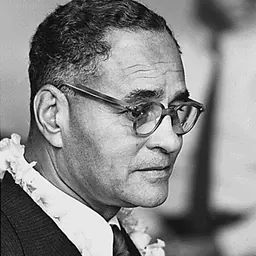
Contemporaries
People whose lives overlapped Alexander Gregory Barmine's
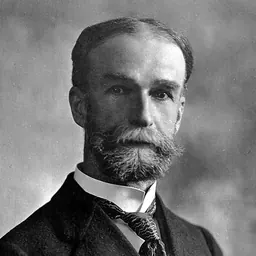
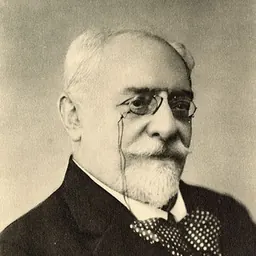
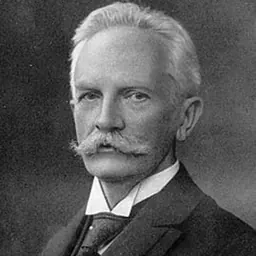

Frequently asked questions
Who was Alexander Gregory Barmine?
GRU officer (1899-1987)
When was Alexander Gregory Barmine born?
Alexander Gregory Barmine was born on 16 August 1899 in Mahilyow.
When did Alexander Gregory Barmine die?
Alexander Gregory Barmine died on 25 December 1987 in Rockville.
What was Alexander Gregory Barmine's occupation?
Alexander Gregory Barmine was a diplomat, writer, military personnel and spy.
What nationality was Alexander Gregory Barmine?
Alexander Gregory Barmine was Russian and American.
Sources & further reading
· Wikipedia: Alexander Gregory Barmine
· DBpedia: Alexander Gregory Barmine
Cite this page
APA: Biography.guide. (2026). Alexander Gregory Barmine. https://biography.guide/alexander-gregory-barmine/
MLA: "Alexander Gregory Barmine." Biography.guide, https://biography.guide/alexander-gregory-barmine/.
Chicago: "Alexander Gregory Barmine." Biography.guide. https://biography.guide/alexander-gregory-barmine/.
Data last updated: 2026-09-22 · Spot an error? Report a correction.
Page generated 2026-09-27 05:05 UTC