
About Alexander Evseevich Braunstein
Lived 1902 – 1986 (aged 84). Alexander Evseevich Braunstein was a Russian biochemist, known for Transamination and Vitamin B6.
Alexander Yevseyevich Braunstein (1902–1986) was a Soviet biochemist. He is best known for his co-discovery, along with Maria Kritzman, of enzymatic transamination and its dependence on vitamin B6. Braunstein and American scientist Esmond Emerson Snell have been cited as the "fathers of vitamin B6".
Early life and education Braunstein was born in Kharkiv (then Kharkov), Ukraine in 1902. His father was an ophthalmologist. In his early education, he displayed a facility for learning languages, became interested in studying chemistry, and eventually began to study medicine in 1920 at the Kharkov State Medical Institute. He then moved to Moscow and received his Ph.D. under the supervision of Vladimir Engelgardt in 1928.
Academic career Braunstein spent his early scientific career at the People's Commissariat of Health. In 1936, he moved to the A. M. Gorky Institute of Experimental Medicine. In 1945, after the end of World War II, he assumed leadership of a laboratory at the Institute of Biological and Medical Chemistry, under the auspices of the then-new USSR Academy of Medical Sciences. In 1959, when his former Ph.D. advisor Engelhardt founded a new Institute of Radiation and Physico-Chemical Biology (later the Institute of Molecular Biology), Braunstein headed a laboratory there. Later, Braunstein's and Esmond Emerson Snell's research groups independently described a general catalytic mechanism for enzymes dependent on the biologically active form of vitamin B6, known as pyridoxal phosphate (PLP), as a cofactor. In his later career, Braunstein focused on X-ray crystallography, attempting to solve the structure of transaminase enzymes.
Awards and honors Stalin Prize in Science and Technology (1941) Foreign Honorary Member, American Academy of Arts and Sciences (1961) Full Member, Academy of Sciences of the Soviet Union (1964) Lenin Prize (1980) Three Orders of the Red Banner of Labour
In recognition of his contributions to the study of vitamin B6 biochemistry, the 1987 meeting in a regular series of international symposia on pyridoxal catalysis was dedicated to Braunstein's memory.
Don’t just read it —
keep it.
Full-length biographies made to live with: read them, listen on the way to work, watch them tonight.
- E-book
- Audio
- Video
Instant download · yours to keep · every purchase keeps this site free
Important facts
People in Alexander Evseevich Braunstein's life
Named in this biography and alive at the same time



Related people
Same field, nearest in time

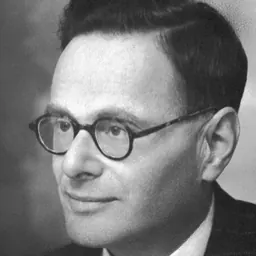

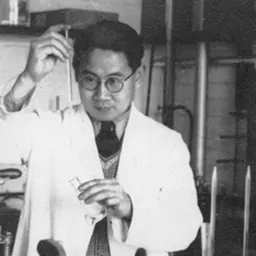


Contemporaries
People whose lives overlapped Alexander Evseevich Braunstein's
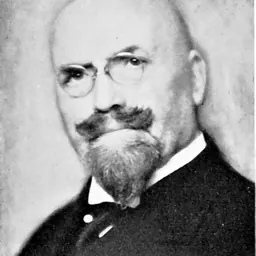



Frequently asked questions
Who was Alexander Evseevich Braunstein?
Soviet biochemist
When was Alexander Evseevich Braunstein born?
Alexander Evseevich Braunstein was born on 13 May 1902 in Kharkiv.
When did Alexander Evseevich Braunstein die?
Alexander Evseevich Braunstein died on 1 July 1986 in Moscow.
What was Alexander Evseevich Braunstein's occupation?
Alexander Evseevich Braunstein was a biochemist.
What was Alexander Evseevich Braunstein known for?
Alexander Evseevich Braunstein was known for Transamination and Vitamin B6.
What nationality was Alexander Evseevich Braunstein?
Alexander Evseevich Braunstein was Russian.
Sources & further reading
· Wikipedia: Alexander Evseevich Braunstein
· DBpedia: Alexander E. Braunstein
Cite this page
APA: Biography.guide. (2026). Alexander Evseevich Braunstein. https://biography.guide/alexander-evseevich-braunstein/
MLA: "Alexander Evseevich Braunstein." Biography.guide, https://biography.guide/alexander-evseevich-braunstein/.
Chicago: "Alexander Evseevich Braunstein." Biography.guide. https://biography.guide/alexander-evseevich-braunstein/.
Data last updated: 2026-09-20 · Spot an error? Report a correction.
Page generated 2026-09-27 05:28 UTC