
About Alexander Edward
Lived 1651 – 1708 (aged 57). Alexander Edward was a Scottish cleric, drafter, landscape architect and architect.
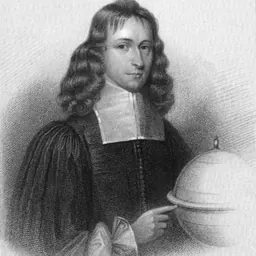
Alexander Edward (10 June 1651 – 16 November 1708) was a priest of the Scottish Episcopal Church who later became a draughtsman, architect and landscape designer. He was a stylistic follower of Sir William Bruce, and planned several gardens in the grand French axial manner.
Early life Alexander Edward was the eldest son of Robert Edward, minister at Murroes in Angus, who was related by marriage to the Maule family, and as such enjoyed the patronage of the Maule Earls of Panmure. Alexander's diary records that his family had to hide from Cromwell's Puritan troops in the 1650s, and also that he had a squint. He graduated from the University of St Andrews in 1670.
Edward was not ordained until 1679, and his activities during the 1670s are unknown. At this time, his father was writing a description of Angus, and preparing a map to accompany the book, entitled Angusia, Provincia Scotiae. The work was commissioned by George Maule, 2nd Earl of Panmure, and published in 1678. John Lowrey has suggested that Alexander assisted with Angusia, acquiring skills as a draughtsman and cartographer. Lowrey also speculates that he may have come into contact with Sir William Bruce at this time, as Bruce designed new gates for Panmure House in 1672.
Edward was one of the pallbearers at the funeral of Archbishop Sharp, the churchman murdered by Presbyterian Covenanters in 1679. From 1681 he was minister of Kemback in Fife, until 1689 when he was deprived of his parish as a non-juror, following the establishment of the Presbyterian Church of Scotland.
Architectural works In around 1685, apprenticed to the Alloa master mason Tobias Bauchop, he prepared plans and elevations of Kinross House, designed by the King's architect Sir William Bruce as his own country house. He worked as Bruce's draughtsman again on an unexecuted scheme for the house and gardens of Kinnaird Castle, Angus. In 1699, he made a drawing of Falkland Palace for its keeper, the 2nd Marquis of Atholl. He made a survey of the Castlestead or Nether Palace at Falkland Palace. In 1704, he designed the monument to John Murray, 1st Marquess of Atholl in Dunkeld Cathedral. Another, more secret, purpose to his journey was to convey coded letters from the Duke of Hamilton to James Stuart, the "Old Pretender", at his court-in-exile at Saint-Germain.
Landscape gardening Edward assisted William Bruce with the layout for the gardens at Hopetoun House, as well as at Kinross.
Death Alexander Edward died in Edinburgh, and was buried in Greyfriars Kirkyard. The antiquary Robert Sibbald described him as a "great master in architecture, and contrivance of avenues, gardens and orchards".
Don’t just read it —
keep it.
Full-length biographies made to live with: read them, listen on the way to work, watch them tonight.
- E-book
- Audio
- Video
Instant download · yours to keep · every purchase keeps this site free
Important facts
People in Alexander Edward's life
Named in this biography and alive at the same time


Related people
Same field, nearest in time


Contemporaries
People whose lives overlapped Alexander Edward's




Frequently asked questions
Who was Alexander Edward?
Scottish landscape architect (1651-1708)
When was Alexander Edward born?
Alexander Edward was born on 10 June 1651.
When did Alexander Edward die?
Alexander Edward died on 16 November 1708.
What was Alexander Edward's occupation?
Alexander Edward was a cleric, drafter, landscape architect and architect.
What nationality was Alexander Edward?
Alexander Edward was Scottish.
Sources & further reading
Cite this page
APA: Biography.guide. (2026). Alexander Edward. https://biography.guide/alexander-edward/
MLA: "Alexander Edward." Biography.guide, https://biography.guide/alexander-edward/.
Chicago: "Alexander Edward." Biography.guide. https://biography.guide/alexander-edward/.
Data last updated: 2026-09-20 · Spot an error? Report a correction.
Page generated 2026-09-27 05:03 UTC