
About Alexander Carr-Saunders
Lived 1886 – 1966 (aged 80). Alexander Carr-Saunders was a British biologist and sociologist.
Sir Alexander Morris Carr-Saunders, (14 January 1886 – 6 October 1966) was an English biologist, sociologist, academic, and academic administrator. He was Director of the London School of Economics from 1937 to 1957.
Early life Carr-Saunders was born on 14 January 1886 in Reigate, Surrey, England. He was educated at Eton College, an all-boys public school in Eton, Berkshire. He then studied biology at Magdalen College, specialising in zoology. He graduated from the University of Oxford with a first class honours Bachelor of Arts (BA) degree in 1908.
Career Early career Carr-Saunders remained a year at the University of Oxford as a demonstrator in comparative anatomy. He left in 1910 to join the University College London where he studied biometrics under Karl Pearson, a proponent of Social Darwinism and eugenics. Deciding against natural science, he instead read for the Bar of the Inner Temple. and to temporary captain on 27 January 1918.
Later career After the Armistice he returned to the Zoology department of the University of Oxford, taking an interest in ecological issues, especially population and overpopulation. He participated in the 1921 Oxford University Spitsbergen expedition, one of the first Oxford Expeditions to Spitsbergen in the Arctic as main scientists, together with Julian Huxley. During the expedition he distilled his early ideas on population dynamics and summarized them in a book called The Population Problem. The book used a neo-Malthusian argument plus Galton's eugenics as the theoretical framework for a quantitative analysis of population dynamics. The population problem arose -according to Carr-Saunders hypothesis- from the fact of having high reproductive rates among primitive people with low mental and physical qualities. Over-population of these lower races endangered the standard of living of races bearing higher qualities. Unlike Malthus, he thought that industrial productivity and not food was the main limiting factor in human populations..
The success of his magnum opus The Population Problem resulted in his appointment to the Charles Booth Chair of Social Science at the University of Liverpool in 1923. In 1937, he was appointed to succeed Sir William Beveridge as Director of the London School of Economics, and held that post until his retirement in 1955.
Carr-Saunders was one of the mentors of the animal ecologist Charles Elton, greatly influencing Elton's approach toward animal ecology as a "sociology and economy of animals"
Honours For his military service during World War I, Carr-Saunders was awarded three medals; the 1914 Star or 1914–15 Star, the British War Medal, and the Victory Medal.
In the 1946 New Year Honours, Carr-Saunders was appointed a Knight Bachelor (Kt) in recognition of his role as Director of the London School of Economics and Political Science. On 12 March 1946, he was knighted by King George VI during a ceremony at Buckingham Palace. In 1946, he was also elected a Fellow of the British Academy (FBA), and awarded the first Galton medal by the Eugenics Society.
Personal life and death Carr-Saunders was married to Teresa Molyneux-Seel (alumna of Somerville College, Oxford) and lived at a 16th-century mansion, Water Eaton, Oxfordshire, age 52, when his son Nicholas Saunders was born in 1938. His daughter, Flora Carr-Saunders, married Peter Maxwell Stuart, 21st Laird of Traquair.
Don’t just read it —
keep it.
Full-length biographies made to live with: read them, listen on the way to work, watch them tonight.
- E-book
- Audio
- Video
Instant download · yours to keep · every purchase keeps this site free
Important facts
People in Alexander Carr-Saunders's life
Named in this biography and alive at the same time


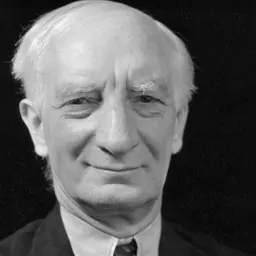

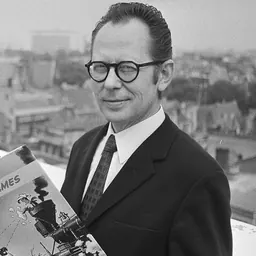



Related people
Same field, nearest in time
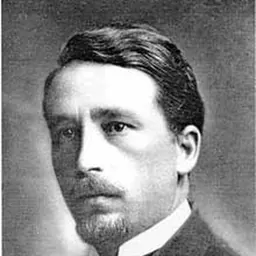



Contemporaries
People whose lives overlapped Alexander Carr-Saunders's
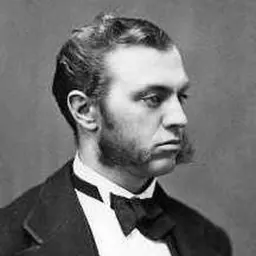




Frequently asked questions
Who was Alexander Carr-Saunders?
British sociologist and biologist (1886–1966)
When was Alexander Carr-Saunders born?
Alexander Carr-Saunders was born on 14 January 1886 in Reigate.
When did Alexander Carr-Saunders die?
Alexander Carr-Saunders died on 6 October 1966 in Dale Head.
What was Alexander Carr-Saunders's occupation?
Alexander Carr-Saunders was a biologist and sociologist.
What nationality was Alexander Carr-Saunders?
Alexander Carr-Saunders was British.
Sources & further reading
· Wikipedia: Alexander Carr-Saunders
· DBpedia: Alexander Carr-Saunders
Cite this page
APA: Biography.guide. (2026). Alexander Carr-Saunders. https://biography.guide/alexander-carr-saunders/
MLA: "Alexander Carr-Saunders." Biography.guide, https://biography.guide/alexander-carr-saunders/.
Chicago: "Alexander Carr-Saunders." Biography.guide. https://biography.guide/alexander-carr-saunders/.
Data last updated: 2026-09-25 · Spot an error? Report a correction.
Page generated 2026-09-27 05:10 UTC