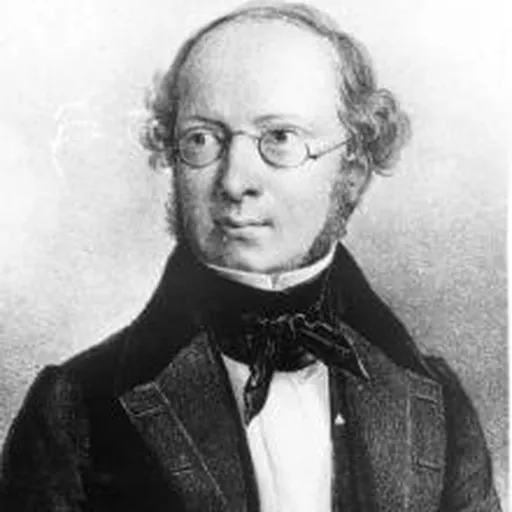
About Alexander Bunge
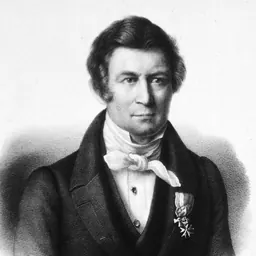
Lived 1803 – 1890 (aged 86). Alexander Bunge was a Russian explorer, botanist, professor, physician, botanical collector and scientific collector.
Alexander Georg von Bunge (; – ) was a Russian botanist. He is best remembered for scientific expeditions into Asia and especially Siberia.
Early life and education Bunge was born under the name Alexander Andreyevich von Bunge on in Kiev as the second son of a family that belonged to the German minority in Tsarist Russia. His father, Andreas Theodor was a pharmacist who had emigrated from East Prussia to Russia with his grandfather in the 18th century and his mother, Elisabeth von Bunge . They moved to Dorpat in 1815 after his father's death in 1814, and he attended high school from 1818 to 1821. He was educated at Dorpat, where he attended the gymnasium from 1821 to 1825. Then he studied medicine and obtained his doctorate of medicine from the Imperial University of Dorpat in 1825. He also studied botany there under Carl Friedrich von Ledebour and completed his thesis entitled De relatione methodi plantarum naturalis in vires vegetabilium medicalis
Expedition to Siberia At early January, he worked as the head of metallurgy in the Kolyvan-Voskresensker factory under P. K. Frolov and as district physician in Barnaul (Tomsk Governorate) which located in southern Siberia.
After the expedition, Bunge lived in Kolyvan and transferred to Zmeinogorsk until 1830. After recommendation by Alexander von Humboldt, whom Bunge met in 1829 when Humboldt visited Altai, he was given a scientific mission to Peking by the Academy of St.Petersburg. Humboldt was on an expedition financed by Tsar Nicholas. He was accompanied by Colonel Ladijenski as pristav (escort) and Dr. P. Kirilov as physician. Apart from him there were other researchers, including Georg Albert von Fuss as astronomer and metereologist, and Kovanko as mineralogist. All of them were part of the eleventh ecclesiastical mission, which happened regularly, and were also to pick up the emissary for the tenth ecclesiastical mission. They went to Peking from the border town Kjachta at the end of O.S August 1830 via Urga in September 1830, and arrived in Peking on 17 November 1830 after crossing the Gobi Desert, and spent the winter in Peking. Bunge continued his research in March 1831 by going to the ruins known as Tsagan Balgasun located in Khalgan (Zhangjiakou). His research was finally stopped in May 1821 because he incurred the displeasure of the Chinese authorities when he stayed at Buddhist Monastery and did not get permission to go out of Peking
They returned to Russia on 6 July 1831 with the emissary of the tenth ecclesiastical mission by following the western route that bypassed Kalgan and Urga.
During his professorship, Bunge made a scientific expedition to Khorasan and Afghanistan in 1857–1858,
Personal life He had two sons with Elisabeth von Pistohlkors: Gustav von Bunge (1844–1920), His older brother, Friedrich Georg von Bunge (1802–1897), was a legal historian.
Commemoration Taxa Genus Bungea (family Orobanchaceae, formerly a member of the family Scrophulariaceae). Allium bungei from genus Allium. Pinus bungeana from genus Pinus. Fraxinus bungeana from genus Fraxinus Clerodendrum bungei from genus Clerodendrum Catalpa bungei from genus Catalpa. Girgensohnia bungeana from genus Girgensohnia.
Places A crater on Mars and a place in New Siberian Island called Bungeland was named after him. Flora Altaica; scripsit Carolus Fridericus a Ledebour, adiutoribus Car. Ant. Meyer et Al. a Bunge. Tomus II (1830) Flora Altaica; scripsit Carolus Fridericus a Ledebour, adiutoribus Car. Ant. Meyer et Al. a Bunge. Tomus III (1831) Flora Altaica; scripsit Carolus Fridericus a Ledebour, adiutoribus Car. Ant. Meyer et Al. a Bunge. Tomus IV (1832) Enumeratio plantarum quas in China boreali collegit Dr. Al. Bunge. Anno 1831. (1832) Plantarum mongolica-chinensium decas fine. (1835) Verzeichniss der im Jahre 1832 im östlichen Theile des Altai-Gebirges gesammelten Pflanzen. Ein Supplement zur Flora Altaica written with Ledebour (1836) Anleitung zum Studium der Botanik, oder Grundriss Dieser Wissenschaft Enthaltend die Organographie, Physiologie, Methodologie, die Pflanzen, Geographie, eine Ubersich der fossilen der pharmaceustischen Botanik und der Geschichte der Botanik written with Alphonse Pyramus de Candolle (1838) Alexandri Lehmann reliquiae botanicae; sive, Enumeratio plantarum in itinere per deserta Asiae Mediae ab A. Lehmann annis 1839–1842 collectarum. Scripsit Al. Bunge. (1847) Beitrag zur Kenntniss der Flor Russlands und der Steppen Central-Asiens, (1851) – Contribution to the knowledge of flora native to Russia and the steppes of Central Asia. Tentamen generis Tamaricum species accuratius definiendi. (1852) Plantas Abichianas in itineribus per Caucasum regionesque Transcaucasicas collectas, enumeravit A. Bunge. (1858). Generis Astragali species gerontogeae. (1868–1869). Labiatae persicae, (1873). ''
Don’t just read it —
keep it.
Full-length biographies made to live with: read them, listen on the way to work, watch them tonight.
- E-book
- Audio
- Video
Instant download · yours to keep · every purchase keeps this site free
Important facts
more
A. Bunge, A. von Bunge, Al. de Bunge, Alexander Georg von BungeFamily & relationships
People in Alexander Bunge's life
Named in this biography and alive at the same time


Related people
Same field, nearest in time

Contemporaries
People whose lives overlapped Alexander Bunge's






Frequently asked questions
Who was Alexander Bunge?
Baltic German botanist (1803–1890)
When was Alexander Bunge born?
Alexander Bunge was born on 24 September 1803 in Kyiv.
When did Alexander Bunge die?
Alexander Bunge died on 18 July 1890 in Kiltsi.
What was Alexander Bunge's occupation?
Alexander Bunge was an explorer, botanist, professor, physician, botanical collector and scientific collector.
What nationality was Alexander Bunge?
Alexander Bunge was Russian.
Sources & further reading
· DBpedia: Alexander von Bunge
Cite this page
APA: Biography.guide. (2026). Alexander Bunge. https://biography.guide/alexander-bunge/
MLA: "Alexander Bunge." Biography.guide, https://biography.guide/alexander-bunge/.
Chicago: "Alexander Bunge." Biography.guide. https://biography.guide/alexander-bunge/.
Data last updated: 2026-09-23 · Spot an error? Report a correction.
Portrait: Wikimedia Commons · author & licence
Page generated 2026-09-27 05:06 UTC