
About Alexander Bovin
Lived 1930 – 2004 (aged 73). Alexander Bovin was a Russian diplomat, journalist, politician, jurist, television presenter and opinion journalist.
Aleksandr Yevgenyevich Bovin (, 9 August 1930 – 29 April 2004) was a Soviet and Russian journalist, political scientist and diplomat, notable for being the first Soviet, and then Russian ambassador to Israel after the re-establishment of Soviet-Israeli diplomatic relations. He was a leading journalist of Soviet Union and Russia of the late 20th century. The New York Times called him "one of the most colorful and daring commentators of the late Soviet period" and The Washington Post also said he was "widely regarded as the Soviet Union's most sophisticated and best-informed political commentator".
Biography
Early life and education
Bovin was born in Leningrad. After spending his childhood in different parts of the USSR as his father was an army officer, he completed school and enrolled at the Rostov State University in Rostov-on-Don, graduating in 1953 with a degree in law. After his graduation, Bovin was appointed to the regional court of the city of Khadyzhensk, serving as a judge from 1953 to 1954 (according to his memories published in 2000, he had been the youngest judge in the USSR at the time of his appointment). He was again appointed to the same position in 1955, serving for another year.
In 1956, Bovin entered the graduate school (aspirantura) at Moscow State University, obtaining a Candidate of Sciences (Ph.D) degree in philosophy in 1959.
Political and journalistic career
After earning his graduate degree in 1959, Bovin, who had joined the CPSU in 1952, started working as the "scientific consultant" for the philosophical section of the Communist, a CPSU magazine. He worked there until 1963, when he was appointed to the Central Committee of the Communist Party of the Soviet Union as a political consultant as part of a group, which he later led. Bovin occupied this position until 1972. During his political career, he cooperated closely with Yuri Andropov, secretary of the Central Committee at that moment. He also served as the speechwriter for Leonid Brezhnev, the General Secretary of the Central Committee and leader of the USSR, for some years.
For many years Bovin appeared on Soviet Central Television with his weekly program, Mezhdunarodnaya Panorama ("the International Panorama"), where he presented his (and the Party's) view of the preceding week's world events. where he worked as a political commentator from 1972 to 1991, thus beginning his journalistic career.
Political commentary and position on Israel
Bovin again exhibited his independent, slightly oppositional political stance while working for Izvestia, mainly through his objective position on Israel, which at that time had no diplomatic relations with the USSR (those had been suspended after the Six-Day War in 1967), being officially regarded a strategic enemy and attacked in numerous "anti-Zionist" propaganda campaigns. Bovin's position was much more balanced, frequently justifying Israeli policy and criticizing the Arab governments officially allied with the USSR. This gave him a specific status in Israel even before being appointed as the Soviet ambassador, where he had a generally positive image, as opposed to most Soviet politicians and political theorists. In 1983, his visit to Beijing with the Soviet ambassador to China made him the first high-ranking Soviet to visit China since the Sino-Soviet split in the 1960s. Throughout the 1980s, along with the US-Russia relations, he was a frequent speaker of President Ronald Reagan, and criticized the Reagan administration, calling them "blind and shortsighted" about the Reagan and Gorbachev meeting in Reykjavík, Iceland and also saying Reagan's foreign policy was "chauvist passions [and] military psychosis" but later amended that by saying "Washington politicians will risk jumping into the abyss..It is one thing to send another hundred, or even another thousand, Marines to death, but it is quite another thing to doom to death themselves". In August 1983, he particularly warned the United States of not having "illusions" that US-Soviet relations had "thawed and improved", saying any signs of alleviated tension were not sincere. However, despite his close relations with the Soviet Union press, in March 1987, he called for more independent and Western media commentary and said that the "days when every article represented the government position" belonged to the past. Bovin was also a critic of the Iranian leaders, saying "one can obviously doubt that the theocratic concept of the state will help Iran become a modern flourishing country" and that Mohammad Reza Pahlavi's downfall allowed Iran to fall into economic chaos and suppressed dissent, making Bovin's comments "the harshest since the [Pahlavi's] downfall [in February 1979]". Although a former associate of Brezhnev's, Bovin also publicly criticized him including in a 1987 Soviet Union-operated The New Times article which made it the harshest personal criticism ever to appear in the Soviet Union targeted at Brezhnev. However, despite continuously criticizing the United States, Bovin also made an ally with Canadian prime minister Pierre Trudeau by agreeing and supporting Trudeau's peace proposals, saying "[Russia was] ready to co-operate with Canada in the revival of a detente".
Diplomatic career
Partly because of his more balanced position, Bovin was appointed Soviet ambassador to Israel by Mikhail Gorbachev after the thorough social and political reforms in the USSR known as the perestroika, which directly led to the re-establishment of diplomatic relations with Israel in 1991. He took this position
Don’t just read it —
keep it.
Full-length biographies made to live with: read them, listen on the way to work, watch them tonight.
- E-book
- Audio
- Video
Instant download · yours to keep · every purchase keeps this site free
Important facts
People in Alexander Bovin's life
Named in this biography and alive at the same time


Related people
Same field, nearest in time

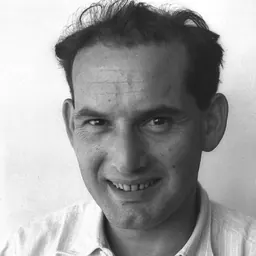
Contemporaries
People whose lives overlapped Alexander Bovin's


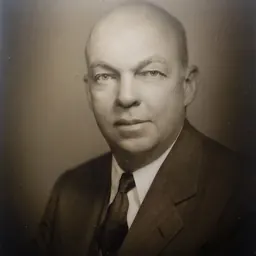

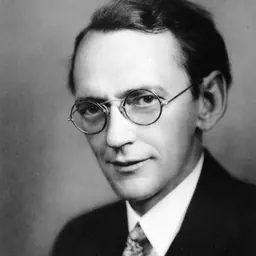
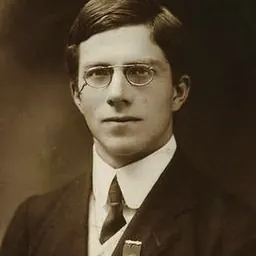
Frequently asked questions
Who was Alexander Bovin?
Soviet diplomat (1930-2004)
When was Alexander Bovin born?
Alexander Bovin was born on 9 August 1930 in Saint Petersburg.
When did Alexander Bovin die?
Alexander Bovin died on 29 April 2004 in Moscow.
What was Alexander Bovin's occupation?
Alexander Bovin was a diplomat, journalist, politician, jurist, television presenter and opinion journalist.
What nationality was Alexander Bovin?
Alexander Bovin was Russian.
Sources & further reading
Cite this page
APA: Biography.guide. (2026). Alexander Bovin. https://biography.guide/alexander-bovin/
MLA: "Alexander Bovin." Biography.guide, https://biography.guide/alexander-bovin/.
Chicago: "Alexander Bovin." Biography.guide. https://biography.guide/alexander-bovin/.
Data last updated: 2026-09-20 · Spot an error? Report a correction.
Page generated 2026-09-27 05:28 UTC