
About Alex Comfort
Lived 1920 – 2000 (aged 80). Alex Comfort was a British physician, writer, university teacher, psychiatrist, scientist and poet.
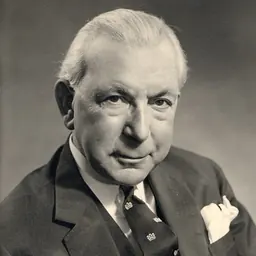
Alexander Comfort (10 February 1920 – 26 March 2000) was a British scientist and physician, writer and activist, known best for his nonfiction sex manual, The Joy of Sex. He was a poet and author of both fiction and nonfiction, as well as a gerontologist, geriatrician, sexologist, political theorist and commentator, anarchist, and pacifist.
Early life and education Comfort was born in Palmers Green, North London, and raised in Barnet, Hertfordshire, then a London suburb. His parents were Alexander Charles Comfort, an administrator in education at the London County Council, and Daisy Elizabeth (Fenner) Comfort, a former teacher, who taught her son French and some Latin by the time he began school. He was educated at Highgate School in London. While he was a student there he tried to develop an improved compound of gunpowder. During his experiments he inadvertently blew up his left hand, of which only the thumb remained. Later he claimed that his left hand proved "very useful for performing uterine inversions".
Comfort had a passion for molluscs, developed on family holidays in Hartland, on the Devon coast, and he joined the Conchological Society of Great Britain & Ireland when he was eighteen years old. He made many contributions to the literature.
He matriculated at Trinity College, Cambridge and studied medicine, qualifying in 1944 with the conjoint diplomas of Licentiate of the Royal College of Physicians (LRCP) London, Member of the Royal College of Surgeons (MRCS) England, and Bachelor of Medicine and Bachelor of Surgery or MB BChir. During World War Two, Comfort wrote a letter to the Tribune (2 April 1943) denouncing the Allied bombing of civilians: Comfort was an active member of the Peace Pledge Union (PPU) and Campaign for Nuclear Disarmament, and a conscientious objector in World War II. In 1951 Comfort was a signatory of the Authors' World Peace Appeal, but later resigned from its committee, claiming the AWPA had become dominated by Soviet sympathisers. Later in the decade he actively endorsed both the Direct Action Committee against Nuclear War, 1957, and the Committee of 100, 1960. Comfort was imprisoned for a month, with Bertrand Russell and other leading members of the Committee of 100, for refusing to be bound not to continue organising the Parliament Square/Trafalgar Square protest of 17 September 1961. In 1964 he joined Russell's Who Killed Kennedy? Committee.
Among the publications by Comfort concerning anarchism are Peace and Disobedience (1946), one of many pamphlets he wrote for Peace News and PPU, and Authority and Delinquency in the Modern State (1950).
Comfort's book The Joy of Sex (1972) earned him worldwide fame and $3 million. But he was unhappy about becoming known as "Dr. Sex" and having his other works given little attention.
Comfort devoted much of the 1950s and 1960s to studying the biology of ageing (biogerontology) and popularised the subject. During 1969 he suggested that life expectancy (not simply maximum life span) could be extended to 120 years of age within the next 20 years.
In 1989, Comfort made an extended appearance on the television discussion programme After Dark, alongside, among others, Ian McColl and David Widgery.
One of Comfort's final letters was to The Guardian in 1989, protesting against the Thatcher government's introduction of the poll tax. The Comfort Papers span more than 80 boxes of material and primarily focus on Comfort's career and research.
Partial bibliography No Such Liberty (1941) – novel. Three New Poets (1942) – Alex Comfort, Roy McFadden, Ian Serraillier A Wreath for the Living (1942). Elegies (1944) The Power House (1944) – novel The Song of Lazarus (1945). Outlaw of the Lowest Planet by Kenneth Patchen (1946) – Preface by Alex Comfort Art and Social Responsibility (1946). The Signal to Engage (1946). Peace and Disobedience (1946) – pamphlet (reprinted in 1994 in Against Power and Death). The New Joy of Sex: a Gourmet Guide to Lovemaking for the Nineties (1992). Writings Against Power and Death (1994).
Don’t just read it —
keep it.
Full-length biographies made to live with: read them, listen on the way to work, watch them tonight.
- E-book
- Audio
- Video
Instant download · yours to keep · every purchase keeps this site free
Important facts
People in Alex Comfort's life
Named in this biography and alive at the same time





Related people
Same field, nearest in time


Contemporaries
People whose lives overlapped Alex Comfort's





Frequently asked questions
Who was Alex Comfort?
British academic and physician (1920–2000)
When was Alex Comfort born?
Alex Comfort was born on 10 February 1920 in London.
When did Alex Comfort die?
Alex Comfort died on 26 March 2000 in Oxford.
What was Alex Comfort's occupation?
Alex Comfort was a physician, writer, university teacher, psychiatrist, scientist and poet.
What nationality was Alex Comfort?
Alex Comfort was British.
Sources & further reading
Cite this page
APA: Biography.guide. (2026). Alex Comfort. https://biography.guide/alex-comfort/
MLA: "Alex Comfort." Biography.guide, https://biography.guide/alex-comfort/.
Chicago: "Alex Comfort." Biography.guide. https://biography.guide/alex-comfort/.
Data last updated: 2026-09-20 · Spot an error? Report a correction.
Page generated 2026-09-27 05:31 UTC