
About Alejandro Jenkins
Born 1979. Alejandro Jenkins is a Costa Rican physicist.
Alejandro Jenkins (born 17 October 1979, in San José, Costa Rica) is a Costa Rican theoretical physicist. He is currently a professor at the University of Costa Rica and a member of Costa Rica's National Academy of Sciences. He has worked on applications of quantum field theory to particle physics and cosmology, as well as on self-oscillating dynamical systems and quantum thermodynamics. Some of the work in Jenkins's doctoral dissertation concerned models of dark energy in cosmology.
Jenkins was a postdoctoral researcher at Caltech (2006), at the MIT Center for Theoretical Physics (2006-09), and at Florida State University's high-energy physics group (2009–12). He became a professor of physics at the University of Costa Rica in 2013 and was elected as a member of Costa Rica's National Academy of Sciences in 2015.
Jenkins's contributions To test this hypothesis, Robert Jaffe, Jenkins, and Itamar Kimchi used models to "tweak" the values of the quark masses and examined how that would affect the ability of stable isotopes of carbon and hydrogen to form, making organic chemistry possible. They found that, within the various potential universes they examined, many had very different qualities from our own, but that nonetheless life could still develop. In some cases, where forms of carbon we find in our universe were unstable, other forms of stable carbon were identified as possible.
The work by Jaffe, Jenkins, and Kimchi on anthropic constraints on quark masses was highlighted by the American Physical Society's Physics magazine. That work, along with research by other theorists on the possibility of an anthropically-allowed "weakless universe", was summarized in Scientific American magazine's January 2010 cover story, which Jenkins co-authored with Israeli particle physicist Gilad Perez. Jenkins also explained his work in a 2015 appearance on the TV show Through the Wormhole.
Self-oscillation and thermodynamics
Jenkins's review of the physics of self-oscillators was published by Physics Reports in 2013. Jenkins has also collaborated with mathematical physicist Robert Alicki and theoretical chemist David Gelbwaser-Klimovsky on applying related ideas in order to arrive at a better understanding of non-equilibrium thermodynamics and quantum thermodynamics, with a particular application to the microscopic physics of solar cells and the triboelectric effect. With experimentalist Elizabeth von Hauff they have also presented a new model of the pumping of electrical charge in batteries.
Don’t just read it —
keep it.
Full-length biographies made to live with: read them, listen on the way to work, watch them tonight.
- E-book
- Audio
- Video
Instant download · yours to keep · every purchase keeps this site free
Important facts
People in Alejandro Jenkins's life
Named in this biography and alive at the same time


Related people
Same field, nearest in time




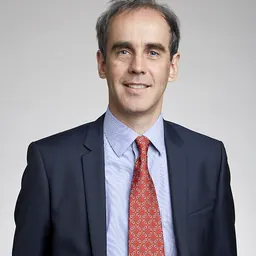
Contemporaries
People whose lives overlapped Alejandro Jenkins's


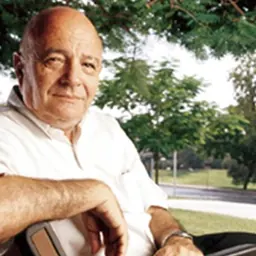

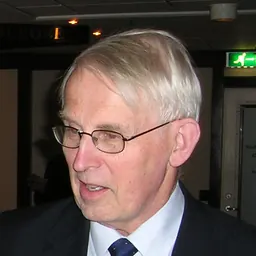
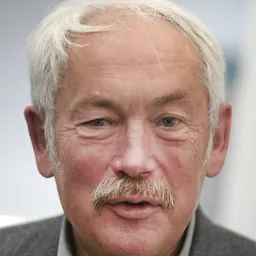
Frequently asked questions
Who is Alejandro Jenkins?
Costa Rican physicist
When was Alejandro Jenkins born?
Alejandro Jenkins was born on 17 October 1979 in San José.
What is Alejandro Jenkins's occupation?
Alejandro Jenkins is a physicist.
What nationality is Alejandro Jenkins?
Alejandro Jenkins is Costa Rican.
Sources & further reading
· Wikipedia: Alejandro Jenkins
Cite this page
APA: Biography.guide. (2026). Alejandro Jenkins. https://biography.guide/alejandro-jenkins/
MLA: "Alejandro Jenkins." Biography.guide, https://biography.guide/alejandro-jenkins/.
Chicago: "Alejandro Jenkins." Biography.guide. https://biography.guide/alejandro-jenkins/.
Data last updated: 2026-09-20 · Spot an error? Report a correction.
Page generated 2026-09-27 05:26 UTC