
About Alejandra Pizarnik
Lived 1936 – 1972 (aged 36). Alejandra Pizarnik was an Argentine linguist, diarist, poet, translator, literary critic and writer.
Flora Alejandra Pizarnik (29 April 1936 – 25 September 1972) was an Argentine poet. Her idiosyncratic and thematically introspective poetry has been considered "one of the most unusual bodies of work in Latin American literature", and has been recognized and celebrated for its fixation on "the limitation of language, silence, the body, night, the nature of intimacy, madness, [and] death". Her work has influenced generations of authors in Latin America.
Biography Early life Flora Pizarnik was born on 29 April 1936, in Avellaneda in the Greater Buenos Aires metropolitan area of Argentina, to Jewish immigrant parents from Rovno in the Russian Empire (now Rivne, Ukraine), Elías Pizarnik (Pozharnik) and Rejzla Bromiker. Her parents left the Soviet Union and arrived in Argentina in 1934, the same year in which her older sister, Myriam, was born. She had a difficult childhood, struggling with acne and self-esteem issues, as well as having a stutter. She adopted the name Alejandra as a teenager. As an adult, she had a clinical diagnosis of schizophrenia.
Career A year after entering the University of Buenos Aires, Pizarnik published her first book of poetry, The Most Foreign Country (1955). She took courses in literature, journalism, and philosophy, but dropped out in order to pursue painting with Juan Batlle Planas. Pizarnik was bisexual/lesbian but in much of her work references to relationships with women were self-censored due to the oppressive nature of the Argentine dictatorship she lived under.
Between 1960 and 1964 Pizarnik lived in Paris, where she worked for the magazine Cuadernos and other French editorials. She published poems and criticism in many newspapers, translated Antonin Artaud, Henri Michaux, Aimé Césaire, Yves Bonnefoy and Marguerite Duras. She also studied French religious history and literature at the Sorbonne. There she became friends with Julio Cortázar, Rosa Chacel, Silvina Ocampo and Octavio Paz. Paz even wrote the prologue for her fourth poetry book, Diana's Tree (1962). A famous sequence on Diana reads: "I jumped from myself to dawn/I left my body next to the light/and sang the sadness of being born." She returned to Buenos Aires in 1964, and published her best-known books of poetry: Works and Nights (1965), Extracting the Stone of Madness (1968) and The Musical Hell (1971). She was awarded a Guggenheim Fellowship in 1968, and in 1971 a Fulbright Scholarship. at the age of 36, She is buried at the Cementerio Israelita in La Tablada, Buenos Aires Province.
Books
Alejandra Pizarnik: Selected Poems translated by Cecilia Rossi, Waterloo Press, 2010. The Most Foreign Country (1955) translated by Yvette Siegert (Ugly Duckling Presse, October 2015) The Last Innocence/The Lost Adventures (1956/1958) translated by Cecilia Rossi (Ugly Duckling Presse, 2019) Diana's Tree (1962) translated by Yvette Siegert (Ugly Duckling Presse, October 2014); translated by Anna Deeny Morales (Shearsman Books, 2020) Works and Nights (1965) translated by Yvette Siegert (in Extracting the Stone of Madness: Poems 1962-1972, New Directions, September 2015) Extracting the Stone of Madness (1968) translated by Yvette Siegert (in Extracting the Stone of Madness: Poems 1962-1972, New Directions, September 2015) A Musical Hell (1971) translated by Yvette Siegert (New Directions, July 2013; reprinted in Extracting the Stone of Madness: Poems 1962-1972 by New Directions, September 2015) The Bloody Countess (1971) Exchanging Lives: Poems and Translations, Translator Susan Bassnett, Peepal Tree, 2002.
Don’t just read it —
keep it.
Full-length biographies made to live with: read them, listen on the way to work, watch them tonight.
- E-book
- Audio
- Video
Instant download · yours to keep · every purchase keeps this site free
Important facts
People in Alejandra Pizarnik's life
Named in this biography and alive at the same time


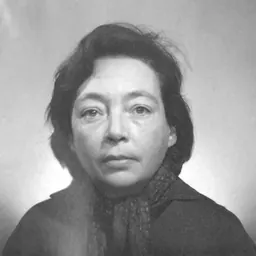



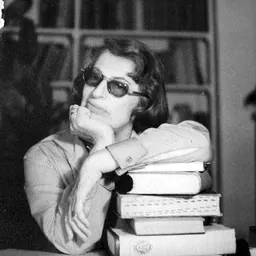
Related people
Same field, nearest in time
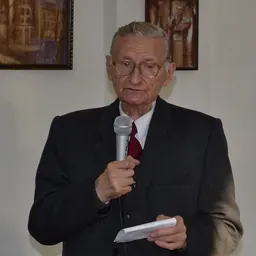


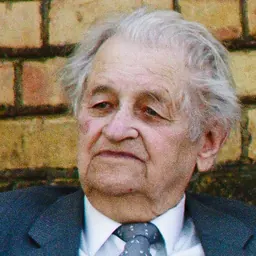
Contemporaries
People whose lives overlapped Alejandra Pizarnik's






Frequently asked questions
Who was Alejandra Pizarnik?
Argentinian poet (1936-1972)
When was Alejandra Pizarnik born?
Alejandra Pizarnik was born on 29 April 1936 in Avellaneda.
When did Alejandra Pizarnik die?
Alejandra Pizarnik died on 25 September 1972 in Buenos Aires.
What was Alejandra Pizarnik's occupation?
Alejandra Pizarnik was a linguist, diarist, poet, translator, literary critic and writer.
What nationality was Alejandra Pizarnik?
Alejandra Pizarnik was Argentine.
Sources & further reading
· Wikipedia: Alejandra Pizarnik
Cite this page
APA: Biography.guide. (2026). Alejandra Pizarnik. https://biography.guide/alejandra-pizarnik/
MLA: "Alejandra Pizarnik." Biography.guide, https://biography.guide/alejandra-pizarnik/.
Chicago: "Alejandra Pizarnik." Biography.guide. https://biography.guide/alejandra-pizarnik/.
Data last updated: 2026-09-20 · Spot an error? Report a correction.
Page generated 2026-09-27 05:24 UTC