
About Alec Kennedy
Lived 1891 – 1959 (aged 68). Alec Kennedy was a British cricketer.
Alexander Stuart Kennedy (24 January 1891 – 15 November 1959) was a Scottish professional cricketer who played in five Test matches for England and had an extensive domestic career with Hampshire in English county cricket, spanning 29 years. Born in Scotland but raised in England, Kennedy made his debut in first-class cricket for Hampshire in 1907. An all-rounder, he formed a potent bowling partnership with fellow all-rounder Jack Newman that spanned 20 years, with the pair sometimes bowling unchanged throughout both innings of a match. A right-handed batsman and right-arm medium pace bowler, Kennedy developed into one of the most durable and consistent all-rounders in county cricket. As a bowler he was known for his accuracy, and his abilities to bowl inswingers and to turn the ball.
After emerging as an all-rounder following the First World War, Kennedy played five Test matches for England on the Marylebone Cricket Club's 1922–23 tour of South Africa. He was chosen as one of five Wisden Cricketers of the Year for 1934. In 677 first-class matches, he took 2,874 wickets, including 225 five wicket hauls. His career total is the seventh highest in first-class cricket, with his 2,549 wickets for Hampshire second only to Derek Shackleton's 2,669. As a batsman, he scored 16,586 runs making ten centuries. Having started out as a tailend batsman, Kennedy's batting improved as his career progressed that by the early 1920s, he was entrusted with opening the batting.
Following his retirement, Kennedy coached cricket at Cheltenham College and later in South Africa from 1947 to 1954. He died on 15 November 1959, having been unwell for several months.
Early life Alexander Stuart Kennedy was born in Edinburgh on 24 January 1891. His family left Scotland when he was a young boy, moving south to England where they settled in Southampton. He took an interest in cricket as a child and would bowl in the nets at the County Ground in Southampton. During this time, he would be coached by Charlie Llewellyn, learning the bowling skills of flight and length by aiming to pitch the ball on a piece of paper in the nets. Kennedy made his debut in first-class cricket for Hampshire as a right-arm medium pace bowler against Leicestershire at Aylestone Road in the 1907 County Championship, taking figures of 4 wickets for 33 rusn in Leicestershire's first innings. He made a second appearance that season, against Warwickshire. He played four first-class matches in the 1908 season, Kennedy gained a regular place in the Hampshire the following season, making 15 appearances and establishing his bowling partnership with Jack Newman, which was to span two decades and form the backbone of the Hampshire attack. He made 20 appearances in 1910, taking 31 wickets for the second successive season.
The following season, Kennedy took a hundred wickets in a season for the first time. whilst against the touring Australians he took 11 wickets in the match, He ended the season as the third leading wicket-taker in the 1912 County Championship, behind Colin Blythe, and George Dennett. At the start of the 1913 season, Kennedy was taken ill with appendicitis, which required an operation. It was expected that this would keep out of the team until July, however, he had returned to the team by June. Against Somerset, he and Arthur Jaques bowled unchanged in the match to dismiss Somerset for scores of 83 and 38. In July, he made his first appearance for the Players in the Gentlemen versus Players fixture. His first match following the cessation of hostilities was for L. G. Robinson's personal team against the Australian Imperial Forces in May 1919, with Kennedy subsequently making two appearances for the MCC at Lord's against Yorkshire and the Australian Imperial Forces. single-handedly leading the Hampshire attack in the absence of Newman, who spent 1919 waiting to be demobilised from the army. Against Surrey at The Oval in June, he took 7 for 47, helping to inflict one of only three home defeats for Surrey between the end of the war and 1927. In 25 first-class matches in 1919, he scored 452 runs and made three half-centuries.
In the 1920 season, Kennedy took 160 wickets from 29 appearances, averaging 18.30; he took five wickets or more in an innings on 16 occasions and ten or more in a match on four. His best innings figures that season, 9 for 33, came in the Championship against Lancashire at Liverpool, Against Sussex at Portsmouth, Kennedy and Newman bowled unchanged throughout the match; In 1921, he scored 1,305 runs, averaging 26.10; he scored two centuries in July,
Achieving consecutive doubles, his 190 first-class wickets for Hampshire remain the most wickets taken in a season for the county. He was a member of the team that played against Warwickshire in June, where Hampshire were dismissed for 15 runs in their first innings, but subsequently went on to win the match by 155 runs, having been forced to follow-on 228 runs behind; Kennedy was one of eight batsmen to be dismissed for zero in the first innings. He combined with Newman in Warwickshire's second innings to bowl Hampshire to victory. Lamenting Hampshire's first innings collapse, Kennedy commented "Every batsman, no matter how good he is, gets a good 'un, some time or other, immediately he gets in - and out he comes. Well, this happened to all of us in one innings." His 200th wicket came at the season-ending Scarborough Festival, and in taking over 200 wickets and scoring over a thousand runs in the season, he achieved a unique double only matched by George Hirst, Maurice Tate, and Albert Trott. Kennedy featured in the five first-class tour matches against South African provincial sides that preceded the Test series, before making his Test debut for England against South Africa at Johannesburg on 23 December. He played in all five Test's on the tour, ending the series as England's leading wicket-taker with 31 at an average of 19.32. He was instrumental in England's success during the 5th Test, Earlier in the series, he had taken 5 for 88 in the 3rd Test at Durban. The cricket journalist Simon Wilde later wrote that his contributions across the series with the ball "were crucial to England's series win". Across the entirety of the tour, Kennedy took 61 wickets in the first-class matches played on the tour (inclusive of the Tests), averaging 16.78. His aggregate placed him three wickets ahead of Percy Fender.
In 1923, Kennedy achieved the double for the third consecutive season. He also scored 1,327 runs, including two centuries, and averaged 25.51. In 1924, he took 135 wickets from 32 matches, averaging 20.85. taking the third hat-trick of his career in the innings. However, his batting form declined, and for the first time in three seasons he did not pass a thousand runs. Kennedy played in fourteen first-class matches during the tour, against a mixture of provincial sides and the South African national team. Returning to England, in the 1925 season, Kennedy took 142 wickets from 33 matches, averaging 18.97 and taking five wickets or more in an innings 11 times. He was afforded a benefit against Surrey in 1926, raising £1,095.
His fortunes reversed in 1927, with Kennedy taking 123 wickets at an average of 22.01 from 30 matches and claiming five wickets or more in an innings on ten occasions.
Career twilight In 1930, Kennedy would take 120 wickets from 32 matches, averaging of 25.72, and took five or more wickets in an innings on seven occasions. having previously coached United Services in Portsmouth. During the season, he took 91 wickets, averaging 29.26 Following the end of the season, he was afforded a testimonial in 1935 in recognition of the services he had rendered to Hampshire cricket; this raised £397. Nevertheless, he returned to the Hampshire team in 1935, playing during the school holidays. Upon his return, he bowled effectively, taking 32 wickets from the seven County Championship matches he played in; and later took 7 for 46 against Northamptonshire. He again played for Hampshire during the school holidays in 1936, making five appearances in which he took 17 wickets. Hampshire came to rely upon Kennedy's bowling, and following his retirement the Hampshire Telegraph reckoned that their bowling had lost much of its effectiveness. His bowling partnership with Newman was described as "one of the most successful in county cricket". For Hampshire, Kennedy made 596 first-class appearances, second to Mead's 700. He held the record for the most first-class wickets for Hampshire until 1967, when it was surpassed by Derek Shackleton. Kennedy took 100 wickets in a season on 15 occasions, taking 120 wickets at 22.84. He was a capable fielder, taking 531 catches in first-class cricket.
Personal life and death Following his retirement, Kennedy continued to coach cricket at Cheltenham College, and following the Second World War, he coached in South Africa from 1947 to 1954. In later life he ran a tobacconist and stationers shop in Southampton. Kennedy was made an honorary life member at Hampshire. He had been in ill health for several months before his death on 15 November 1959 at the Hythe and Dibden War Memorial Hospital in Hythe, Hampshire. Kennedy was married with one daughter, with both surviving him. Paying tribute to Kennedy following his death, his teammate and sports journalist Harold Day expressed "There was never a greater hearted trier than Kennedy, nor was there a fairer bowler".
Don’t just read it —
keep it.
Full-length biographies made to live with: read them, listen on the way to work, watch them tonight.
- E-book
- Audio
- Video
Instant download · yours to keep · every purchase keeps this site free
Important facts
People in Alec Kennedy's life
Named in this biography and alive at the same time



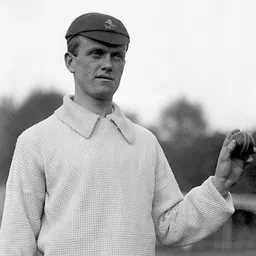
Related people
Same field, nearest in time

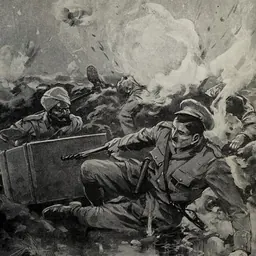
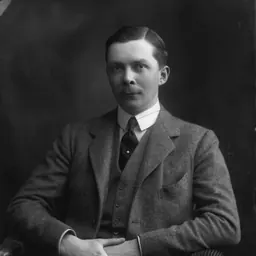


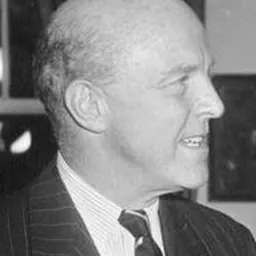
Contemporaries
People whose lives overlapped Alec Kennedy's


Frequently asked questions
Who was Alec Kennedy?
English cricketer (1891-1959)
When was Alec Kennedy born?
Alec Kennedy was born on 24 January 1891 in Edinburgh.
When did Alec Kennedy die?
Alec Kennedy died on 15 November 1959 in Hythe.
What was Alec Kennedy's occupation?
Alec Kennedy was a cricketer.
What nationality was Alec Kennedy?
Alec Kennedy was British.
Sources & further reading
Cite this page
APA: Biography.guide. (2026). Alec Kennedy. https://biography.guide/alec-kennedy/
MLA: "Alec Kennedy." Biography.guide, https://biography.guide/alec-kennedy/.
Chicago: "Alec Kennedy." Biography.guide. https://biography.guide/alec-kennedy/.
Data last updated: 2026-09-20 · Spot an error? Report a correction.
Page generated 2026-09-27 05:30 UTC