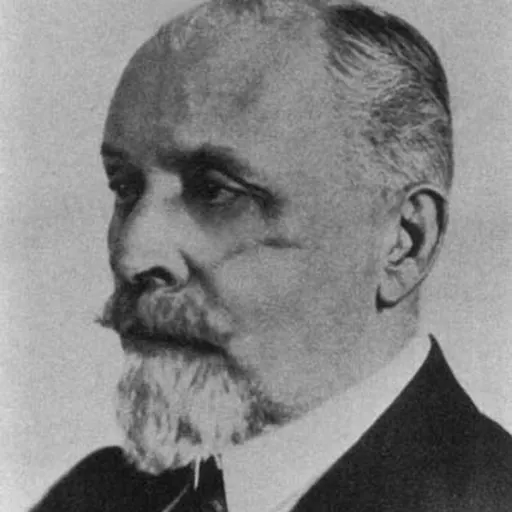
Albert von Schrenck-Notzing
German parapsychologist & psychotherapist
About Albert von Schrenck-Notzing
Lived 1862 – 1929 (aged 66). Albert von Schrenck-Notzing was a German parapsychologist, physician, psychiatrist, psychologist, psychotherapist and writer.
Albert Freiherr von Schrenck-Notzing (18 May 1862 – 12 February 1929) was a German physician, psychiatrist and notable psychical researcher, who devoted his time to the study of paranormal events connected with mediumship, hypnotism and telepathy. He investigated Spiritualist mediums such as Willi Schneider, Rudi Schneider, and Valentine Dencausse. Prior to his exposure as a fraud, Schrenk-Notzig would entertain famous and prestigious clients, including Elisabeth Petznek, the daughter of the late Crown Prince Rudolf von Habsburg He is credited as the first forensic psychologist by Guinness World Records.
Eva C Schrenck-Notzing investigated the medium Eva Carrière and believed the ectoplasm she produced was genuine. However, Schrenck-Notzing did not believe her ectoplasm "materializations" were anything to do with spirits, he claimed they were the result of "ideoplasty" in which the medium could form images onto ectoplasm from her mind. Schrenck-Notzing published the book Phenomena of Materialisation in English translation (1920), which included photographs of the ectoplasm. Critics pointed out that the photographs of the ectoplasm revealed marks of magazine cut-outs, pins and a piece of string.
The psychiatrist Mathilde Ludendorff wrote that the experiments of Schrenck-Notzing were unscientific and that he had been duped by tricks of Carrière. In the Schrenck-Notzing experiments with Carrière the scientific controls were scarce and there was evidence that she had freed her hands in the séance room. Harry Price wrote the photographs of her ectoplasm taken with Schrenck-Notzing look artificial and two-dimensional made from cardboard and newspaper portraits and that there were no scientific controls as both her hands were free. In 1920 Carrière was investigated by the Society for Psychical Research in London. An analysis of her ectoplasm revealed it to be made of chewed paper. She was also investigated in 1922 and the results of the tests were negative. Back issues of the magazine also matched some of Carrière's ectoplasm faces. In 1913 Miss Barkley in an article in the newspaper Neue Wiener Tagblatt had exposed the fraud of Carrière:
Miss Eva prepared the heads before every séance, and endeavoured to make them unrecognizable. A clean-shaven face was decorated with a beard. Grey hairs became black curls, a broad forehead was made into a narrow one. But, in spite of all her endeavours, she could not obliterate certain characteristic lines.
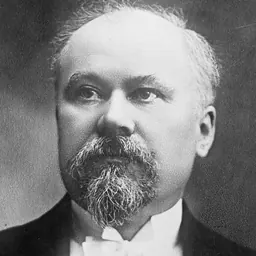
Cut out faces that she used included Woodrow Wilson, King Ferdinand of Bulgaria, French president Raymond Poincaré and the actress Mona Delza. After Schrenck-Notzing discovered Carrière had taken her ectoplasm faces from the magazine he defended her by claiming she had read the magazine but her memory had recalled the images and they had materialized into the ectoplasm.
Ladislas Lasslo The Hungarian medium Ladislas Lasslo (also known as Laszlo Laszlo) confessed that all of his spirit materializations were fraudulent in 1924. A séance sitter was also found to be working as a confederate for Lasslo. Lasslo who was originally endorsed as genuine by Schrenck-Notzing was a pickpocket and army deserter. During his séances he confessed to hiding "spirit heads" made from pieces of gauze in Schrenck-Notzing's pocket or in the seat of his armchair.
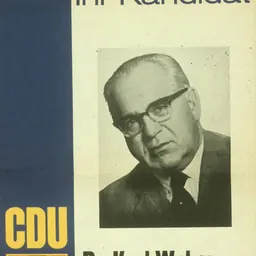
Karl Kraus Karl Kraus (pseudo Karl Weber) was a medium that was exposed as a fraud by Professor Hans Thirring in Vienna in 1924. However, Kraus had been endorsed by Schrenck-Notzing as genuine. Kraus would later write a manuscript about his mediumship. He admitted that he had set out to deceive Schrenck-Notzing to reveal the inefficiency of psychical research. In 1928 Harry Price obtained the Kraus manuscript. Some of the manuscript was later reprinted by the American Society for Psychical Research and Schrenck-Notzing was charged of being a credulous investigator.
Fraud In 1954, the SPR member Rudolf Lambert published a report revealing details about a case of fraud that was covered up by many early members of the Institute Metapsychique International (IMI). Lambert who had studied Gustav Geley's files on Eva Carrière discovered photographs depicting fraudulent ectoplasm taken by her companion Juliette Bisson.
Don’t just read it —
keep it.
Full-length biographies made to live with: read them, listen on the way to work, watch them tonight.
- E-book
- Audio
- Video
Instant download · yours to keep · every purchase keeps this site free
Important facts
People in Albert von Schrenck-Notzing's life
Named in this biography and alive at the same time


Related people
Same field, nearest in time



Contemporaries
People whose lives overlapped Albert von Schrenck-Notzing's




Frequently asked questions
Who was Albert von Schrenck-Notzing?
German parapsychologist & psychotherapist (1862-1929)
When was Albert von Schrenck-Notzing born?
Albert von Schrenck-Notzing was born on 18 May 1862 in Oldenburg, Osternburg.
When did Albert von Schrenck-Notzing die?
Albert von Schrenck-Notzing died on 12 February 1929 in Munich.
What was Albert von Schrenck-Notzing's occupation?
Albert von Schrenck-Notzing was a parapsychologist, physician, psychiatrist, psychologist, psychotherapist and writer.
What nationality was Albert von Schrenck-Notzing?
Albert von Schrenck-Notzing was German.
Sources & further reading
· Wikipedia: Albert von Schrenck-Notzing
· DBpedia: Albert von Schrenck-Notzing
Cite this page
APA: Biography.guide. (2026). Albert von Schrenck-Notzing. https://biography.guide/albert-von-schrenck-notzing/
MLA: "Albert von Schrenck-Notzing." Biography.guide, https://biography.guide/albert-von-schrenck-notzing/.
Chicago: "Albert von Schrenck-Notzing." Biography.guide. https://biography.guide/albert-von-schrenck-notzing/.
Data last updated: 2026-09-24 · Spot an error? Report a correction.
Portrait: Wikimedia Commons · author & licence
Page generated 2026-09-27 05:08 UTC