
About Albert Sutton
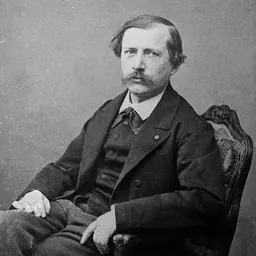
Lived 1867 – 1923 (aged 56). Albert Sutton was an American architect.
Albert Sutton (June 6, 1867 – November 18, 1923) was a Canadian-born American architect active in the Pacific Northwest.
Early life and education Albert Sutton was born on June 6, 1867, in Victoria, British Columbia, the eighth of nine children to John and Anna Sutton. His father led a seafaring life as chief engineer in the Pacific Squadron of the U.S. Navy during the 1860s and was on the George S. Wright Steamer when it disappeared in January 1873 off Sitka, Alaska, on its way back to Portland, Oregon.
Sutton grew up in Portland, where his family moved when he was a young boy, and attended public schools there. He relocated to Berkeley, California, for two years of study at the University of California.
Pickles & Sutton, Tacoma In 1888, Sutton moved to Tacoma, Washington, during its railroad boomtown period, when it served as the western terminus of the newly completed northern transcontinental railroad. Sutton, in his early twenties, fortunately was able to became a junior partner with architect James Pickles, who was thirty. Together, Pickles & Sutton designed many of the historic commercial buildings in Tacoma in the early boom years, using design elements from the Romanesque Revival style which was in vogue at the time. Their portfolio included the Sprague Block (1888); the Sprague Building (1889); the U.S. Post Office (1889); the Abbot Building (1889); the Uhlman Block (1889); the Baker Building (1889); the Wolf Building (1889); the Dougan Block (1890); the Holmes & Ball Furniture Co. (1890); the Joy Block (1892); and the Berlin Building (1892). moving to San Francisco the following year, where they had two daughters, Alberta and Anna.
Sutton & Weeks, San Francisco
St. Peter's Chapel, Mare Island: designed by Albert Sutton, 1900, NRHP-listed In San Francisco, Sutton entered a 1895 design competition for new buildings to house the affiliated colleges of the University of California, including the College of Medicine, the College of Dentistry & Pharmacy, and the College of Law. Although he did not win the award, he garnered among five finalists the largest support of the board of regents on its first two ballots and established his presence as an architect.
In 1896, he designed a new building for the Good Samaritan Mission near 2nd and Folsom Streets in San Francisco. The following year, he was selected by the board of trustees to design a new $125,000 homeopathic hospital on Lake street between 14th and 15th avenues of San Francisco, with support from philanthropist Phoebe Hearst for a children's ward. In 1900, he designed the St. Peter's Chapel, Mare Island, which was dedicated in 1901. It is listed in the National Register of Historic Places and is the oldest extant U.S. Navy chapel.
Around 1903, Sutton formed the firm of Sutton & Weeks with junior partner Charles Peter Weeks (1870–1928), which increased his reach in California. Their portfolio ranged from the Pacific Hardware and Steel Company Building (San Francisco, 1904), which is listed in the National Register of Historic Places, to the Citizens' National Bank of San Francisco (1905), and the Zeta Psi House in Berkeley (1910). Other works designed were, according to historian Carey, "the Farmers & Merchants Bank at Oakland, the John A. Roebling's Sons Company building at San Francisco, said to be one of the best examples of fireproof construction in the country...".
After a public contested divorce and child custody battle in the courts, Sutton received custody of the two daughters, remarried in 1909 to Marie L. Hewitt of Tacoma, and retired to a ranch in Hood River, Oregon, the following year – only in his early forties. His second marriage added two children, Rocena and John Hewitt.
Sutton & Whitney, Portland
Sutton resumed his practice of architecture in 1912, when he returned to his childhood city of Portland, and joined forces with junior partner Harrison Allen Whitney (1877–1962). The two formed a prosperous alliance for more than a decade. the Meier & Frank Warehouse, costing one million dollars, and the Scottish Rite Cathedrals in Portland and Tacoma.
Death Sutton died at the home of his mother-in-law in Tacoma, of congestive heart failure, on November 18, 1923, aged 56. At the time of his death, he was supervising several projects in Tacoma, including the Annie Wright seminary and the new College of Puget Sound campus. According to the Pacific Builder and Engineer, Sutton "was, with one exception, the oldest practicing architect on the [West] Coast."
Don’t just read it —
keep it.
Full-length biographies made to live with: read them, listen on the way to work, watch them tonight.
- E-book
- Audio
- Video
Instant download · yours to keep · every purchase keeps this site free
Important facts
People in Albert Sutton's life
Named in this biography and alive at the same time




Related people
Same field, nearest in time



Contemporaries
People whose lives overlapped Albert Sutton's




Frequently asked questions
Who was Albert Sutton?
American architect
When was Albert Sutton born?
Albert Sutton was born on 6 June 1867 in British Columbia.
When did Albert Sutton die?
Albert Sutton died on 18 November 1923 in Tacoma.
What was Albert Sutton's occupation?
Albert Sutton was an architect.
What nationality was Albert Sutton?
Albert Sutton was American.
Sources & further reading
· DBpedia: Albert Sutton (architect)
Cite this page
APA: Biography.guide. (2026). Albert Sutton. https://biography.guide/albert-sutton/
MLA: "Albert Sutton." Biography.guide, https://biography.guide/albert-sutton/.
Chicago: "Albert Sutton." Biography.guide. https://biography.guide/albert-sutton/.
Data last updated: 2026-09-20 · Spot an error? Report a correction.
Page generated 2026-09-27 05:17 UTC