
About Albert Schmidt
Lived 1890 – 1974 (aged 83–84). Albert Schmidt was a neurologist.
Albert Smidt (c. 1847 – 18 November 1890) was a German-born Australian serial killer who murdered two men (and possibly a third) in south-east New South Wales. Smidt was convicted of the murder in April 1890 of his travelling companion, John Young Taylor, and hanged for the crime at Wagga Wagga. It was strongly believed that Smidt had also murdered Jacob Rick, a travelling companion of both he and Taylor, but the investigation of Rick's disappearance stalled after police failed to locate his body. It was also suspected that Smidt had earlier murdered an unidentified man whose decapitated body was found in the Murrumbidgee River in October 1888, on 'Gellingroe' station downstream from Gundagai. However, Smidt's role in that murder remained a matter of conjecture. He was hanged at Wagga Wagga in November 1890.
Biography
A German immigrant
Albert Smidt was born in about 1847 in Potsdam in Prussia, Germany. Rev. MacIntyre of Wagga Wagga, who frequently visited Smidt after he had been charged with murder in 1890, formed the opinion that Smidt was "a fairly educated and intelligent man, who had received in his youth a good deal of religious instruction".
In a statement made to the police in May 1890, Smidt claimed to have been in Australia for "eight or nine years" (i.e., since about 1881 or 1882), having initially arrived in Queensland. A later newspaper article recorded that Smidt "arrived in Victoria from New Zealand".
In Australia Smidt was an itinerant miner, prospector and rural worker. In about 1888 or 1889 Smidt possibly worked as a fisherman on the Murrumbidgee River in the vicinity of Gundagai. Another newspaper report stated that Smidt may have been in the Murrumbidgee district as early as 1881 or 1882, at which time he "employed himself fishing in the river". After he was charged with murder in April 1890, enquiries by the police ascertained that Smidt had been working as a prospector in the Wee Jasper district, east of Gundagai, since about 1888. It was reported that "he used to go away occasionally, and on his return always seemed to have a good supply of money".
A newspaper article in November 1890 described Smidt, who at the time was awaiting execution, as a man of about five feet 4 inches in height (1.63 m.), of medium build, and "inclined to be of fair complexion, although considerably sun-burnt". The prisoner's face was described as having "a sullen look", with "a low forehead, receding head, gray eyes, small moustache and 'goatee' beard".
The 'Gellingroe' murder
On Wednesday, 17 October 1888, the pastoralist Richard Whitacker, of 'Gellingroe' station (about twenty miles downstream from Gundagai), was fishing in the Murrumbidgee River about half a mile from his homestead when he discovered the headless, naked body of a man snagged on a log in the river. Whitacker informed the police at Gundagai and Constable Nickson was sent to investigate and take charge of the body. Nickson soon determined the man had been murdered “by one who is no novice in the business”. The man's head had been severed from the body by two distinct cuts, a piece of flesh was hanging from the shoulders and there were further marks of violence on the back and arms, indicating a fierce struggle with the killer had taken place. Nickson secured the body with ropes until it could be removed from the river. The body was “very much swollen and bloated”, reckoned to have been in the water less than three weeks. The man was estimated to be under 30 years of age, about five feet four inches (1.62 m.) tall, with the appearance of a healthy, muscular man. No trace of the head or clothing could be found. There had been no reports of a missing person from the district, suggesting that the murdered man had been a stranger to the area.
The murder of the unidentified man in 1888, found decapitated in the Murrumbidgee River downstream from Gundagai on 'Gellingroe' station, remained unsolved. In April 1890 Albert Smidt was arrested for the murder of his companion, John Young Taylor. The fact that Smidt had decapitated Taylor and buried the head and body in different locations led to speculation that Smidt had also been responsible for the earlier Gellingroe murder. After Smidt's arrest Inspector Charles Harrison from Wagga Wagga led the investigation into Smidt's possible involvement, as well as the circumstances surrounding the later disappearance of Smidt's companion, Jacob Rick. It was reported in May 1890 that "the police are in possession of information which leaves no doubt that [Smidt] was in the neighbourhood of Gundagai at the time" of the Gellingroe murder. It was at Peak Hill, north of Parkes, where the two men met Alfred Smidt, and began working and travelling with him. Soon afterwards, finding the prospects at Peak Hill less than what they had anticipated, the two Rushworth miners, together with Smidt and another man named Tubbenhaur, decided to move on. The four men left Peak Hill in November 1889, travelling in a horse-drawn waggonette, and proceeded to the Good Friday Gully, near Young in inland south-east New South Wales, where they began working an old claim. After four days Taylor travelled to Peak Hill to collect property belonging to Rick and then returned to Rushworth. After a further nine days Rick, Smidt and Tubbenhaur abandoned the claim at Good Friday Gully. The waggonette was taken into Young for repairs, after which the three miners travelled to old diggings south of Young, between Wombat and Murrumburrah, arriving there on December 6 and establishing a camp. For the next eight days Rick, Smidt and Tubbenhaur were employed by a local farmer in harvesting work. Tubbenhaur then left the group, and Rick and Smidt travelled to the Wee Jasper district, east of Gundagai at the foot of the Brindabella Ranges, a region familiar to Smidt. The two men were not seen again until the evening of December 31 when they camped at Shaking Bog Crossing on Adjungbilly Creek, near Thomas Bell's selection and five miles from Anderson's place. The following day, 1 January 1890, Rick and Smidt were taken by a local miner, Margules Keinitz, "to a likely prospecting site" in Garner's paddock in the Tumorrama district. They were observed by other miners at the location, shortly after noon on New Year's Day. Smidt and Rick prospected at the reef for only about an hour, before moving on later that afternoon.
Subsequent police investigations led to the conclusion that Jacob Rick was probably murdered by Smidt later in the afternoon of 1 January 1890, as the prospecting reef in Garner's paddock was the last place at which Rick was seen alive. At about four o'clock that same afternoon, Smidt, alone and leading the pack-horse, called at Bell's dwelling and purchased some butter. He then proceeded to Anderson's place, arriving there towards evening. When he was later interviewed by the police, Anderson recalled Smidt's "excited manner" on this occasion. On January 11 he arrived at Goode's wine shop at Eight-mile Creek, eight miles from Albury on the Sydney-road, where he remained until the 18th. Smidt left the waggonette with Goode and turned out the horse, asking the proprietor to sell both "if he could find a purchaser". He then travelled by coach to Albury, telling Goode "he intended proceeding to Victoria".
Taylor's murder
After Smidt crossed into Victoria at Albury in January 1890, he travelled to Rushworth. He stayed at a hotel in town for a few days until he ascertained where Taylor was living. He then "renewed his acquaintance" with Taylor, "and followed him about like a dog". Eventually, Smidt was able to persuade Taylor to go to the Tumbarumba diggings, where he claimed there was plenty of gold to be found by sluicing. Taylor purchased a new dray, as well as a red waggonette with a white tilt (canvas canopy), and two horses. The two men left Rushworth on about February 23 for Tumbarumba, on the western edge of the Snowy Mountains. At seven o'clock in the morning he pulled up at the Caledonian Hotel, on the Junee road at North Wagga, and purchased a bag of chaff from the publican. After this incident, the two policemen continued "as fast as possible" along the road with their prisoner. At O'Donnell's Caledonian Hotel, two miles from Wagga, they were met by Inspector Harrison and the Police Magistrate, Henry Baylis. By this time Smidt had lost consciousness. Dr. Druitt arrived shortly afterwards and stitched the wounds and Smidt was taken into Wagga and conveyed to the hospital.
Finding Taylor's remains
An illustration of the severed head of John Young Taylor (published in April 1890).
After Smidt's apprehension, searches were initiated to locate Taylor's body. Constables were sent out along the route taken by Smidt and every likely spot was "dilligently searched".
The body was conveyed by mail train to Wagga, arriving there on Sunday morning, April 12. It was taken to the police barracks where a post-mortem examination was performed by Dr. Thomas Hillas and Dr. St. Clair Long and the connection of the two separate portions established. By then the body was in a more advanced state of decomposition, "and was sending off a strong effluvia". Rev. MacIntyre continued to visit the prisoner in hospital, who was spending "a good deal of his time in reading the Bible".
Before the inquest commenced on Monday, 28 April 1890, at the Wagga Court House, Smidt was brought before Henry Baylis, the Police Magistrate at Wagga, and charged with having two horses and a waggonette, together with its contents, in his illegal possession and he was formally remanded in custody. The adjourned inquest into John Young Taylor's death resumed at 10 a.m. before the district coroner, Leonard A. Fosbery, and a jury of fifteen. Smidt's appearance in court was described as "very pale and much emaciated, but he was thoroughly self possessed and apparently emotionless". A pair of "stalwart" constables stood on either side of his chair at the end of the solicitors' table. After the evidence had concluded, the prisoner Smidt indicated that he wished to say something additional to his written statement. Smidt was placed in the winess box and had the oath administered to him. The prisoner spoke in so low a voice that he was inaudible to the courteroom, but his words were conveyed by Inspector Harrison (who was standing beside him). Smidt said he had no intention to kill Taylor, claiming: "When I first knocked Taylor down with the tomahawk I thought he was dead, that I had killed him". He added: "Shortly afterwards I cut his throat thinking he was dead". Smidt remained incarcerated at the Goulburn jail, "where better facilities exist for his safe keeping", until his trial in September.
After the unsuccessful search for Rick's remains, Senior-constable Dixon sought to follow the route taken by Smidt after leaving the Wee Jasper district in early-January 1890. The policeman "had little difficulty" in tracing Smidt's route, with roadside innkeepers and residents "readily identifying" a photograph of Smidt. After Smidt's arrest in April, a silver watch was found in his possession, which he claimed as his own. Police investigations subsequently revealed that the inscribed number on the watch tallied with that of a watch sold to Rick by a watch-maker at Rushworth.
When the trial commenced on September 29 the evidence presented by the prosecution was substantively similar to that given at the inquest in late-April. No evidence was called for the defence.
After Smidt's trial, in an effort to have Smidt's execution carried out elsewhere, the Wagga Municipal Council sent a letter to the New South Wales Minister of Justice, "pointing out that the public sentiment was shocked by hangings being permitted to take place within the precincts of a small jail situated in the very heart of the business part of town". The Minister's reply stated that "the Government could not see their way to any alteration being made in the arrangements for the execution of the criminal". On October 28 the Executive Council met and established November 18 as the date for the sentence of the Court to be carried out.
The scaffold was constructed in the jail-yard, thirty yards away from Smidt's cell. The structure was composed of heavy timbers and painted black. During the construction, efforts were made to reduce noise as much as possible. The timbers were cut to length outside the jail and "screw nails" were used to secure the joints. The hangman, Robert Howard, and his assistant arrived from Sydney a week before the execution and were provided with quarters at the jail. In an effort to conceal the scaffold from houses adjacent to the jail, a wide canvas screen was placed around two sides of the jail walls.
At five o'clock in the afternoon the coffin containing Smidt's body was placed in the hearse. It was taken to the town cemetery and placed in the prepared hole in unconsecrated ground adjoining the cemetery proper. As reported in one of the local newspapers: "A hastily made mound now marks the place of confinement of the relics of one whose presence the world was well rid of, and for whose departure from here at the hangman's hands no one regrets".
The victims
Jacob Rick – born in about 1835 in Hochkirch in Württemberg, Germany. Taylor had emigrated to the colony of Victoria by the mid-1850s (during the goldrush era), and eventually settled at Rushworth. He worked as a miner and prospector in the Victorian and New South Wales goldfields, as well as engaging in rabbiting and railway construction work. Taylor worked as a cart-driver for Fishburn and Morton during the construction of the Junee to Narrandera railway line (completed in 1881). Taylor was five feet 11 inches in height, with grey hair and "silvered" whiskers towards the end of his life. His surname appears in newspaper records as 'Smidt', 'Schmidt', 'Smitz' and 'Smith'.
Don’t just read it —
keep it.
Full-length biographies made to live with: read them, listen on the way to work, watch them tonight.
- E-book
- Audio
- Video
Instant download · yours to keep · every purchase keeps this site free
Important facts
People in Albert Schmidt's life
Named in this biography and alive at the same time



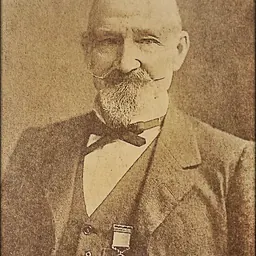


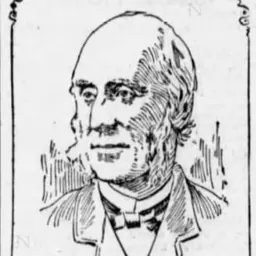
Related people
Same field, nearest in time
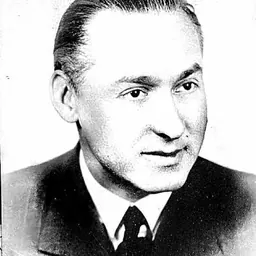

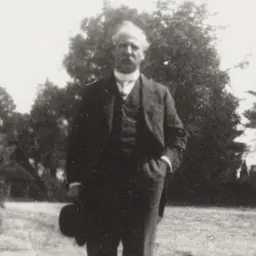
Contemporaries
People whose lives overlapped Albert Schmidt's




Frequently asked questions
Who was Albert Schmidt?
Prussian-born Australian murderer
When was Albert Schmidt born?
Albert Schmidt was born in 1890.
When did Albert Schmidt die?
Albert Schmidt died in 1974.
What was Albert Schmidt's occupation?
Albert Schmidt was a neurologist.
Sources & further reading
Cite this page
APA: Biography.guide. (2026). Albert Schmidt. https://biography.guide/albert-schmidt-neurologist/
MLA: "Albert Schmidt." Biography.guide, https://biography.guide/albert-schmidt-neurologist/.
Chicago: "Albert Schmidt." Biography.guide. https://biography.guide/albert-schmidt-neurologist/.
Data last updated: 2026-09-20 · Spot an error? Report a correction.
Page generated 2026-09-27 05:04 UTC