
About Albert Memmi
Lived 1920 – 2020 (aged 99). Albert Memmi was a French and Tunisian writer and essayist.
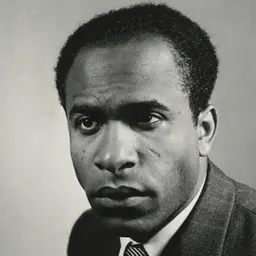
Albert Memmi (; 15 December 1920 – 22 May 2020) was a French-Tunisian writer and essayist of Tunisian Jewish origins. A prominent intellectual, his nonfiction books and novels explored his complex identity as an anti-imperialist, deeply related to his ardent Zionism.
Biography Memmi was born in Tunis, French Tunisia in December 1920, one of 13 children of Tunisian Jewish Berber Maïra (or Marguerite) Sarfati and Tunisian-Italian Jewish Fradji (or Fraji, or François) Memmi, a saddle maker. During the Nazi occupation of Tunisia, Memmi was imprisoned in a forced labor camp from which he later escaped.
Memmi started Hebrew school when he was 4. He was educated in French primary schools, and continued his secondary studies at the prestigious Lycée Carnot de Tunis in Tunis, where he graduated in 1939. During World War II, he was studying philosophy at the University of Algiers when France's collaborationist Vichy regime implemented anti-Semitic laws. As a result, he was expelled from the university and subsequently sent to a labor camp in eastern Tunisia. After the war, Memmi resumed his studies at the Sorbonne in Paris and married Marie-Germaine Dubach, a French Catholic, with whom he had three children. The family returned to Tunis in 1951, where Memmi taught high school. and at the University of Nanterre.
Despite his support for Tunisian independence, once Tunisia achieved independence in 1956, Memmi moved to France. Memmi wrote about his conflicted sense of identity in The Pillar of Salt (1953):I am a Tunisian, but of French culture. I am Tunisian, but Jewish, which means that I am politically and socially an outcast. I speak the language of the country with a particular accent and emotionally I have nothing in common with Muslims. I am a Jew who has broken with the Jewish religion and the ghetto, is ignorant of Jewish culture and detests the middle class. He died in May 2020, in Neuilly-sur-Seine, France, at the age of 99.
Writings Memmi found himself at the crossroads of three cultures, and based his work on the difficulty of finding a balance between the East and the West.
Memmi's well-regarded first novel, La statue de sel (translated as The Pillar of Salt), was published in 1953 with a preface by Albert Camus and was awarded the Fénéon Prize in 1954. His vivid story of an escape from a Tunisian ghetto was semi-autobiographical. The backgrounds of the protagonist's parents matched his own. His other novels include Agar (translated as Strangers), Le Scorpion (The Scorpion), and Le Desert (The Desert).
His best-known non-fiction work is The Colonizer and the Colonized, about the interdependent relationship of the two groups. It was published in 1957, a time when many national liberation movements were active. Jean-Paul Sartre wrote the preface. The work is often read in conjunction with Frantz Fanon's Les damnés de la Terre (The Wretched of the Earth) and Peau noire, masques blancs (Black Skin, White Masks) and Aimé Césaire's Discourse on Colonialism. In October 2006, Memmi's follow-up to this work, entitled Decolonization and the Decolonized, was published. In this book, Memmi suggests that in the wake of global decolonization, the suffering of former colonies cannot be attributed to the former colonizers, but to the corrupt leaders and governments that control these states.
Memmi's related sociological works include Dominated Man, Dependence, and Racism.
Memmi wrote extensively on Jewish identity and the place of the Jew in Muslim North African states after independence, including Portrait of a Jew, Liberation of the Jew and Jews and Arabs.
He was also known for the Anthology of Maghrebian literature (written in collaboration) published in 1965 (vol. 1) and 1969 (vol. 2).
Reviewing Memmi's fiction, scholar Judith Roumani asserts that the Tunisian writer's work "reveals the same philosophical evolution over time from his original viewpoints to less radical but perhaps more realistic positions." She concludes that "his latest fiction is certainly more innovative and different than his earlier work."
In his review for The New York Times, essayist and critic Richard Locke described Albert Memmi's earlier novels as memoirs "recorded with a cleareyed sensitivity, a modest candor, and remarkable strength." He likened Memmi to "a Tunisian Balzac graced with Hemingway's radical simplicity and sadness." Locke further wrote, "But ultimately, it is Memmi's heart, not his skill, that moves you: the sights and sounds of Tunis, the childhood memories, the brothers' sympathetic and contrasting voices, their all-too-human feelings, have a resonance that reawakens for a while the ghost of European humanism."
In a 2018 article for The Jewish Review of Books, Daniel Gordon wrote that Memmi “has combined, perhaps more than any other writer since World War II, the compassion needed to articulate the suffering of oppressed groups with the forthrightness needed to censure them for their own acts of oppression.”
In 1995, Memmi said of his own work: "All of my work has been in sum an inventory of my attachments; all of my work has been, it should be understood, a constant revolt against my attachments; all of my work, for certain, has been an attempt at...reconciliation between the different parts of myself."
Refuting scientific racism
In Racisme (Racism in English), Memmi defined racism as a social construction assigning values to biological differences (both real and imagined) “to the advantage of the one defining and deploying them, and to the detriment of the one subjected to that act of definition”. In doing so, he countered three major arguments of scientific racism— a pseudoscientific belief in the existence of empirical evidence in support of racist beliefs. First, that pure and distinct races exist; second, that biologically ‘pure’ races were superior to others; and finally, that superior races had legitimate dominance over others. Memmi opposed this belief, asserting biological differences across human beings correlated with changes in geography, and that biological purity was a particular human fantasy. Memmi also pointed out that no evidence existed in support of the idea of racial purity, and merit, rather than biology, was the only basis of superiority. In this way, Memmi's arguments for racism as a social construct were important in refuting the notion of science as a basis for racist thought.
Sean P. Hier, in a review of Memmi's Racism, calls it "well-written and autobiographically informed." He writes that Memmi's main claim is that racism is a "'lived experience' arising within human situations which only secondarily become 'social experiences.' According to Hier, Memmi writes that racism is "endemic to collective human existence."
Don’t just read it —
keep it.
Full-length biographies made to live with: read them, listen on the way to work, watch them tonight.
- E-book
- Audio
- Video
Instant download · yours to keep · every purchase keeps this site free
Important facts
People in Albert Memmi's life
Named in this biography and alive at the same time





Related people
Same field, nearest in time



Contemporaries
People whose lives overlapped Albert Memmi's





Frequently asked questions
Who was Albert Memmi?
French writer of Tunisian-Jewish origin
When was Albert Memmi born?
Albert Memmi was born on 15 December 1920 in Tunis.
When did Albert Memmi die?
Albert Memmi died on 22 May 2020 in 4th arrondissement of Paris.
What was Albert Memmi's occupation?
Albert Memmi was a writer and essayist.
What nationality was Albert Memmi?
Albert Memmi was French and Tunisian.
Sources & further reading
Cite this page
APA: Biography.guide. (2026). Albert Memmi. https://biography.guide/albert-memmi/
MLA: "Albert Memmi." Biography.guide, https://biography.guide/albert-memmi/.
Chicago: "Albert Memmi." Biography.guide. https://biography.guide/albert-memmi/.
Data last updated: 2026-09-26 · Spot an error? Report a correction.
Page generated 2026-09-27 05:15 UTC