
Albert Kūnuiākea
Politician in the Kingdom of Hawaii and the Republic of Hawaii
About Albert Kūnuiākea
Lived 1851 – 1903 (aged 51). Albert Kūnuiākea was a politician.
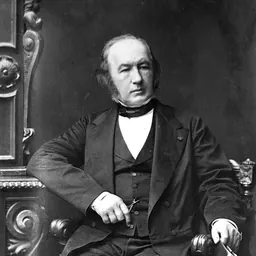
Albert Kūkaʻilimoku Kūnuiākea (June 19, 1851 – March 10, 1903) was the illegitimate son of King Kamehameha III and his mistress Jane Lahilahi. He served as a politician in the Kingdom of Hawaii and the Republic of Hawaii. He later was baptized into the Anglican Church of Hawaii with the name Albert Fredrick Kunuiakea Oiwiaulani Koenaokalani.
Early life and family Kūnuiākea was born on June 19, 1851, at his mother's residence at Kuaihelani, on Beretania Street, Honolulu, where the Central Union Church now stands. He and his twin brother were born to King Kamehameha III and his mistress Jane Lahilahi. Lahilahi was married to Joshua Kaʻeo by whom she had a son named Peter Kaʻeo, his older half-brother. From his mother's family, he was the grandson of John Young, the British advisor of Kamehameha I, and Kaʻōanaʻeha, the daughter of Kamehameha I's brother Keliʻimaikaʻi. In the Hawaiian language, his name Kūnuiākea means "Kū the Supreme One" while his second name Kūkaʻilimoku means "Kū the Snatcher of Land" and honor the war god Kū, the patron deity of his grandfather King Kamehameha I who conquered and unified the Kingdom of Hawaii in 1810.
Sources are disputed on the name and exact fate of his twin brother. Under the name Kīwalaʻō, it was claimed he was taken by Kamehameha III and his wife Queen Kalama to raise while Kūnuiākea was brought back to his maternal family to be reared. The Hawaiian custom of hānai is an informal form of adoption between extended families practiced by Hawaiian royals and commoners alike. Other genealogy of the Young family name a son by Lahilahi and Kaʻeo called Alebada Keliʻimaikaʻi. He was adopted by their maternal uncle James Kānehoa and died on October 13, 1851. This may or may not be the same person as Kīwalaʻō. When this brother died as an infant, Kūnuiākea was hānai (adopted) to the royal couple and raised at the Royal Palace.
Succession to the throne Kamehameha III died in 1854 and was succeeded by his nephew and adopted heir Alexander Liholiho as Kamehameha IV. Kūnuiākea was not eligible for the throne since the Hawaiian constitution only permitted succession through legitimate lines. Later, non-contemporary sources claimed Kamehameha III wanted Kūnuiākea in the succession. According to an 1883 publication of the Hawaiian newspaper Ka Nupepa Kuokoa, Kamehameha III wanted to make Kūnuiākea his second heir after Alexander Liholiho. However, Kūnuiākea's maternal uncle Keoni Ana, who was Minister of the Interior and the Kuhina Nui (premier or co-ruler), opposed this plan and insisted that Alexander Liholiho be followed by Lot Kapuāiwa. Keoni Ana's opposition stopped Kamehameha III's plan.
Adulthood In 1862, he was baptized Albert Fredrick Kunuiakea Oiwiaulani Koenaokalani into the newly established Anglican Church of Hawaii founded by his cousin Queen Emma and her husband Kamehameha IV.
Kūnuiākea was betrothed to Miriam Likelike, the younger sister of King Kalākaua and Queen Liliʻuokalani. However, she married Scottish businessman Archibald Scott Cleghorn and became the mother Princess Kaʻiulani. It was speculated that Kūnuiākea would have been the natural choice for heir to his childless cousin if Emma had won the election.
On January 17, 1893, the monarchy was overthrown and Queen Liliʻuokalani was deposed by the Committee of Safety with the covert support of United States Minister John L. Stevens and the landing of American forces from the USS Boston. After a brief transition under the Provisional Government, the oligarchical Republic of Hawaii was established on July 4, 1894, with Sanford B. Dole as president. During this period, the defacto government was composed largely of residents of American and European ancestry, although a few Native Hawaiians including Kūnuiākea served in political roles. He became a member of the Constitutional Convention charged with drafting a new constitution for the Republic and was one of the five Native Hawaiian signatories of the document.
Death and funeral Kūnuiākea died on March 10, 1903, in Honolulu, at the age of 51. As a sign of respect to his position as one of the last descendants of Kamehameha the Great, the Hawaiian territorial government held a state funeral for Kūnuiākea. After lying in state in the former throne room of the ʻIolani Palace, he was laid to rest at the Royal Mausoleum at Mauna ʻAla. His remains were moved along with political advisor Robert Crichton Wyllie and other members of Queen Emma's family to the newly-built Wyllie Tomb in June 1904.
Don’t just read it —
keep it.
Full-length biographies made to live with: read them, listen on the way to work, watch them tonight.
- E-book
- Audio
- Video
Instant download · yours to keep · every purchase keeps this site free
Important facts
Family & relationships
People in Albert Kūnuiākea's life
Named in this biography and alive at the same time




Related people
Same field, nearest in time





Contemporaries
People whose lives overlapped Albert Kūnuiākea's


Frequently asked questions
Who was Albert Kūnuiākea?
politician in the Kingdom of Hawaii and the Republic of Hawaii (1851-1903)
When was Albert Kūnuiākea born?
Albert Kūnuiākea was born on 19 June 1851 in Honolulu.
When did Albert Kūnuiākea die?
Albert Kūnuiākea died on 10 March 1903 in Honolulu.
What was Albert Kūnuiākea's occupation?
Albert Kūnuiākea was a politician.
Sources & further reading
Cite this page
APA: Biography.guide. (2026). Albert Kūnuiākea. https://biography.guide/albert-kunuiakea/
MLA: "Albert Kūnuiākea." Biography.guide, https://biography.guide/albert-kunuiakea/.
Chicago: "Albert Kūnuiākea." Biography.guide. https://biography.guide/albert-kunuiakea/.
Data last updated: 2026-09-20 · Spot an error? Report a correction.
Page generated 2026-09-27 05:29 UTC