
About Albert Heschong
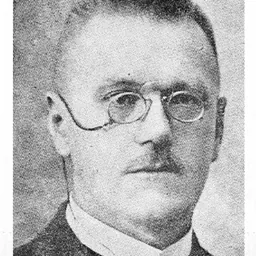
Lived 1919 – 2001 (aged 82). Albert Heschong was an American designer and production designer.
Elmer Albert Heschong (February 22, 1919 – March 1, 2001) was an American art director and production designer, principally for television. In a career that spanned more than 40 years, he worked on over 2,500 productions and was posthumously inducted into the Art Directors Guild Hall of Fame.
A native of Cincinnati, he served in the United States Army during World War II and worked in scenic design for the live theater after the war. He began working for the American Broadcasting Company in 1949 and worked on the network's early live drama series, Pulitzer Prize Playhouse and Celanese Theatre. He continued to work on live television drama in the 1950s, working on United States Steel Hour, Climax!, and Playhouse 90. He won an Emmy Award for his art direction on Playhouse 90s 1956 production of Requiem for a Heavyweight.
In the 1960s, he worked on multiple CBS series, including Gunsmoke (1961–1973), The Wild Wild West (1965–1967), and Hawaii Five-O (1968–1969). During the 1970s and 1980s, he worked principally on television movies, winning Emmy nominations for his work on Rascals and Robbers: The Secret Adventures of Tom Sawyer and Huckleberry Finn (1982) and My Wicked, Wicked Ways: The Legend of Errol Flynn (1985).
Early years Heschong was born in Cincinnati in 1919. His father, Albert Heschong, designed and made clothing. As a boy, he enjoyed building model boats and airplanes, drawing, and building things with Erector Sets. He attended Walnut Hills High School in Cincinnati, graduated cum laude, and was voted "most all-around boy in the class."
After the war, Heschong returned to Carnegie Tech to finish his degree. He was then hired to assist in teaching scenic design at Carnegie Tech. For the first episode, You Can't Take It with You, he built a large Victorian house set for $15,000.
While at ABC, he also worked with Alex Segal on the live drama series Celanese Theatre, including productions of Abe Lincoln in Illinois (1950) with Raymond Burr, Winterset (1951) with Burgess Meredith, Ah Wilderness (1951), Anna Christie (1952), and The Street Scene (1952). In the early 1950s, the ABC art department in New York worked out of a building that had previously been horse stables. They built sets using quarter-inch plywood on one-by-three framing. For A Garden in the Sea, he designed a villa in Venice, including a gondola approaching the villa.
First stint at CBS In the fall of 1955, he moved to Los Angeles to work for CBS. His first series for CBS was Climax! with Martin Manulis.
During the 1963–64 season, he also worked on The Great Adventure. The first episode of that series was "The Hunley", a story about a Civil War submarine. He prepared a full-size submarine (full-size exterior and interiors and miniatures) and docks for that production.
In all, Heschong was art director or production designer on more than 2,500 productions.
His son, Gregg, became a camera operator and director of photography for dozens of television series.
Selected works
Pulitzer Prize Playhouse You Can't Take It with You (1950, art director) Celanese Theatre (1951–1952) Abe Lincoln in Illinois (1950) Winterset (1951) Ah Wilderness (1951) Anna Christie (1952) The Street Scene (1952) United States Steel Hour (1953–1955, production designer, 3 episodes) P.O.W. (1953, production designer) The Last Notch (1954) Hedda Gabler (1954) A Garden in the Sea (1954) No Time for Sergeants (1955, production designer) Freighter (1955) Climax! (1955–1956) Dr. Jekyll and Mr. Hyde (1955) The Adventures of Huckleberry Finn (1955) The Circular Staircase (1956) Judy Garland Musical Special (1956) Playhouse 90 (1957–1959, art director, 12 episodes) Requiem for a Heavyweight (1956, art director) The Miracle Worker (1957) Helen Morgan (1957, art director) The Hostess with the Mostes' (1957, art director) Seven Against the Wall (1958, art director) Judgment at Nuremberg (1959, art director) Studio One in Hollywood (1958, art director, 1 episode) Adventures in Paradise (1959–1960, art director) Have Gun – Will Travel (1961, art director) The Great Adventure (1963–1964, art director) "The Hunley" Gunsmoke (1961–1973, art director) The Wild Wild West (1965–1967, art director) Hawaii Five-O (1968–1969, art director) The Bob Newhart Show (1975–1976, art director) Rascals and Robbers: The Secret Adventures of Tom Sawyer and Huckleberry Finn (1982) My Wicked, Wicked Ways: The Legend of Errol Flynn (1985) Extreme Prejudice (1987, production designer) Eisenhower and Lutz (1988, art director) Annie McGuire (1988, art director) Flight of the Intruder (1991, art director)
Don’t just read it —
keep it.
Full-length biographies made to live with: read them, listen on the way to work, watch them tonight.
- E-book
- Audio
- Video
Instant download · yours to keep · every purchase keeps this site free
Important facts
People in Albert Heschong's life
Named in this biography and alive at the same time



Related people
Same field, nearest in time
Contemporaries
People whose lives overlapped Albert Heschong's





Frequently asked questions
Who was Albert Heschong?
art director (1919–2001)
When was Albert Heschong born?
Albert Heschong was born on 22 February 1919 in Cincinnati.
When did Albert Heschong die?
Albert Heschong died on 1 March 2001 in Encino.
What was Albert Heschong's occupation?
Albert Heschong was a designer and production designer.
What nationality was Albert Heschong?
Albert Heschong was American.
Sources & further reading
Cite this page
APA: Biography.guide. (2026). Albert Heschong. https://biography.guide/albert-heschong/
MLA: "Albert Heschong." Biography.guide, https://biography.guide/albert-heschong/.
Chicago: "Albert Heschong." Biography.guide. https://biography.guide/albert-heschong/.
Data last updated: 2026-09-22 · Spot an error? Report a correction.
Page generated 2026-09-27 05:18 UTC