
Albert Hastings Markham
British explorer and Royal Navy officer
About Albert Hastings Markham
Lived 1841 – 1918 (aged 76). Albert Hastings Markham was a British explorer, arctic exploration and royal Geographical Society.
Family and background Albert Markham was the fifth son of Captain John Markham, who had retired from the navy because of ill health with the rank of lieutenant. John Markham's grandfather, William Markham, had been Archbishop of York. He was a cousin and close friend of Sir Clements Markham. Markham's father was short of money for his education and had for some time tried to find a naval officer willing to sponsor Albert for admission to the navy. He only succeeded in doing so after Albert had passed the normal entry age of fourteen, but by good luck the admiralty at that time had decided to experiment with accepting older cadets. His aunt's son Clements Markham, who was eleven years older than Albert, had also joined the navy before leaving to become a geographer and explorer. He became a lifelong friend to his cousin Albert and exerted a considerable influence on his career.
When away from Clements and his wife Minna, whom for much of his life he regarded as his only family, Albert was often moody, irritable and defensive. He had a strong sense of duty as a naval officer, which compelled him to serve with a strict adherence to rules and established practices, and strong religious convictions. He did not smoke, allowing that a gentleman might have an occasional cigar, but believing that cigarettes were for effeminate weaklings and that a black pipe ruined mind and body. He did not drink and disapproved of those who did. He found it difficult to socialise with other officers. He disliked the peacetime navy, with its endless social engagements, partying and ritual displays.
Markham's family emigrated to the United States and John Markham bought a farm at La Crosse in Wisconsin. Albert visited them twice and was unimpressed. He found the trains slow, the hotels disreputable, and travelling companions murderous. He was, however, impressed by the wild grandeur and wildlife of the Mississippi Valley and was invited to hunt with General Mackenzie in Indian territory. Throughout his life he enjoyed hunting all manner of beasts. The only killing at which he showed disgust was the drawn-out deaths of whales, which he saw on Arctic voyages.
He married Theodora Gervers in 1894, with whom he had one daughter.
Naval career
Markham had no great conviction for a naval career, but accepted the constraints it placed upon him in return for the opportunities it presented to further his other interests. He followed the advice he had been given to join and stick with the navy, although he suffered from seasickness and disliked the customary cruelty of service punishments. However, his austere upbringing had better suited him to the rigours of navy life than had his cousin's.
Markham joined the Royal Navy in 1856 at the age of 15 and spent the first eight years of his career on the China Station, travelling out in HMS Camilla and later serving on HMS Niger, HMS Retribution, , HMS Coromandel and HMS Centaur.
In 1862, Markham received a promotion to lieutenant. In 1864, he returned to Britain where he took naval exams and stayed with Clements and his wife Minna, at what was to be his only permanent home in England for 30 years. In November he was appointed to the last three-decker constructed for the Royal Navy, HMS Victoria, in the Mediterranean. Life sailing in the Levant was considerably less dangerous, and normally only required the arrival of a British ship to settle a dispute. There was plenty of time for leave and Markham visited Turkey, Egypt, the Holy Land, Greece and the Aegean islands. Appointment to the fleet patrolling the eastern end of the Mediterranean was considered by many as less desirable than the western patrol which visited France and Italy, but the historical sites in the east suited Markham's interests. He kept a journal describing the places he visited, as he did throughout his life. One of his greatest delights was to meet Minna and Clements ashore and to accompany them on archaeological expedition in the region.
In 1868, Markham was appointed first lieutenant of HMS Blanche on the Australia Station where he helped suppress "blackbirding", the illegal trading of slaves between Queensland and the South Sea Islands. This included time spent as an acting commander on HMS Rosario. The issue was not straightforward, because the Queensland government was ambivalent towards the trade, which provided workers for its plantations. Some of the native workers were pleased to be travelling to Queensland, while others hated all white men. A bishop and three others were murdered in one incident, and Markham led a party to Nukapu to exact revenge, destroying a local village. Although Markham's actions were supposedly fuelled by his righteous indignation at an attack upon churchmen, he was criticised in parliament and the press for overreacting. The admiralty, however, approved of his actions. Markham himself found the work more worthwhile than the Mediterranean posting, although it meant he no longer saw Clements and Minna.
In 1869 he submitted a design to George Bowen, the Governor of New Zealand, for a national ensign for New Zealand. His proposal, incorporating the Southern Cross, was approved and remains in use to this day.
On 29 November 1872 he was promoted to commander and spent the next six years engaged in Arctic Exploration. As a reward for his efforts in the British Arctic Expedition of 1876, he was promoted to captain. From 1879 to 1882 he was the captain of , On 1 August 1891, he was promoted to the rank of rear-admiral.
Sinking of HMS Victoria
Markham was appointed second in command of the Mediterranean fleet on 20 March 1892, commanding the second division. For part of the year the fleet would operate combined, and for part the first division under Vice-Admiral Sir George Tryon visited the eastern Mediterranean, while the second patrolled the west.
On 22 June 1893, the whole fleet was operating together for the annual exercises off the Syrian coast. The two divisions were proceeding in parallel columns headed towards the shore, which meant that shortly they must turn. Tryon issued orders for a turn through 180 degrees, which was to be done by the two columns turning towards each other. The two columns were only three cables apart, but the minimum safe spacing for such a turn was generally considered to be four cables. Markham was faced with a dilemma, what to do when given an order which appeared impossible to carry out safely. He hesitated acknowledging the order (sent by flag signals), but eventually acknowledged it when Tryon queried his delay. Tryon's flagship HMS Victoria executed an extreme tight turn, while Markham executed a slower standard turn. The effect was that Victoria turned slightly faster, and Markham's ship, HMS Camperdown, rammed her towards the bow. Victoria sank within 15 minutes, taking with her 358 men including Tryon.
The surviving crew of Victoria were court-martialled for the loss of their ship and were exonerated. Markham was not tried so no verdict was passed upon his actions. The Victoria verdict noted that it was difficult to condemn an officer for obeying an explicit command, but regrettable that Markham had accepted the order without query. Markham attempted to obtain his own court martial to clear his name, but was persuaded by the new commander of the Mediterranean fleet and chairman of Victorias court martial, Admiral Michael Culme-Seymour, that it was not in his best interest to persist in this attempt.
Markham completed his tour of the Mediterranean before a period on half pay without a command. He was promoted to Vice-Admiral on 23 August 1897.
On 1 November 1901, he was made Commander-in-Chief, The Nore, making him responsible for the defence of the port of London and of merchant ships along the East coast of Britain. He hoisted his flag on board the battleship on the same day. He was promoted to the full rank of admiral on 21 January 1903. Stepping down from his command after two years in November 1903, he was made a Knight Commander of the Order of the Bath in the 1903 Birthday Honours on 9 November 1903. He retired from the navy upon reaching the age limit on 11 November 1906. At the outbreak of the First World War he offered his services to the Admiralty, but his services were declined. Instead, he worked for the next four years as treasurer for the Mine Sweepers' Fund. He had just finished some fund work on 23 October 1918 when he fell ill, and died at age 76.
Exploration
In 1873, Markham shipped as the second mate They did, however, fail to realize their ultimate goal of reaching the North Pole.
In 1879, Markham accompanied Lars Jorgensen and Sir Henry Gore Booth on a surveying expedition around the Novaya Zemlya archipelago on the Norwegian schooner Isbjörn. Reaching their highest latitude of 78° 24’ N south of Franz Josef Land, the expedition passed through the Matochkin Shar to the Kara Sea, Markham's storm petrel
Posthumous homage
Markgama Island Cape Alberta Markgama , the Northwestern cape of Hooker Island Markham Channel Markham Ice Shelf former ice shelf on the Canadian Arctic island Ellesmere Island Mount Albert Markham in Antarctica
Don’t just read it —
keep it.
Full-length biographies made to live with: read them, listen on the way to work, watch them tonight.
- E-book
- Audio
- Video
Instant download · yours to keep · every purchase keeps this site free
Important facts
People in Albert Hastings Markham's life
Named in this biography and alive at the same time


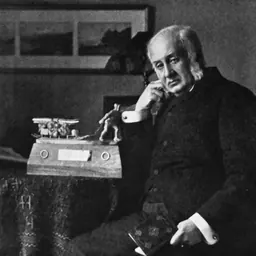
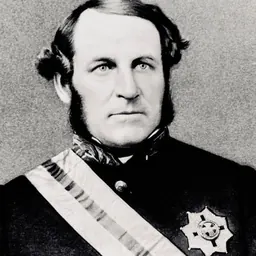
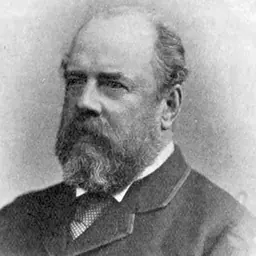

Related people
Same field, nearest in time

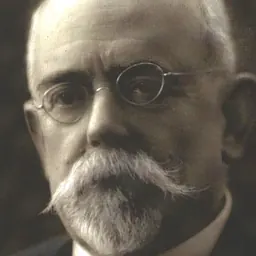


Contemporaries
People whose lives overlapped Albert Hastings Markham's
Frequently asked questions
Who was Albert Hastings Markham?
British explorer and Royal Navy officer (1841–1918)
When was Albert Hastings Markham born?
Albert Hastings Markham was born on 11 November 1841 in Bagnères-de-Bigorre.
When did Albert Hastings Markham die?
Albert Hastings Markham died on 28 October 1918 in London.
What was Albert Hastings Markham's occupation?
Albert Hastings Markham was an explorer, arctic exploration and royal Geographical Society.
What nationality was Albert Hastings Markham?
Albert Hastings Markham was British.
Sources & further reading
· Wikipedia: Albert Hastings Markham
· DBpedia: Albert Hastings Markham
Cite this page
APA: Biography.guide. (2026). Albert Hastings Markham. https://biography.guide/albert-hastings-markham/
MLA: "Albert Hastings Markham." Biography.guide, https://biography.guide/albert-hastings-markham/.
Chicago: "Albert Hastings Markham." Biography.guide. https://biography.guide/albert-hastings-markham/.
Data last updated: 2026-09-20 · Spot an error? Report a correction.
Page generated 2026-09-27 05:27 UTC