
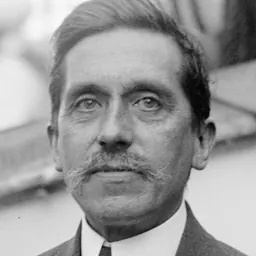
Albert Hadley Cantril Jr.
American psychologist
About Albert Hadley Cantril Jr.
Lived 1906 – 1969 (aged 62). Albert Hadley Cantril Jr. was an American communication scholar, social psychologist, psychologist and sociologist.
Albert Hadley Cantril, Jr. (16 June 1906 – 28 May 1969) was an American psychologist from Princeton University, who expanded the scope of the field.
Cantril made "major contributions in psychology of propaganda; public opinion research; applications of psychology and psychological research to national policy, international understanding, and communication; developmental psychology; psychology of social movements; measurement and scaling; humanistic psychology; the psychology of perception; and, basic to all of them, the analysis of human behavior from the transactional point of view."
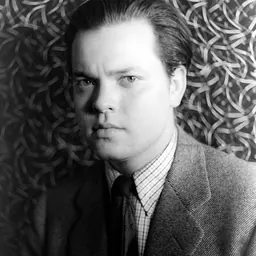
Cantril was a member of the Princeton Radio Research Project. The Project looked at the reaction to Orson Welles' radio drama The War of the Worlds and published a study accenting the public's disturbance.
In 1940 he served as a consultant to the Office of the Coordinator of Inter-American Affairs.
Cantril's later psychological work included collaboration with Adelbert Ames, Jr. developing a transactional method for studying human perception, as well as other research in humanistic psychology. In 1942 Cantril conducted a small-sample survey of Vichy officials in Morocco, prior to Operation Torch, that revealed the intensity of the anti-British sentiment of the French forces there. This information influenced the disposition of forces during the operation, with American troops landing near Casablanca and mixed forces at Oran and Algiers. According to George Gallup, "On the basis of his opinion studies, [Cantril] advised Presidents Roosevelt, Eisenhower, and Kennedy at critical points in history. Judged by subsequent events his advice was exceptionally sound."
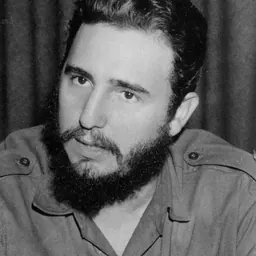
In 1955 he and Lloyd Free founded the Institute for International Social Research (IISR). Notably, Cantril and Free conducted a poll of Cuba during 1960 demonstrating great support for Fidel Castro, which was overlooked during the presidential transition between Eisenhower and Kennedy and read only after the Bay of Pigs Invasion fiasco.
Cantril's most-cited work is The Pattern of Human Concerns, notable for the development of the self-anchoring scale (also known as "Cantril's Ladder"). Cantril and Free also first discovered the paradox that American voters tend to oppose "big government" in general while supporting many specific liberal social programs.
Works 1934: Social Psychology of Everyday Life 1935:(with Gordon Allport) Psychology of Radio from Internet Archive 1939: Industrial Conflict: a Psychological Interpretation, 1940: The Invasion from Mars, a Study in the Psychology of Panic 1940: America Faces the War, a Study in Public Opinion 1941: Psychology of Social Movements from HathiTrust 1944: Gauging Public Opinion, Princeton University Press, via Internet Archive 1947: (with Muzafer Sherif) Psychology of ego-involvements : social attitudes & identifications via HathiTrust 1950: The "Why" of Man's Experience 1950: Tensions that cause wars (a report for UNESCO) 1951: (with Mildred Strunk) Public Opinion, 1935–1946, polls from the USA, Europe and Canada, via Internet Archive 1953: (with William Buchanan) How Nations See Each Other, a study in public opinion 1954: (with William H. Ittelson) Perception: a Transactional Approach 1956: On Understanding the French Left 1957 The Nature of Faith via archive.org 1958: Faith, Hope, and Heresy: the Psychology of the Protest Voter via HathiTrust 1958: Politics of Despair via HathiTrust 1959: introduction to book 6 allies and a neutral 1960: Reflections on the Human Venture 1960: Soviet Leaders and Mastery over Man 1961: Human Nature and Political Systems 1965: Pattern of Human Concerns 1967: (with L. A. Free) Political beliefs of Americans; a study of public opinion 1967: The Human Dimension: Experiences in Policy Research 1988: (Albert H. Cantril, editor) Psychology, Humanism, and Scientific Inquiry: the Selected Essays of Hadley Cantril
Don’t just read it —
keep it.
Full-length biographies made to live with: read them, listen on the way to work, watch them tonight.
- E-book
- Audio
- Video
Instant download · yours to keep · every purchase keeps this site free
Important facts
People in Albert Hadley Cantril Jr.'s life
Named in this biography and alive at the same time



Related people
Same field, nearest in time





Contemporaries
People whose lives overlapped Albert Hadley Cantril Jr.'s
Frequently asked questions
Who was Albert Hadley Cantril Jr.?
American psychologist (1906-1969)
When was Albert Hadley Cantril Jr. born?
Albert Hadley Cantril Jr. was born on 16 June 1906 in Hyrum.
When did Albert Hadley Cantril Jr. die?
Albert Hadley Cantril Jr. died on 28 May 1969 in Princeton.
What was Albert Hadley Cantril Jr.'s occupation?
Albert Hadley Cantril Jr. was a communication scholar, social psychologist, psychologist and sociologist.
What nationality was Albert Hadley Cantril Jr.?
Albert Hadley Cantril Jr. was American.
Sources & further reading
· Wikipedia: Albert Hadley Cantril Jr.
Cite this page
APA: Biography.guide. (2026). Albert Hadley Cantril Jr.. https://biography.guide/albert-hadley-cantril-jr/
MLA: "Albert Hadley Cantril Jr.." Biography.guide, https://biography.guide/albert-hadley-cantril-jr/.
Chicago: "Albert Hadley Cantril Jr.." Biography.guide. https://biography.guide/albert-hadley-cantril-jr/.
Data last updated: 2026-09-22 · Spot an error? Report a correction.
Page generated 2026-09-27 05:24 UTC