
About Albert Geyser
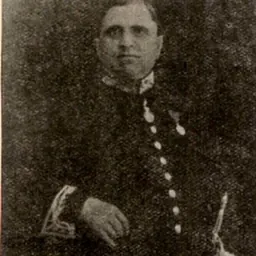
Lived 1918 – 1985 (aged 67). Albert Geyser was a South African theologian.
Albertus (Albert) Stephanus Geyser (10 February 1918 – 13 June 1985) was a South African cleric, scholar and anti-apartheid theologian. Geyser became an outcast in the white Afrikaner community
Albert Geyser attended primary school in Ermelo, and matriculated from the Hoërskool (High School) Ermelo in 1935. With his brother, Hendrik, he was admitted to the University of Pretoria, with both intending to become ministers in the NHK. Albert earned his BA degree in Greek and Latin cum laude in 1938, followed by a BD in 1940. Geyser worked in Cape Town until he became eligible in 1941. He was then invited to serve the congregations at Heilbron and at Parys in the Free State, where he was ordained and ministered from 1941 to 1943. He served as minister of the NHK's Pretoria North-West congregation from 1944–1945. Geyser's was the first doctorate to be awarded by the Theology Faculty.
Academic career Geyser's academic career included professorial appointments at the University of Pretoria (1946-1961) and, subsequently, at the University of the Witwatersrand (1962-1983). but the Faculty had permitted him to continue teaching until Geyser had obtained his doctorate. Geyser had registered in 1943 for a doctorate in Church History, but in September 1944 switched to New Testament studies with Professor Berend Gemser as doctoral advisor. than Geyser to complete his doctoral examinations. Van Selms was a prisoner of war in Japanese-held Indonesia, and would only return in 1946.
At the May 1945 general assembly of the NHK, Greyvenstein requested to continue teaching beyond 1947 and mobilised some of his former students in support. Greyvenstein was particularly reluctant to surrender two of his three courses to Geyser, one of which he had handed off to Professor Casper Hendrik Rautenbach in 1939. as professor and head of the Department of New Testament Science. and the Suid-Afrika Eerste Beweging, without providing further explanation.
In 1955 Geyser joined 13 Afrikaans academics in signing a petition that condemned the National Party government's proposed removal of coloureds from Parliament and the stacking of the Senate with its own politicians to better achieve its aims. As the publication of the petition coincided with the launch of public protests by the official opposition party, Geyser was accused of transgressing the NHK's prohibition that clergy refrain from partisan actions or pronouncements.
Geyser's signing of the petition marked a turning point in his relations with those inside and outside the NHK, which worsened as he set out to refute any biblical justifications for apartheid. The NHK initially tolerated his views, permitting him an extensive hearing in the theological journal, Hervormde Teologiese Studies in 1960. Here he launched a scathing attack on the theological justification of apartheid advocated in the book "Eiesoortige Ontwikkeling tot Volksdiens," written by Professor Andries Bernardus du Preez, then Professor of Dogmatics in the Faculty of Theology (Section B) at the University of Pretoria.
Geyser’s critique of apartheid was grounded not only in political opposition to racial segregation, but also in biblical interpretation and ecclesiology. As a New Testament scholar, he challenged the hermeneutic used by apartheid theologians, arguing that Afrikaner nationalist ideology had been imposed onto Scripture rather than racial separation being derived from the biblical text itself.
Apartheid theology and wider Afrikaner civil religion frequently drew on Old Testament motifs in interpreting South African history and racial relations. Afrikaners were sometimes represented as a chosen or covenant people, while the Great Trek was interpreted through an Exodus framework. The separation of peoples, the Tower of Babel, the election of Israel and other Old Testament patterns of ethnic distinction were invoked to support the idea that God had ordained separate peoples and, by extension, separate churches. Geyser rejected such readings as an ideological use of Scripture.
Geyser instead argued that Scripture had to be interpreted in light of the New Testament witness to reconciliation in Christ. He emphasised the universal scope of the gospel and the unity of believers expressed in passages such as Galatians 3:28, Ephesians 2 and Acts 10, which he understood as breaking down inherited ethnic and religious barriers rather than sanctifying them. His principal theological point of entry into the apartheid debate was ecclesiological: for Geyser there was ultimately only one church in Christ, and racial separation within the church was therefore incompatible with its nature and calling. His opposition to apartheid consequently challenged both the political system of racial segregation and the biblical hermeneutic by which it had been defended.
While Geyser by 1960 still identified with those who called themselves Afrikaner "nationalists," he clearly meant the desire for political self-determination, not the more narrowly defined racist ideology intent on developing one group at the expense of others. This distinction emerges clearly in a 1969 essay in Pro Veritate in which he pointed out that the Protestant reformer Calvin was not a nationalist.
In the context of the Sharpeville massacre in 1960 Geyser used public media more intensively to castigate the government for its unjust draconian laws. He joined a group of 350 Afrikaans clergy who met secretly in Johannesburg and Pretoria for six months to discuss the nature and effects of apartheid policies on churches. As a direct result of these consultations, a book titled Vertraagde Aksie (Delayed Action) was produced, comprising contributions by 11 authors, edited by Geyser and Stellenbosch theologian Professor Barend Bartholomeus Keet. Constituting "the first formal protest of Afrikaans theologians against apartheid," the book aimed to help churches express their public witness and Christian calling in a context marked by the increasing miseries caused by apartheid legislation. Geyser and Marais clarified in an interview with Die Transvaler newspaper on 21 November 1960 that "the book was not written for politicians or to promote rebellion in church and state. It was not intended as a political pamphlet, but rather as a theological document with political consequences."
The recommendations were rejected outright by the Broederbond, the leading National Party and Prime Minister Verwoerd, who claimed foreign powers were interfering with South Africa's domestic policies. As a result of this conflict the NHK and the Nederduits Gereformeerde Kerk (NGK) withdrew from the WCC. While Geyser was not a representative at Cottesloe he strongly supported the recommendations and continued to launch fierce attacks on the NHK, particularly on its understanding of the concept of catholicity and on its policy with regard to missionary work. The disclosure was significant not simply because it revealed the identities and activities of Broederbond members, but because Geyser believed the documents demonstrated the organisation’s influence over Afrikaner church and political institutions.
In his statement on 20 November 1963, Geyser said that he had decided to make the documents public because he wanted to frustrate the aims of the Broederbond. According to Geyser the documents showed without a doubt that the Broederbond was using the Church for political ends: "My immediate observation was that these people were making the Church, which is the bride of Christ, a servant girl of politics". The episode therefore reflected Geyser’s broader opposition to what he regarded as the subordination of the church to Afrikaner nationalist politics.
The Broederbond reported the documents stolen and the offices of Naudé and Geyser were raided by the security police. The fact that the raids were not conducted through normal police operations but by the security police implied that the actions of the leaders of the Christian Institute were now regarded as a matter of national security. The Christian Institute continued to be a target for security police raids and attacks in the Afrikaans media.
Court cases against defamation During 1964 and 1965 Pont wrote a series of articles in Die Hervormer, the monthly magazine of the NHK in which he accused Naudé and Geyser of various misdemeanours, including:
Supporting and promoting communism and its objectives Advocating sabotage and planning a revolution Pretending to be Christians but in reality seeking to destroy Christianity Supporting the massacre and murder of white women and children Committing heresy and opposing the Afrikaner churches In 1988 the 64th issue of the Journal of Theology for Southern Africa was devoted to Geyser's memory, with contributions by former colleagues and students. Geyser’s legacy has also been reassessed in terms of his standing as a New Testament scholar and the relationship between his biblical scholarship and his opposition to apartheid. Later studies have emphasised that his critique of apartheid emerged particularly from his New Testament ecclesiology: his conviction that there could ultimately be only one church in Christ led him to reject the theological legitimacy of racially defined churches and racial exclusion from Christian fellowship.
Concerted efforts have recently been made to restore Geyser's largely forgotten contributions to the resistance against apartheid. Individual and co-authored scholarly articles by A G van Aarde e.a. (1992, ) and Van Eck (1995 ) positively assessed his roles in theology, church and society. Van Selms was, with Berend Gemser, one of the dissenters from the NHK's theological justification of apartheid. The denomination's pronouncements, to counter Geyser's, became ever more explicitly aligned with apartheid.
In a 2011 memorial lecture in Leeuwarden, Casper Labuschagne highlighted that it was Geyser who had initiated the formation of the Christian Institute and had co-founded the ecumenical newspaper Pro Veritate with Ben Engelbrecht.
Publications (1943). Die Iphigeneia Aulidensis van Euripides: 'n kritiese ontleding. MA thesis, University of Pretoria. OCLC No. 810135256. (1945). "Die vroegste heidenberig oor Christus en die Christene. HTS Teologiese Studies / Theological Studies. 2:1, p. 5-16. DOI: 10.4102/hts.v2i1.3334. (1946). "Die beeld van God volgens die Nuwe Testament. HTS Teologiese Studies / Theological Studies. 3: 3/4, p. 202-209. DOI: 10.4102/hts.v3i3/4.3559. (1946). Die geslagsregister van Jesus Christus volgens Matth. 1:1-17 en Luk. 3:23-38. D D dissertation, University of Pretoria. OCLC No.: 830564996. (1946). "Teksverbeteringe van die Afrikaanse Bybel - Nuwe Testament. HTS Teologiese Studies / Theological Studies, 2: 4, p. 187-190. DOI: 10.4102/hts.v2i4.3526. (1950). "Die wenslikheid van 'n hersiening van die Afrikaanse vertaling van die Bybel. III. Die Evangelie volgens Markus." HTS Teologiese Studies / Theological Studies. 6, 4. DOI: 10.4102/hts.v6i1/2.3607. (1951). "Antwoord aan Prof. P.V. Pistorius." HTS Teologiese Studies / Theological Studies. 8, 1. (1951). "Die betrekking tussen Jesus en Johannes die Doper." HTS Teologiese Studies / Theological Studies. 7. (1952). Die navolging van Christus. Vertaal...toegelig en ingelei deur Dr. A.S. Geyser. Kaapstad: H.A.U.M. (1953). "Die "Eerste Algemene Kerkvergadering". HTS Teologiese Studies / Theological Studies. 9. (1953). "Lukas se Segsman vir die Geskiedenis van die Emmausgangers." HTS Teologiese Studies / Theological Studies. 9: 2. (1953). "Wyle Prof. H.G. Viljoen." HTS Teologiese Studies / Theological Studies. 9: 2. (1954). "Voorwaardes vir die prediking." HTS Teologiese Studies / Theological Studies. 11:1, 1-7. (1957). "The Youth of John the Baptist: A Deduction from the Break in the Parallel Account of the Lucan Infancy Story." Novum Testamentum. 1, 1: 70-80. Co-author with H. B. Kossen. DOI: 10.1163/156853685X00553. (1959). "Die name van Petrus en I. Petrus." HTS Teologiese Studies / Theological Studies. 15. (1960). Vertraagde aksie: 'n ekumeniese getuienis vanuit die Afrikaanssprekende kerk. (A.S Geyser & B.B. Keet, eds.). Pretoria: HAUM. (1960). "Die Eerste Evangelie oor die eenheid van die kerk as Christusgetuienis," in Vertraagde aksie - : 'n ekumeniese getuienis vanuit die Afrikaanssprekende kerk. (A.S Geyser & B.B. Keet, eds.). Pretoria: HAUM, 12–23. (1960). "Un Essai d'Explication de Rom. XV. 19." New Testament Studies, 6, 2: pp. 156–159. DOI: 10.1017/S0028688500000813. (1961). "Barnabas: Van Leviet tot Apostel." HTS Teologiese Studies / Theological Studies. 17. (1961). "Die Skrif beveel 'n sigbare eenheid van die Kerk." Hervormer. 51: 12. (1961). "Logos en Ideologia: Woord en Skynwoord." HTS Teologiese Studies / Theological Studies. 16: 4. (1962). Christian Nationalism and academic freedom: address delivered at the University of Cape Town on 12 June. Cape Town: National Union of South African Students. (1964). Living together. Addresses by T.G.V. Inman & A.S. Geyser to the C.U.S.A. assembly, Durban, October. Johannesburg: Congregational Union of South Africa. Ed. C. Kemp. OCLC No. 1017324513. (1964). The herald's wand in the sending of the twelve. Inaugural lecture delivered 2 October. Johannesburg: Witwatersrand University Press. OCLC No. 896744056. (1965). Freedom and Order. Address delivered by Albert Geyser on the UCT day of affirmation of academic and human freedom, May. Cape Town: publisher not identified. 8 pages. OCLC No. 63496894. (1969). "Calvyn was nie 'n Nasionalis nie." Pro Veritate, June. pp. 4–6. (1970). "The Semeion at Cana of the Galilee." Studies in John. Presented to Professor Dr. J. N. Sevenster on the Occasion of his Seventieth Birthday. Ed. W.C. van Unnik. Novum Testamentum, Supplements. 24: 12-21. Leiden: Brill. . DOI: 10.1163/9789004266018. (1975). "The Letter of James and the social condition of his addressees." Neotestamentica. 9: 25-33. (1978). "Jesus, the Twelve and the Twelve tribes in Matthew." Neotestamentica. 12: 1-19. (1980). Aspects of Jewish life in South Africa: Three lectures. B. M. Casper, A. S. Geyser, I. Norwich. Johannesburg: Friends of the Library, University of the Witwatersrand. (1980). "The place of the Bible in religious education." Journal of Theology for Southern Africa. 33,4: 16-23. (1986). "Israel in the fourth gospel." Neotestamentica. 20: 13-20.
Don’t just read it —
keep it.
Full-length biographies made to live with: read them, listen on the way to work, watch them tonight.
- E-book
- Audio
- Video
Instant download · yours to keep · every purchase keeps this site free
Important facts
People in Albert Geyser's life
Named in this biography and alive at the same time



Related people
Same field, nearest in time


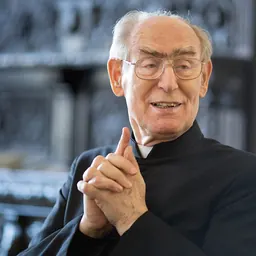


Contemporaries
People whose lives overlapped Albert Geyser's


Frequently asked questions
Who was Albert Geyser?
South African cleric and theologian (1918-1985)
When was Albert Geyser born?
Albert Geyser was born on 10 February 1918 in Mookgophong.
When did Albert Geyser die?
Albert Geyser died on 13 June 1985 in Johannesburg.
What was Albert Geyser's occupation?
Albert Geyser was a theologian.
What nationality was Albert Geyser?
Albert Geyser was South African.
Sources & further reading
Cite this page
APA: Biography.guide. (2026). Albert Geyser. https://biography.guide/albert-geyser/
MLA: "Albert Geyser." Biography.guide, https://biography.guide/albert-geyser/.
Chicago: "Albert Geyser." Biography.guide. https://biography.guide/albert-geyser/.
Data last updated: 2026-09-26 · Spot an error? Report a correction.
Page generated 2026-09-27 05:13 UTC