
Albert Ernest Kitson
British/Australian geologist and naturalist
About Albert Ernest Kitson
Lived 1868 – 1937 (aged 68). Albert Ernest Kitson was a Nigerian and Australian naturalist, geologist and botanist.
Sir Albert Ernest Kitson, (21 March 1868 – 8 March 1937) was a British-Australian geologist, naturalist, and winner of the Lyell Medal in 1927.
Early life Kitson was born in North Street, Audenshaw, Cheshire, England, the son of John Kitson from Manchester and Margaret, née Neil, from Edinburgh, Scotland. On his father's side the family had been stonemasons, while his maternal grandfather was a Scottish Presbyterian minister. Albert's early childhood was spent in Nagpur in the Central Provinces of India where his family moved when he was a year old. Around 1876 they emigrated to Victoria. Here John and Margaret taught at a State School in the gold-mining settlement of Enoch's Point in the Victorian Alps before John was appointed as head teacher of the, recently created, North Winton State School near Benalla. John died of angina in 1879 and so until her death in 1898 Margaret took over the running of the school which was attended by both her surviving children – Albert and his younger brother (John) Sidney.
Career Albert Kitson joined the Public Service in Victoria in 1886 as a clerk. Whilst still employed in this function he also carried out geological field work. This fired a passion and encouraged him to take up part-time studies in geology at the Working Men's College (now the Royal Melbourne Institute of Technology) and subsequently at the University of Melbourne. He contributed a number of studies on the mineral resources of Victoria and the Glacial beds of Tasmania. In 1907, Albert Kitson recommended that the Buchan Caves in Gippsland, Victoria be set aside as a reservation to protect them from vandalism.
After his initial work in Victoria, Kitson spent much of his subsequent professional life in Africa. Recognising his geological talents Professor J. W. Gregory recommended him for a post as Principal mineral surveyor in Southern Nigeria where he went on to discover coal and lignite. In 1909 he discovered black bituminous coal along the Enugu-Udi escarpment in Nigeria and high hopes were placed in such a potentially important coal deposit. The town of Port Harcourt was built in 1912 as an outlet for this Nigerian coal and was linked with Enugu via a railway line that extended northwards to Kaduna. The Enugu coal fields went into production in 1915 and caused an important immigration of population to Enugu earning the town the nickname of the "Coal City". The Nigerian coal turned out to be of poor quality and was used mainly for domestic consumption within the colonies, providing an important power resource for the railways and electricity.
Although Kitson's mission was to discover mineral deposits which might be exploited by the British colonial authority he always combined this with a paternalistic concern to improve the material situation of the local populations. In 1912, after hearing a lecture by J. P. Unstead about the climatic conditions for wheat cultivation in North America, Kitson's response was to ask whether Unstead's findings might be applied to Nigeria. Kitson argued: "Could a wheat-growing industry be established it would be a great boon to the people of West Africa." In paternalistic tones he went on: "It might in Northern Nigeria replace to a large extent the less valuable millet now grown there, while in Southern Nigeria it could materially supplement the staple foods- cassava, yams and maize".
After Nigeria, Kitson continued his explorations in Africa, along with Edmund Thiele, working particularly in the Gold Coast (now Ghana) between 1913 and 1930 where he was first Principal of the Mineral Survey and afterwards Director of the Geological Survey. Kitson travelled round the colony by train and bicycle and discovered sizeable mineral deposits including bauxite and manganese. He discovered Bauxite, the raw material of alumina, in the Atewa Range near Kibi in 1914. The first manganese ore which he discovered was in May 1914 when he found occurrences near the Sekondi-Kumassi Railway about from Tarkwa. These deposits were important to Britain's war effort, as supplies of these minerals from other locations had become difficult. During the last year of the war 32 000 tons of manganese, used in munitions production, were shipped to Britain from the deposits Kitson had found in the Gold Coast. The diamonds were of small size but high quality. Kitson observed that they were good crystals showing octahedron and dodecahedron. This proved to be a particularly valuable source of diamonds and the exportation of diamonds grew spectacularly. In 1934 the of diamonds exported from the Gold Coast accounted for 39% of the world's supply that year.
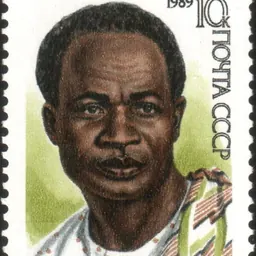
Kitson is also associated with the development of hydro-electric power in the Gold Coast/Ghana. In 1915 he was the first to recommend building a dam at Akosombo on the Volta River to generate hydro-electricity, hoping to use this to process the bauxite deposits that he had discovered in the Kwahu plateau the previous year. It was not until 1965 that the idea of the dam was put into effect when Ghana's first black president, Dr Kwame Nkrumah, decided to generate hydropower as a means of modernizing the economy. This development created Lake Volta, the largest man-made lake in the world.
Late life After his retirement from the Gold Coast in 1930 Kitson moved to Beaconsfield, Buckinghamshire, where he called his house "Benalta" (a reference to the original name of Benalla), as an indication of his enduring passion for Australia. Here he continued to be consulted on geological questions connected to Africa. In particular he reported on goldfields in Kenya during the so-called Kakamega Gold Rush of the early 1930s where gold-mining once again showed its disrespect for the rights of local communities and the environment. In his report for the Colonial Office Kitson suggested that possibly as much as half of the gold being prospected was wasted by amateur techniques. In an article for the magazine The Spectator, Kitson compared the influx of amateur gold-prospectors to a similar situation in Klondike in Canada in 1897-8 : "The road to Kakamega now resembles a miniature 'trail of 98' without the snow. Old mining men, from ex-Klondyke Pioneers to Australian backwoodsmen, are hurrying to the spot". But it seems that Kitson's initial report had helped create the rush in the first place by highlighting the rich pickings available. As The Spectator noted: "Since the publication of Sir Albert Kitson's report, the population of the Kakamega goldfields had doubled". One of the Buchan Caves in Victoria Australia is named after him, as are a fossil mollusk, a fossil eucalypt and a living eucalypt. The Eucalyptus tree Eucalyptus kitsoniana (Gippsland Malee) bears his name, as does the lizard Panaspis kitsoni (sometimes considered a synonym of Panaspis togoensis). Kitson Avenue in Takoradi in modern-day Ghana is named in his honour as is Kitson Court in Benalla, Victoria, Australia and Kitson Place in the Florey suburb of Canberra, Australia.
For his obituary the journal Nature wrote: "SIR ALBERT KITSON, whose death occurred on 8 March, was a geologist of world-wide repute, and the discoveries which he made and which are now being exploited in many parts of the world entitle him to be classed as one of the foremost economic geologists of his time."
From his earliest age, Kitson took an interest in the natural world around him. Throughout his career he collected fossils which he would send to museums in Victoria and London. He was fascinated by the Victorian Lyrebird, publishing an article on it for the Smithsonian Institution. In the Australian bush he learnt a facility to handle snakes and this would later earn him a reputation on the Gold Coast as a fetish priest. Many of these are preserved in Ghana's national archive (where they are wrongly attributed to E. A. Kitson). Kitson was also noted for his keen amateur interest in archeology, finding numerous artefacts which he made available to Museums in Africa and England.
Nicknamed "Kittie", Kitson was a very religious serious-minded man and a teetotaller. He was quite strict as J. N. F. Green makes clear: "Lifelong self-discipline gave Kitson exceptional powers of endurance and concentration in difficult and trying conditions. Somewhat of a driver in the field, he never spared himself, taking the heaviest burden." At the award of his Lyell medal, Ormsby-Gore spoke of "his tireless energy, but his attractive and stimulating personality".
In 1910 he married Margaret Legge, née Walker (1870–1920). After her death he married Elinore Almond Ramage (1892–1963) in 1927. Like his mother she was the daughter of a Scottish Presbyterian minister, although she herself was born in Victoria, Australia. Despite their advancing years (the couple had a combined age of around 100) they had two children: (Ernest) Neil (1928–2009) and David (1935–2011), the latter was the father of British-New Zealand historian Simon Kitson (b. 1967). Albert Kitson died in Beaconsfield on 8 March 1937 of broncho-pneumonia and influenza.
Sir Albert Kitson is sometimes wrongly referred to as Sir Arthur Kitson or Sir Alfred Kitson. He is also sometimes confused with his contemporary Albert Kitson, 2nd Baron Airdale (1863–1944) who does not appear to be related.
Don’t just read it —
keep it.
Full-length biographies made to live with: read them, listen on the way to work, watch them tonight.
- E-book
- Audio
- Video
Instant download · yours to keep · every purchase keeps this site free
Important facts
People in Albert Ernest Kitson's life
Named in this biography and alive at the same time




Related people
Same field, nearest in time

Contemporaries
People whose lives overlapped Albert Ernest Kitson's




Frequently asked questions
Who was Albert Ernest Kitson?
British/Australian geologist and naturalist (1868–1937)
When was Albert Ernest Kitson born?
Albert Ernest Kitson was born on 21 March 1868 in Audenshaw.
When did Albert Ernest Kitson die?
Albert Ernest Kitson died on 8 March 1937 in Beaconsfield.
What was Albert Ernest Kitson's occupation?
Albert Ernest Kitson was a naturalist, geologist and botanist.
What nationality was Albert Ernest Kitson?
Albert Ernest Kitson was Nigerian and Australian.
Sources & further reading
· Wikipedia: Albert Ernest Kitson
Cite this page
APA: Biography.guide. (2026). Albert Ernest Kitson. https://biography.guide/albert-ernest-kitson/
MLA: "Albert Ernest Kitson." Biography.guide, https://biography.guide/albert-ernest-kitson/.
Chicago: "Albert Ernest Kitson." Biography.guide. https://biography.guide/albert-ernest-kitson/.
Data last updated: 2026-09-25 · Spot an error? Report a correction.
Page generated 2026-09-27 05:11 UTC