
About Albert E. Jenner, Jr.
Lived 1907 – 1988 (aged 81). Albert E. Jenner, Jr. was an American lawyer.
Albert Ernest Jenner Jr. (June 20, 1907 – September 18, 1988) was an American lawyer and one of the name partners at the law firm of Jenner & Block. He served as assistant counsel to the Warren Commission; as a member of the U.S. National Commission on the Causes and Prevention of Violence; and as special counsel to the House Judiciary Committee during the Watergate Scandal and the impeachment process against Richard Nixon.
Background Jenner was born in Chicago, and his father was a police officer with the Chicago Police Department. Jenner attended the University of Illinois at Urbana–Champaign (B.A. 1929). To help pay his way through college, Jenner earned money by competing as a professional boxer. He was also the circulation editor at the Daily Illini. It was while working on the Daily Illini that Jenner met his future wife, Nadine Newbill.
He studied law at the University of Illinois College of Law, receiving his LL.B. in 1930. Following law school, he served as the reporter for the Illinois Civil Practice Act. He joined the firm of Poppenheusen, Johnston, Thompson and Cole (the precursor of Jenner & Block) in 1933 and became a partner of the firm in 1939. Jenner thrived at the firm and, in 1947, at age 40, he became the president of the Illinois State Bar Association. He would later serve as the eighth president of the American College of Trial Lawyers.
Years as prominent attorney In his practice at Poppenheusen, Johnston, Thompson and Cole, Jenner would develop relationships with several prominent clients. By the 1940s, Jenner had already become the top earner at the firm. In 1955, he was rewarded by becoming a named partner at the firm. (The firm eventually became known as "Jenner & Block" in 1964.) As a lawyer, Jenner was dedicated to pro bono work and, in the 1960s, he supported partner Prentice Marshall's efforts to found Jenner & Block's pro bono program, one of the first in the country. Jenner had a history of representing figures from Jack Rubenstein's (AKA Jack Ruby) criminal milieu, such as Allen Dorfman, an insurance agency owner, and consultant to the International Brotherhood of Teamsters (IBT) Central States Pension Fund who was a close associate of longtime IBT President Jimmy Hoffa, and associated with organized crime via the Chicago Outfit. Dorfman was convicted on several felony counts, and was murdered in 1983. Jenner was counsel for General Dynamics in 1963 when it was deeply involved in a series of scandals in Texas that were exposed by the U.S. Department of Justice.
In 1964, the U.S. Supreme Court named Jenner chairman of the Advisory Committee for the Federal Rules of Evidence—he would continue in this post until 1975.
In 1968, Lyndon B. Johnson appointed Jenner to the U.S. National Commission on the Causes and Prevention of Violence, which Johnson established in the wake of the assassinations of Martin Luther King Jr. and Robert F. Kennedy to study the causes of violence in the U.S.
1968 also saw Jenner argue his first major case at the U.S. Supreme Court, Witherspoon v. Illinois. In the following years, he would argue Mills v. Electric Auto-Lite (1970); Reliance Electric Co. v. Emerson Electric Co. (1972); Gonzales v. Automatic Employees Credit Union (1974); and Serbian Eastern Orthodox Diocese for the United States of America and Canada v. Milivojevich (1976). Jenner himself was mentioned as a preferred candidate for the Supreme Court by Johnson's Secretary of Defense, Clark Clifford, over Johnson's choice, Homer Thornberry. With the impending retirement of Chief Justice Earl Warren, Johnson hoped to elevate Associate Justice Abe Fortas to that post and Thornberry to Fortas' seat. Clifford thought Jenner would be a more acceptable candidate for Senate Republicans than Thornberry and help make them more amenable to Fortas as Chief Justice. He was a friend of an attorney for the family of Henry Crown. However, he was replaced in July 1974 after advocating for the impeachment of Nixon. The Committee later recommended impeachment.
Jenner represented convicted labor racketeer Allen Dorfman.
In the course of his career, Jenner also served as a director of General Dynamics; as a permanent member of the editorial board of the Uniform Commercial Code; and the chairman of the Committee on the Federal Judiciary of the American Bar Association. He also served on the Board of Governors of the NAACP Legal Defense Fund; as president of the American Judicature Society; and as president of the National Conference of Commissioners on Uniform State Laws.
Legacy The University of Illinois College of Law bestowed an honorary doctorate on Jenner in 1981. In 1982, Jenner endowed a professorship at the University of Illinois College of Law. The University of Illinois College of Law's library is also named in his honor.
Jenner died in 1988. His funeral was held at Holy Name Cathedral, Chicago. Illinois Governor Jim Thompson delivered a eulogy at the funeral. In that eulogy, Gov. Thompson said
Don’t just read it —
keep it.
Full-length biographies made to live with: read them, listen on the way to work, watch them tonight.
- E-book
- Audio
- Video
Instant download · yours to keep · every purchase keeps this site free
Important facts
People in Albert E. Jenner, Jr.'s life
Named in this biography and alive at the same time
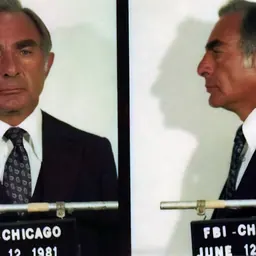


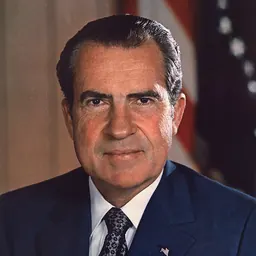
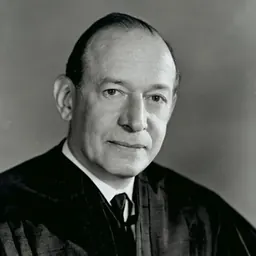
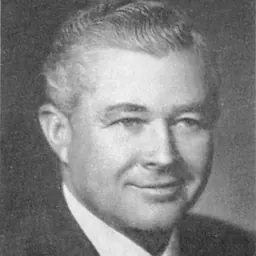

Related people
Same field, nearest in time



Contemporaries
People whose lives overlapped Albert E. Jenner, Jr.'s


Frequently asked questions
Who was Albert E. Jenner, Jr.?
American attorney (1907–1988)
When was Albert E. Jenner, Jr. born?
Albert E. Jenner, Jr. was born on 20 June 1907 in Chicago.
When did Albert E. Jenner, Jr. die?
Albert E. Jenner, Jr. died on 18 September 1988 in Deerfield.
What was Albert E. Jenner, Jr.'s occupation?
Albert E. Jenner, Jr. was a lawyer.
What nationality was Albert E. Jenner, Jr.?
Albert E. Jenner, Jr. was American.
Sources & further reading
· Wikipedia: Albert E. Jenner, Jr.
· DBpedia: Albert E. Jenner Jr.
Cite this page
APA: Biography.guide. (2026). Albert E. Jenner, Jr.. https://biography.guide/albert-e-jenner-jr/
MLA: "Albert E. Jenner, Jr.." Biography.guide, https://biography.guide/albert-e-jenner-jr/.
Chicago: "Albert E. Jenner, Jr.." Biography.guide. https://biography.guide/albert-e-jenner-jr/.
Data last updated: 2026-09-22 · Spot an error? Report a correction.
Page generated 2026-09-27 05:10 UTC