
About Alba Rosa Viëtor
Lived 1889 – 1979 (aged 89). Alba Rosa Viëtor was an Italian composer and violinist.
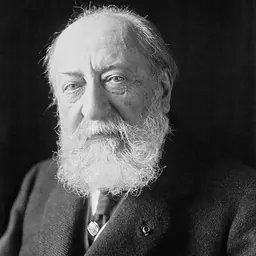
Alba Rosa Viëtor (July 18, 1889 – April 15, 1979) was an Italian-born violinist and composer who settled in the United States in 1919. One of his notable students was Jan Kubelík, who would become her mentor and to whose memory she dedicated her Elegie. In 1919 she settled permanently in the United States, and married Jan Fresemann Viëtor, a Dutch businessman who was a skilled amateur violinist. in 1916 she played alongside Camille Saint-Saëns on piano during a tour in Argentina, she decided to end this and dedicated herself completely to composing.
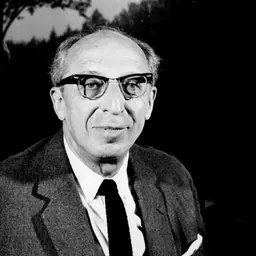
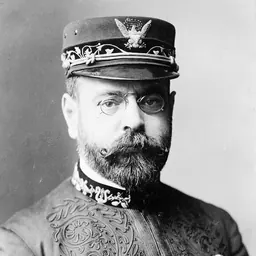
After her divorce (the marriage was dissolved in 1940; Jan died in 1953 in Panama) she became a member of the National Association for American Composers and Conductors. She composed prolifically for orchestra, voice and various solo instruments. Her compositions were performed in the same program as Charles Ives, Aaron Copland and John Philip Sousa by the National Gallery Orchestra in 1950.
The most important element that dominates all of Alba Rosa Vietor's work is not the form but rather the mood she wishes to convey. Lawrence A. Johnson calls one of her best known works, Primavera Lombarda (Springtime in Lombardy), "an intriguing moody Mediterranean tone poem".
After her death in 1979 her compositions fell into oblivion. Due to the initiative of her son Hendrik Viëtor to digitize the works of his mother, her works have been performed more frequently since 2003.
Her works have been archived by the Marta & Austin Weeks Music Library of the University of Miami.
The Alba Rosa Viëtor Foundation and Alba Rosa Viva! chamber music festival The Alba Rosa Viëtor Foundation was founded by Mary van Veen-Viëtor, Hermance Viëtor and Maarten van Veen in 2009 to promote knowledge of Rosa Viëtor's music and to encourage improvisation and composition, particularly by female composers. The Foundation has published a book, The Story of Alba Rosa Viëtor: Violinist and Composer 1889–1979 (2009), which includes essays about her works by Paul Janssen and Peter Fraser MacDonald, as well as a list of compositions. The Foundation have also released a CD with a recording of her Piano Trio Op. 8 by the Storioni Trio.
In 2014, the Foundation started a biannual chamber music festival, Alba Rosa Viva! This festival is not only intended to make the works of Alba Rosa heard, but also to draw attention to other female composers, whose works are rarely heard in the classical music halls. Some recent compositions are always part of the festival program. The Festival is an idea of artistic director Reinild Mees, who had already put Alba Rosa Viëtor’s music in the spotlight during the Women's Music Marathon in the Concertgebouw Amsterdam.
The Foundation also organizes the biennial Alba Rosa Viëtor Composition Competition for composers up to 35 years old, with a jury headed by composer Willem Jeths. The compositions of the finalists are performed during the festival.
Compositions Source:
Works for piano solo Capriccio 1914 Piccolo Danza 1914 Gavotte Rococo 1916 Tema Fugato 1916 Valse Lente 1916 Studio (Etude) 1917 Allegro Appassionato 1918 Barcarola (A Jan) 1918 Eileen’s Refrain 1935 Indian Dance 1935 Calma 1936 Nocturne 1936 Tin Soldiers 1936 Truitje Danst op Klompies 1936 Scherzo 1937 Incertezza 1939 Danse Grotesque 1946 Sonata 1948 Variations On London Bridge 1950 Plainte Chromatique I+II 1951 Playground 1951 Preludio 1951 Five Sketches 1953 Children Singing 1965 Making Money 1965 Dreams 1965 Billy’s Prayer 1966 Frolics 1966 Richiamo [Remembrance] 1972 Pezzi 1973 Dialogue 1977
Works for violin and piano Giuochi 1916 Valse Romantique 1939 Canzonetta 1939 Elegie [in memory of Jan Kubelik] 1941 Rhapsody 1952
Chamber music works Canzonetta 1939 piano, violin, cello Quintetto in La Minore 1940 piano, string quartet Duetto Fugato all’ Antica 1950 2 pianos Piano Trio in A minor 1951 piano, violin, cello Intermezzo 1952 violin I, violin II, viola, violoncello, double bass Little Suite 1952 piano, violin I, violin II Evening Bells 1956 carillon Chimes at Dusk 1956 violin, viola Four [Humoristic] Sketches 1957 piano, violin I, violin II Little Poem 1958 violin I, violin II, viola Recitativo 1959 violin I, violin II, viola Serenade In Pre-Modern Style 1961 timpani, harp, violin I, violin II Duet 1962 flute, clarinet Toddler at Play 1966 flute, violin, piano, percussion Billy’s Prayer 1967 flute, clarinet Bb, bassoon Four Pieces 1968 [2 instr.] Suite 1969 piano, flute, violin, violoncello Ritornello 1976 oboe, piano Tarantella 1976 oboe, piano • Popolino 1979 clarinet, piano
Works for orchestra Primavera Lombarda 1949 Mediolanum 1950 The Blue Bird Suite 1951 Symphonietta [Sinfonietta] 1959 Ballet Suite (Tabloid) 1960 Five Symphonic Sketches 1962
Vocal works To A Violinist 1940 Wall Street [Text by Burton] 1940 High Flight [Text by Magee] 1941 Virgilian Spring [Text from Virgil] 1941 Invocation 1945 Forget Me Not (Text by Emily Bruce Roelofson)1945 Dedication [Text by Roche] 1945 Chiusa (Longing) 1947 Rimpianto 1947 Malia 1955 To My Darling 1957 The Meadow Lark 1958 Nostalgia 1959 Little Refrain 1960 Two Choral Songs 1961 My Birthday Song 1962 L’orgoglio 1963 Rhythm Song 1963 Goodbye To Naples 1967 Two Poems 1973
Popular works for piano
Valse De Salon 1936 Tango Habernera 1949 Noche De Verano (Tango) 1949 Paraphrase On “South Pacific” 1949
Don’t just read it —
keep it.
Full-length biographies made to live with: read them, listen on the way to work, watch them tonight.
- E-book
- Audio
- Video
Instant download · yours to keep · every purchase keeps this site free
Important facts
People in Alba Rosa Viëtor's life
Named in this biography and alive at the same time




Related people
Same field, nearest in time



Contemporaries
People whose lives overlapped Alba Rosa Viëtor's


Frequently asked questions
Who was Alba Rosa Viëtor?
Italian violinist and composer (1889–1979)
When was Alba Rosa Viëtor born?
Alba Rosa Viëtor was born on 18 July 1889 in Milan.
When did Alba Rosa Viëtor die?
Alba Rosa Viëtor died on 15 April 1979 in Fort Lauderdale.
What was Alba Rosa Viëtor's occupation?
Alba Rosa Viëtor was a composer and violinist.
What nationality was Alba Rosa Viëtor?
Alba Rosa Viëtor was Italian.
Sources & further reading
Cite this page
APA: Biography.guide. (2026). Alba Rosa Viëtor. https://biography.guide/alba-rosa-vietor/
MLA: "Alba Rosa Viëtor." Biography.guide, https://biography.guide/alba-rosa-vietor/.
Chicago: "Alba Rosa Viëtor." Biography.guide. https://biography.guide/alba-rosa-vietor/.
Data last updated: 2026-09-27 · Spot an error? Report a correction.
Page generated 2026-09-27 05:16 UTC