
About Alan R. Katritzky
Lived 1928 – 2014 (aged 85). Alan R. Katritzky was a British, American and English chemist.
Alan Roy Katritzky FRS (18 August 1928 – 10 February 2014) was a British-born American chemist, latterly working at the University of Florida. He was a heterocyclic chemistry pioneer, who played a leading role in the subject’s elucidation and development.
Early life and education Alan Roy Katritzky was born in Harringay on 18 August 1928, son of Frederick Charles Katritzky, a tailor, and Emily Catherine (née Lane). In 1940 he was evacuated with other children from his secondary school (Hornsey County Grammar School) to Wisbech in Cambridgeshire, and it was there that "his passion for chemistry was inspired by the chemistry master, W. E. Fieldhouse". Having returned to Harringay, he set up his own laboratory at home and on his fifteenth birthday he prepared his first heterocyclic compound, the barbiturate drug Veronal. During his time in Cambridge, he continued his research on pyridines as well as branching out into other areas. One such – NMR – particularly caught his interest, as it gave new insights into structure while leaving the sample intact. In 1963 Cambridge University honored him with the award of a DSc degree.
At the age of 34 Alan Katritzky was appointed professor of chemistry and head of a new school of physical sciences at UEA. Facing considerable opposition he argued that he should be head of a school of chemical sciences. He was supported by Alexander Todd, Robinson and Cockcroft, and won the day. developed and made available a computer program (Codessa Pro: COmprehensive DEscriptors for Structural and Statistical Analysis) and extensively researched the versatility of benzotriazoles in the synthesis of biologically interesting compounds. During his career, he supervised more than "300 graduate students and he worked with over 500 visiting faculty and postdoctoral fellows". He has been described as "forceful, direct and resolute in his professional life, but compassionate and warm in personal relationships."
For many years, Katritzky conducted annual worldwide lecture tours and over the course of his career "he served as a consultant to 32 companies throughout Europe and North America". When required, he was able to lecture and answer questions in German, French and Italian. Many of his lecture tours were organized through the British Council, national academies of science and chemical societies. Two of the companies for which he did consultancy were 3M and Pfizer. His consultancy for 3M continued for a long time, with visits to their headquarters at St Paul, Minnesota, their Harlow laboratories, and their subsidiary Ferrania in Savona, Italy.
Publications “During 60 years of research, Professor Katritzky's output was prodigious with over 2170 papers in the primary scientific literature plus authorship or editorship of more than 200 books. In the 1960s, Katritzky collaborated with Jeanne Lagowski to write two seminal textbooks: Heterocyclic Chemistry 1960 and Principles of Heterocyclic Chemistry 1967. The second book was translated into seven languages. In 1962 and 1965 respectively, he took on the editorship of two organic chemistry journals: Advances in Heterocyclic Chemistry and Tetrahedron Letters (UK editor). He relinquished the latter when he moved to the US in 1980, but in the same year he started as US editor for Tetrahedron and continued in this role until 1998. He and Charles Rees were jointly editors-in-chief of the eight volume Comprehensive Heterocyclic Chemistry, which was published in 1984. Katritzky also participated as an editor-in-chief of updates of this work, which were published in 1996 (eleven volumes) and 2008 (fifteen volumes).
In 2000, Katritzky founded Arkivoc, an open access journal which is free to both readers and authors. He and his wife Linde made a charitable donation to start Arkivoc, hoping that the journal would particularly help authors and readers in developing countries. In the same year, Katritzky started annual Florida Heterocyclic & Synthetic Chemistry (FloHet) conferences, anticipating that they could provide revenue to support the journal.
Honors and awards "His work was recognized throughout the world by 33 honorary doctorates or professorships and awards.” Amongst the latter were:
Tilden Medal of the Royal Society of Chemistry (1975) Fellow of the Royal Society, England (1980) Fellow of the American Association for the Advancement of Science (2000) Cope Senior Scholar Award of the American Chemical Society (2002) Robert Robinson Lectureship (2009)
Family
Alan Katritzky met Agnes Juliane Dietlinde Kilian (Linde) while skiing in Germany in 1949. They married in Munich on 5 August 1952. They had four children: Margaret, Erika, Rupert, and Freda.
Don’t just read it —
keep it.
Full-length biographies made to live with: read them, listen on the way to work, watch them tonight.
- E-book
- Audio
- Video
Instant download · yours to keep · every purchase keeps this site free
Important facts
People in Alan R. Katritzky's life
Named in this biography and alive at the same time

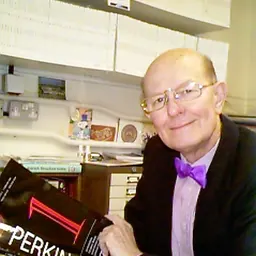
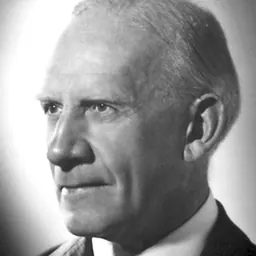

Related people
Same field, nearest in time


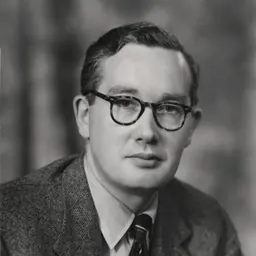


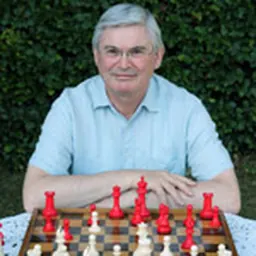
Contemporaries
People whose lives overlapped Alan R. Katritzky's

Frequently asked questions
Who was Alan R. Katritzky?
American chemist
When was Alan R. Katritzky born?
Alan R. Katritzky was born on 18 August 1928 in Harringay.
When did Alan R. Katritzky die?
Alan R. Katritzky died on 10 February 2014 in Gainesville.
What was Alan R. Katritzky's occupation?
Alan R. Katritzky was a chemist.
What nationality was Alan R. Katritzky?
Alan R. Katritzky was British, American and English.
Sources & further reading
· Wikipedia: Alan R. Katritzky
Cite this page
APA: Biography.guide. (2026). Alan R. Katritzky. https://biography.guide/alan-r-katritzky/
MLA: "Alan R. Katritzky." Biography.guide, https://biography.guide/alan-r-katritzky/.
Chicago: "Alan R. Katritzky." Biography.guide. https://biography.guide/alan-r-katritzky/.
Data last updated: 2026-09-20 · Spot an error? Report a correction.
Page generated 2026-09-27 05:30 UTC