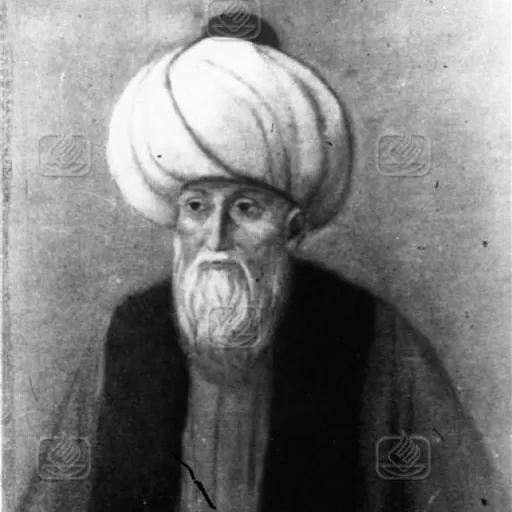
Ala al-Din Ali ibn Ahmad Djamali
Shaykh-ul-Islam of the Ottoman Empire
About Ala al-Din Ali ibn Ahmad Djamali
Lived 1445 – 1526 (aged 80–81). Ala al-Din Ali ibn Ahmad Djamali was a Turkish statesperson and writer.
Zenbilli Ali Cemali Efendi (1445 – 1526) Ottoman mufti, Islamic scholar (alim), shaykh al-Islam, Sufi, and minister. Zenbilli Ali was the son of Ahmed Çelebi, the grandson of Cemaleddin Aksarayi, a descendant of Fahraddin al-Razi. Since he is the descendant of Cemaleddin Aksarâyî, he is referred to with the title of Cemali (pronounced Jemali), like his contemporary relatives and other statesmen and scholars. He was known among the people as "Zenbilli mufti" and "Zenbilli Ali Efendi", because he took people's questions with a weaved basket (zenbil) hanging from the window of his house in order to conclude the affairs of those who applied to him for a fatwa in a short time and put the answers back in the zenbil.
Birth According to Cavit Baysun, Zenbilli Ali was born in the first reign of Sultan Mehmed the Conqueror, which coincides with 1444-1446 CE. According to Hüseyin Hüsameddin, he was born in Eslem Hatun (Islam) neighborhood in Amasya. Som sources mention his birthplace as Karaman. It is known that the Cemali family resided in Aksaray and later some of this family migrated to Istanbul and for this reason it is likely that he was born in Aksaray. Hodja Sadeddin and Atai write that he was sent to the Mufti of Amasya. Sultan Bayezid II probably wanted to show his loyalty to his sheikh by sending him to Amasya, the residence place of Çelebi Khalife (Cemal-i Halveti) from the Cemali family, who played an influential role during his reign.
Ali Cemali Efendi was appointed to Hudavendigar Madrasah in Bursa after being Mufti of Amasya, and then to Bursa Sultaniyesi (Yeşilcami Madrasa). Mecdi writes that while he was a professor in Bursa (even though he did not want it), the mufti of the city was given to him. When the construction of the Amasya Beyazıt Madrasa was completed in 1486, he went there again as a professor and assumed the role of Mufti of Amasya. Meanwhile, when Şehzade Ahmed, who was an administrator in Amasya, put his teacher Birgivizade Mustafa Efendi ahead of the ulema there at the circumcision wedding of his sons Murad and Alaeddin in 896 (1491), Cemali Efendi left his job and returned to Istanbul. However, it should be taken into account that the attitude of the Sunni mystics and scholars in Amasya against Şehzade Ahmed who is said to be close to the Persian (Shia) ulama, had an effect on this. Mecdi writes that Bayezid II got angry and dismissed him because he left the madrasah in Amasya without permission. It could be for this reason that Ali Cemali Efendi waited for six months and was appointed to the professorship of the Sultan (Beyazit II) Madrasa, which Bayezid II had opened for him in Istanbul. When he hesitated to accept the position because this madrasah was not suitable for his scholarly level, he was transferred to one of the Semaniye madrasahs. While in this position, he went on Hajj (pilgrimage) with his uncle Çelebi Khalifa. However, he had to wait in Egypt for a year due to some turmoil in Mecca and was able to fulfill his pilgrimage the following year. While he was in Egypt in 908 AH/1503 CE, the mufti of Istanbul Efdalzade Hamiduddin Efendi died and the mufti post was given to him. The fatwa authority was left to the teachers of Sahn-i Seman until he returned. Ali Cemali Efendi most probably came to Istanbul towards the middle of 910 AH / 1504 CE and sat in the office of fatwa. It is very likely that such narrations about Zenbilli Ali Efendi and Sultan Selim I are aimed at emphasizing the importance of the station of shaykh al-Islam, which was in fact in the forming as a new official institution. Just as in the case of the office of grand vizier, the first important steps to take on a form for the Istanbul mufti office in order to ensure religious control were taken during his duty.
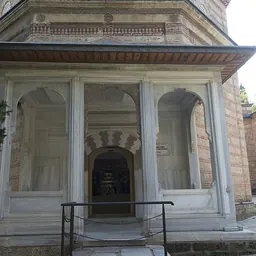
Zenbilli Ali Cemali Efendi was known for his philanthropy and had mosques and schools built in different parts of Istanbul. While Alaca Mescid was on Tersane street in Galata, it was demolished in 1957 when Azapkapı street was opened. Mufti Ali (Zenbilli Ali) Efendi Mosque is in the Küçük Mustafa Paşa district. It was built in 932 (1525–26). The single-domed, square planned Ali Cemali Efendi School was built on Zeyrek Slope between 1523 and 1525. Mufti Hamam, destroyed in 1960, was located near the Mufti Ali Mosque in the Fatih Kadı Fountain. The income of this bath was donated to the mosque and school mentioned above. Muhyiddin Mehmed Şah Efendi (Molla Çelebi), one of the sons of Zenbilli Ali Efendi, is the author of Târîh-i Âl-i Osman, and Ruhi Çelebi is the author of another Tevârîh-i Âl-i Osman. Fudayl Çelebi, on the other hand, is a scholar who has various poetic and prose works. Cemaleddin Mehmed (Cemal Çelebi) worked as a judge and governor, and his daughter Sitti Şah Hatun had a mosque and madrasah built in Istanbul.
Works Zenbilli Ali Cemali Efendi constantly renewed himself by following scholarly developments. Sources state that he was very interested in books and brought works from various places. His main works are:
Mukhtarat min al-Fatawa (Fetâvâ-yı Ali Efendi). Various copies of this copyrighted work on Hanafi fiqh can be found in Istanbul libraries (Süleymaniye Lib., Âşir Efendi, n. 138; Esad Efendi, n. 644; Fatih, n. 2387, 2388, 2389; Laleli, n. 1154). Mukhtasar al-Hidaya. A work of fiqh. Risala Fi Haq al-Dawran (Risâletü'd-deverân). The work states that if the Sufi “dance” is performed for the purpose of dhikr (remembrance of Allah), it is not haram (forbidden). Records state the availability of two copies of the work, one in prose and the other in verse. The copy registered in the Süleymaniye Library (Hacı Mahmud Efendi, nr. 3093/2) with the name Risâle fî cevâzi devrâni'ṣ-ṣûfiyye is in Arabic and in prose.
Although the work on ethics named Adab al-Awsiya is attributed to Ali Efendi, it has been determined that this work was written by his son Zenbillizâde Fudayl Çelebi.
Don’t just read it —
keep it.
Full-length biographies made to live with: read them, listen on the way to work, watch them tonight.
- E-book
- Audio
- Video
Instant download · yours to keep · every purchase keeps this site free
Important facts
People in Ala al-Din Ali ibn Ahmad Djamali's life
Named in this biography and alive at the same time
Related people
Same field, nearest in time


Contemporaries
People whose lives overlapped Ala al-Din Ali ibn Ahmad Djamali's



Frequently asked questions
Who was Ala al-Din Ali ibn Ahmad Djamali?
shaykh-ul-Islam of the Ottoman Empire
When was Ala al-Din Ali ibn Ahmad Djamali born?
Ala al-Din Ali ibn Ahmad Djamali was born in 1445 in Aksaray.
When did Ala al-Din Ali ibn Ahmad Djamali die?
Ala al-Din Ali ibn Ahmad Djamali died in 1526 in Istanbul.
What was Ala al-Din Ali ibn Ahmad Djamali's occupation?
Ala al-Din Ali ibn Ahmad Djamali was a statesperson and writer.
What nationality was Ala al-Din Ali ibn Ahmad Djamali?
Ala al-Din Ali ibn Ahmad Djamali was Turkish.
Sources & further reading
· Wikipedia: Ala al-Din Ali ibn Ahmad Djamali
· DBpedia: Zenbilli Ali Cemali Efendi
Cite this page
APA: Biography.guide. (2026). Ala al-Din Ali ibn Ahmad Djamali. https://biography.guide/ala-al-din-ali-ibn-ahmad-djamali/
MLA: "Ala al-Din Ali ibn Ahmad Djamali." Biography.guide, https://biography.guide/ala-al-din-ali-ibn-ahmad-djamali/.
Chicago: "Ala al-Din Ali ibn Ahmad Djamali." Biography.guide. https://biography.guide/ala-al-din-ali-ibn-ahmad-djamali/.
Data last updated: 2026-09-26 · Spot an error? Report a correction.
Portrait: Wikimedia Commons · author & licence
Page generated 2026-10-04 10:42 UTC