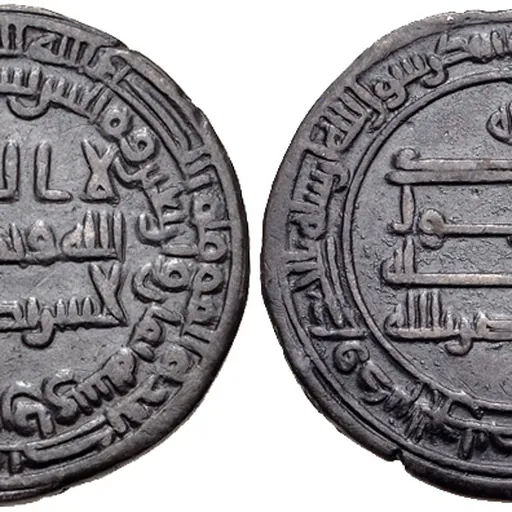
Al-Muntasir
11th Abbasid caliph from 861 to 862
About Al-Muntasir
Lived 838 – 862 (aged 24). Al-Muntasir was an Arab caliph.
Involvement in the assassination of al-Mutawakkil Al-Mutawakkil had appointed his oldest son, al-Muntasir, as his heir in 849/50, but slowly had shifted his favor to his second son, al-Mu'tazz, encouraged by al-Fath ibn Khaqan and the vizier Ubayd Allah ibn Yahya ibn Khaqan. This rivalry extended into the political sphere, as al-Mu'tazz's succession appears to have been backed by the traditional Abbasid elites as well, while al-Muntasir was backed by the Turkic and Maghariba guard troops. In late autumn 861, matters came to a head: in October, al-Mutawakkil ordered the estates of the Turkic general Wasif to be confiscated and handed over to al-Fath. Feeling backed into a corner, the Turkic leadership began a plot to assassinate the Caliph. They were soon joined, or at least had the tacit approval, of al-Muntasir, who smarted from a succession of humiliations: on 5 December, on the recommendation of al-Fath and Ubayd Allah, he was bypassed in favor of al-Mu'tazz for leading the Friday prayer at the end of Ramadan, while three days later, when al-Mutawakkil was feeling ill and chose al-Muntasir to represent him on the prayer, once again Ubayd Allah intervened and persuaded the Caliph to go in person. Even worse, according to the historian al-Tabari, on the next day, al-Mutawakkil alternately vilified and threatened to kill his eldest son, and even had al-Fath slap him on the face. With rumors circulating that Wasif and the other Turkish leaders would be rounded up and executed on 12 December, the conspirators decided to act.
According to al-Tabari, a story later circulated that al-Fath and Ubayd Allah were forewarned of the plot by a Turkic woman, but had disregarded it, confident that no one would dare carry it out. On the night of 10/11 December, about one hour after midnight, the Turks burst in the chamber where the caliph and al-Fath were having supper. Al-Fath was killed trying to protect the Caliph, who was killed next. Al-Muntasir, who now assumed the caliphate, initially claimed that al-Fath had murdered his father and that he had been killed after; within a short time, however, the official story changed to al-Mutawakkil choking on his drink. Al-Mutawakkil was assassinated by a Turkish soldiers on Wednesday December 10th, 861.
Reign Al-Muntasir became caliph on December 11, 861, after his father al-Mutawakkil was assassinated by members of his Turkic guard. Although he was suspected of being involved in the plot to kill al-Mutawakkil, he was able to quickly take control of affairs in the capital city of Samarra and receive the oath of allegiance from the leading men of the state. Al-Muntasir's sudden elevation to the Caliphate served to benefit several of his close associates, who gained senior positions in the government after his ascension. Included among these were his secretary, Ahmad ibn al-Khasib, who became vizier, and Wasif, a senior Turkic general who had likely been heavily involved in al-Mutawakkil's murder.
Al-Muntasir's secretary Ahmad ibn al-Khasib quickly worked to secure the succession for al-Muntasir. The army, secretaries and eminent men were assembled and Ahmad ibn al-Khasib read to them an official version of the caliph's murder, claiming (falsely) that he had been killed by his favorite companion al-Fath ibn Khaqan. He also had an Bay'ah drawn up and administered to everyone present. Al-Muntasir's younger brothers al-Mu'tazz and al-Mu'ayyad immediately recognized the new caliph, and al-Muntasir was able to establish his position without incident.
Ahmad ibn al-Khasib, now serving as al-Muntasir's vizier, held a dominant position in the new caliph's administration. According to al-Tabari, he was able to get rid of a rival, the general Wasif al-Turki, by convincing the caliph to send him on a campaign at the Byzantine frontier. He also plotted with the Turkic officers to deprive al-Mu'tazz and al-Mu'ayyad of their rights to succeed al-Muntasir in the event of the latter's death, as they feared that al-Mu'tazz would eradicate them if he became caliph. Al-Muntasir eventually agreed to this and the two brothers were forced to abdicate their position as heirs apparent. He also fearing they would seek revenge for his involvement in the murder of their father. In their place, he was to appoint his son as heir apparent. On 27 April 862, both brothers wrote statements of abdication, although al-Mu'tazz did so after some hesitation.
Al-Muntasir was lauded because, unlike his father, he loved the house of ʻAlī (Shīʻa) and removed the ban on pilgrimage to the tombs of Hassan and Hussayn. He sent Wasif to raid the Byzantines.
War with Byzantines Shortly after securing his position as caliph, al-Muntasir decided to send an Abbasid army against the Byzantines. According to al-Tabari, this decision was prompted by Ahmad ibn al-Khasib; the vizier had recently had a falling out with Wasif, and he sought to find an excuse to get him out of the capital. Ahmad ultimately decided that the best way to accomplish this was to put him at the head of a military campaign. He was eventually able to convince the caliph to go along with the plan, and al-Muntasir ordered Wasif to head to the Byzantine frontier.
Having completed their preparations for the campaign, Wasif and the army departed for the Byzantine frontier in early 862. Upon arriving at the Syrian side of the frontier zone, They set up camp there in preparation for their incursions into Byzantine territory.
Before Wasif had a chance to make any serious progress against the Byzantines, however, the campaign was overshadowed by events back at the capital. After a reign of only six months, al-Muntasir died around the beginning of June, of either illness or poison. Following his death, the vizier Ahmad ibn al-Khasib and a small group of senior Turkish commanders met and decided to appoint al-Musta'in as caliph in his stead. They presented their decision to the Samarran military regiments and were eventually able to force the soldiers to swear allegiance to their candidate.
The death of al-Muntasir did not immediately result in the termination of the military campaign. Wasif, upon learning of the passing of the caliph, decided that he should still persist with the operation, and led his forces into Byzantine territory. The army advanced against a Byzantine fortress called Faruriyyah in the region of Tarsus. The defenders of the fortress were defeated and the stronghold was conquered by the Muslims.
Death Al-Muntasir's reign lasted less than half a year; it ended with his death from unknown causes on Sunday, 7 June 862, at the age of 24 years (solar). There are various accounts of the illness that led to his death, including that he was bled with a poisoned lancet. According to al-Tabari, al-Muntaṣir was the first Abbasid caliph whose tomb became publicly known, attributing this to his mother, a Greek concubine, and that the earlier caliphs preferred secrecy regarding their tombs out of fear of desecration.
However, Joel L. Kraemer notes, citing Ayni (via al-Sibt ibn al-Jawzi), that this statement is surprising, since the tombs of several earlier Abbasid caliphs were in fact known, including al-Saffāḥ at Anbār, al-Mahdī at Masabadhān, Hārūn al-Rashīd at Ṭūs, al-Maʾmūn at Ṭarsūs, and al-Muʿtaṣim, al-Wāthiq, and al-Mutawakkil at Samarra.
Succession His father, caliph al-Mutawakkil (r. 847–861) had created a plan of succession that would allow his sons to inherit the caliphate after his death; he would be succeeded first by his eldest son, al-Muntasir, then by al-Mu'tazz and third by al-Mu'ayyad. During al-Muntasir's short reign (r. 861–862), the Turks convinced him into removing al-Mu'tazz and al-Mu'ayyad from the succession. When al-Muntasir died, the Turkic officers gathered together and decided to install the dead caliph's cousin Ahmad al-Musta'in on the throne.
Following al-Muntasir's death, Utamish and the officers Bugha al-Kabir and Bugha al-Sharabi met to select a new caliph, eventually deciding on al-Musta'in, a cousin of al-Muntasir. Utamish seems to have held a strong influence on al-Musta'in and became one of the most powerful individuals in the new administration; he was appointed as vizier and given control over the treasury, and additionally received the governorships of Egypt and the Maghrib. The new caliph was almost immediately faced with a large riot in Samarra in support of the disenfranchised al-Mu'tazz; the rioters were put down by the military but casualties on both sides were heavy. Al-Musta'in, worried that al-Mu'tazz or al-Mu'ayyad could press their claims to the caliphate, first attempted to buy them off and then threw them in prison.
Don’t just read it —
keep it.
Full-length biographies made to live with: read them, listen on the way to work, watch them tonight.
- E-book
- Audio
- Video
Instant download · yours to keep · every purchase keeps this site free
Important facts
Family & relationships
People in Al-Muntasir's life
Named in this biography and alive at the same time

Related people
Same field, nearest in time
Contemporaries
People whose lives overlapped Al-Muntasir's


Frequently asked questions
Who was Al-Muntasir?
11th Abbasid caliph from 861 to 862
When was Al-Muntasir born?
Al-Muntasir was born on 23 March 838 in Samarra.
When did Al-Muntasir die?
Al-Muntasir died on 7 June 862 in Samarra.
What was Al-Muntasir's occupation?
Al-Muntasir was a caliph.
What nationality was Al-Muntasir?
Al-Muntasir was Arab.
Sources & further reading
Cite this page
APA: Biography.guide. (2026). Al-Muntasir. https://biography.guide/al-muntasir/
MLA: "Al-Muntasir." Biography.guide, https://biography.guide/al-muntasir/.
Chicago: "Al-Muntasir." Biography.guide. https://biography.guide/al-muntasir/.
Data last updated: 2026-09-22 · Spot an error? Report a correction.
Portrait: Wikimedia Commons · author & licence
Page generated 2026-09-27 05:02 UTC