
About Al-Kisa'i
Lived 737 – 805 (aged 67–68). Al-Kisa'i was a qāriʾ, philologist and grammarian.
Al-Kisā’ī (d. ca. 804 or 812) was a Persian polymath and founder of the Kufan School of Arabic grammar. He directly served caliph Harun al Rashid as the Abbasid court tutor for two future caliphs. He is also called one of the ‘Seven Readers’ of the seven canonical Qira'at.
Life A Persian and became known as al-Mas'ala al-Zunburīyah (The Question of the Hornet). At issue was the Arabic phrase: كنتُ أظن أن العقربَ أشد لسعة من الزنبور فإذا هو هي\هو إياها I always thought that the scorpion is more painful than the hornet in its sting, and so it is (lit. translation). At issue was the correct declension of the last word in the sentence. Sibawayh proposed: ... fa-'ida huwa hiya (فإذا هو هي), literally ... sure-enough he shemeaning "so he (the scorpion, masc.) is she (the most painful one, fem.)"; In Arabic syntax the predicative copula of the verb to be or is, has no direct analogue, and instead employs nominal inflexion. Al-Kisa'i argued that the following form is also correct :... fa-'ida huwa 'iyyaha(فإذا هو إياها), literally ... sure-enough he her meaning "he is her".
In Sibawayh's theoretical argument the accusative form can never be the predicate. However, when al-Kisa'i was supported in his assertion by four Bedouin -Desert Arab, whom he had supposedly bribed or they had perhaps supported him due to his closeness with the caliph- that the form huwa 'iyyaha, is also correct, his argument won the debate. Such was Sibawayh's bitterness in defeat, he left the court
Legacy Hishām ibn Mu'āwīyah and Yaḥya al-Farrā' were two notable students. The primary transmitters of his recitation method were Abū al-Ḥārith ibn Khālid al-Layth (d.845) and Al-Duri
Al-Naqqāsh wrote Al-Kitāb al-Kisā’ī.and Bakkār wrote The Reading of al- Kisā’ī.
Works
His list of works are:
Surviving works
Mā Talḥanu fīhi al-ʿAwāmm (Errors in the Speech of the Common People)
A treatise on common linguistic mistakes and colloquial deviations from standard Arabic, regarded as the earliest surviving work devoted to this subject. It was first published by German Orientalist Carl Brockelmann in Zeitschrift der Deutschen Morgenländischen Gesellschaft with commentary of Theodor Nöldeke. In 1926, it was edited by the Indian scholar ʿAbd al-ʿAzīz al-Maimānī and published in Cairo, and in 1982, it was critically edited and published by the Egyptian linguist Ramaḍān ʿAbd al-Tawwāb.
Mutashābih al-Qurʾān (also known as Mushtabihāt al-Qurʾān; Similar Verses of the Qurʾān)
A work devoted to the verbal and structural similarities between Qurʾānic verses (mutashābih al-Qurʾān). According to al-Suyūṭī, it may be the earliest work composed in this genre.
The work is known under several titles, including Mutashābih al-Qurʾān, al-Mutashābih fī al-Qurʾān, Mushtabihāt al-Qurʾān al-ʿAẓīm, and Mā Tashābaha min Alfāẓ al-Qurʾān wa-Tanāẓara min Kalimāt al-Furqān. Fuat Sezgin suggested that these titles may reflect two distinct textual traditions. A versification of the work was written by Shams al-Dīn al-Sakhāwī .
Modern editions include those prepared by Sabīḥ al-Tamīmī (Tripoli, 1402/1982; reissued 1994), Muḥammad Muḥammad Dāwūd (Cairo, 1418/1998), Muḥammad b. ʿĪd (Ṭanṭā, 1427/2006), Muḥammad Ḥasan Āl Yāsīn (Amman, 1428/2008), and Aḥmad ʿAdnān Ṣāliḥ al-Ḥamdānī (Baghdad, 2014).
Lost works
Maʿānī al-Qurʾān (Meanings of the Qurʾān)
Al-Kisāʾī's most famous work, transmitted by his student al-Dūrī. A chain of transmission (isnād) for the work is quoted by al-Azharī in Tahdhīb al-Lughah. It served as a direct source for al-Azharī and for al-Thaʿlabī's al-Kashf wa-l-Bayān.
According to a report, the rival grammarian al-Akhfash al-Akbar accused al-Kisāʾī of basing the work on a book that he had previously composed for his own use. By contrast, al-Dūrī highly praised the work, reportedly remarking that even after reading it ten times, one remained in need of returning to it again.
A modern reconstruction was undertaken by the Egyptian scholar ʿĪsā Shaḥātah ʿĪsā in 2014, who collected quotations attributed to the Maʿānī from approximately 120 sources and arranged them according to the order of the Qurʾān. The reconstruction was assessed by Weipert as providing few significant new insights and as not substantially improving knowledge of the original work's content, structure, or extent.
Kitāb al-Qirāʾāt ("Book of the Qurʾānic Readings")
A work on the Qira'at of the Qurʾān. It is cited by al-Azharī in Tahdhīb al-Lughah, who quoted a chain of transmission (isnād) for the work.
Kitāb al-ʿAdad (Book of [Verse] Enumeration)
A work on the enumeration of Qurʾānic verses according to the Kufan tradition of verse-counting.
Ikhtilāf al-ʿAdad (Differences in [Verse] Enumeration)
A companion work to Kitāb al-ʿAdad dealing with disagreements among the various traditions of Qurʾānic verse enumeration. Ibn al-Jazarī gives its title as al-ʿAdad wa-Ikhtilāfuhum Fīh.
Ikhtilāf Maṣāḥif Ahl al-Madīnah wa-Ahl al-Kūfah wa-Ahl al-Baṣrah (Differences between the Codices of the People of Medina, Kufa, and Basra)
A work documenting textual differences among the codices of Medina, Kufa, and Basra. The text survives in its entirety within Kitāb al-Maṣāḥif of Ibn Abī Dāwūd al-Sijistānī, where it is transmitted with a chain of transmission (isnād).
Ajzāʾ al-Qurʾān (Divisions of the Qurʾān)
A work on the division of the Qurʾān into sections (ajzāʾ).
Maqṭūʿ al-Qurʾān wa-Mawṣūluh (Separated and Conjoined Forms in the Qurʾān)
A work on the orthographic conventions governing word separation and conjunction in Qurʾānic writing.
al-Hāʾāt al-Maknīyyu bihā fī al-Qurʾān (The Pronominal Hāʾ Forms Used Indirectly in the Qurʾān)
A specialized study of pronominal hāʾ forms used indirectly or euphemistically in the Qurʾānic text. al-Qifṭī records it under a variant title, Hāʾāt al-Kināyah fī al-Qurʾān.
Mukhtaṣar fī al-Naḥw (Abridgement of Grammar)
A grammatical treatise and reportedly the most widely received of al-Kisāʾī’s works in the Andalusian tradition. Several Andalusian scholars are said to have composed commentaries on it. The grammarian Jūdī al-Naḥwī, a direct student of al-Kisāʾī, is reported to have transmitted the work to al-Andalus.
Kitāb al-Ḥurūf (Book of Particles)
A work on Arabic particles (ḥurūf) and their usage.
Kitāb al-Maṣādir (Book of Verbal Nouns)
A grammatical work dealing with verbal nouns (maṣādir) and their formation.
Kitāb al-Hijāʾ (Book of Orthography)
A work on Arabic orthography and spelling conventions.
al-Nawādir al-Kabīr (The Major Rare Expressions)
The largest of the three Nawādir compilations and the most extensively cited. al-Azharī quotes a chain of transmission (isnād) for the work in Tahdhīb al-Lughah. According to Fuat Sezgin, it circulated in three distinct recensions, including one transmitted via al-Farrāʾ. It served as a direct source for al-Azharī’s Tahdhīb al-Lughah, al-Ṣaghānī’s al-Takmilah and al-ʿUbāb, and is frequently cited in Tāj al-ʿArūs. Abū Miḥshal’s Kitāb al-Nawādir also drew heavily upon it. A passage is additionally preserved in quotation in Abū Ḥayyān al-Tawḥīdī’s al-Baṣāʾir wa-l-Dhakhāʾir.
al-Nawādir al-Awsaṭ (The Middle Rare Expressions)
A middle-sized compilation within the Nawādir corpus.
al-Nawādir al-Aṣghar (The Minor Rare Expressions)
The smallest of the three Nawādir works. Ibn al-Anbārī refers to it under the synonym title al-Nawādir al-Ṣaghīr.
Ashʿār al-Muʿāyāt wa-Ṭarāʾiquhā (Riddle Poetry and Its Methods)
A work on the genre of Arabic riddle poetry. Ibn al-Nadīm records a variant corrupted title as Ashʿār al-Muʿānāh.
al-Āthār fī al-Qirāʾāt (Transmitted Reports on the Readings)
Possibly a distinct work or an alternative title for Kitāb al-Qirāʾāt, or for a section thereof.
Dīwān (Poetic Fragment Collection)
Recorded in the Fihrist as comprising approximately ten folios. Some verses are preserved in quotation in Muʿjam al-Udabāʾ and al-Durr al-Farīd. Tradition describes his poetic output as small but of good quality, although Yāqūt and Ibn Khallikān note that his expertise in poetry was limited.
Kitāb al-Ḥudūd fī al-Naḥw (Book of Grammatical Definitions)
A grammatical work on definitions and technical terminology in Arabic grammar (naḥw). A manuscript was formerly held in Leipzig (Rifāʿīyah 354), though its current location is unknown. Its relationship to al-Kisāʾī’s Mukhtaṣar fī al-Naḥw also remains unclear.
Don’t just read it —
keep it.
Full-length biographies made to live with: read them, listen on the way to work, watch them tonight.
- E-book
- Audio
- Video
Instant download · yours to keep · every purchase keeps this site free
Important facts
more
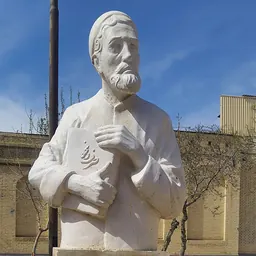
al-KisāʾīPeople in Al-Kisa'i's life
Named in this biography and alive at the same time
Related people
Same field, nearest in time





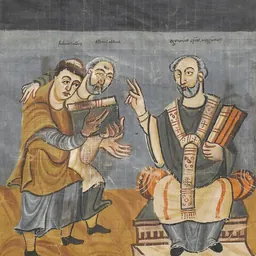
Contemporaries
People whose lives overlapped Al-Kisa'i's




Frequently asked questions
Who was Al-Kisa'i?
8th-century founder of Kufi school of Arabic grammar
When was Al-Kisa'i born?
Al-Kisa'i was born in 737 in Baghdad, Kufa.
When did Al-Kisa'i die?
Al-Kisa'i died in 805 in Arambuiyeh.
What was Al-Kisa'i's occupation?
Al-Kisa'i was a qāriʾ, philologist and grammarian.
Sources & further reading
Cite this page
APA: Biography.guide. (2026). Al-Kisa'i. https://biography.guide/al-kisa-i/
MLA: "Al-Kisa'i." Biography.guide, https://biography.guide/al-kisa-i/.
Chicago: "Al-Kisa'i." Biography.guide. https://biography.guide/al-kisa-i/.
Data last updated: 2026-09-26 · Spot an error? Report a correction.
Page generated 2026-09-27 05:13 UTC