
About Akiki Nyabongo
Lived 1907 – 1975 (aged 67–68). Akiki Nyabongo was a writer.
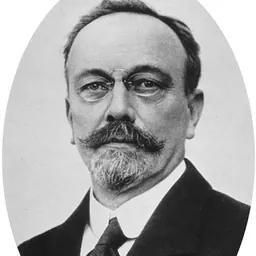
Akiki Hosea Kanyarusoke Nyabongo ( – October 2, 1975) was a Ugandan political activist and author.
Akiki Nyabongo collaborated with various pan-African activists (including W.E.B. Du Bois and George Padmore) and openly advocated for African decolonization and development in his writings. His most noted novel was Africa Answers Back (1936), one of the first English-language novels by a Ugandan author. In 1937, the Rhodes Trust started supporting his studies due to his high academic performance there. Nyabongo graduated in 1939 from Oxford with the thesis The Religious Practices and Beliefs of Ugandans. This study comprehensively analyzed Ugandan religion, beliefs, and oral traditions. It was praised as an example of 'autoethnography' with a highly non-replaceable academic value. The letter requested the translation of a morally charged poem that Tagore had composed about Africa to disseminate the text to all Africans. The poem protested Benito Mussolini's invasion of Ethiopia (then Abyssinia) and critiqued the organized violence by European imperial forces on the African continent. In Tagore's response to Nyabongo, he complied with Nyabongo's request. As a result of this correspondence, the British press The Spectator published "To Africa," the English version of the original poem translated by Tagore on May 7, 1937.
Akiki Nyabongo was a significant member and contributor to the Universal Ethiopian Student's Association (UESA), formed by activist scholars from the United States, the Caribbeans, and Africa, in Harlem, New York, in 1927.
Political ideology Akiki Nyabongo advocated for the unity of ethnicities and religions. Nyabongo had also been in contact with the members of the African Association and endorsed a united tribe, characterized by brotherhood with no "tribe against tribes" or "sects against sects". This ideology directly influenced many East African states with many ethnicities, including the British Uganda Protectorate and the Tooro Kingdom. Inspired by Dr. James Aggrey and his educational philosophy on unity and inclusivity of the entire African continent, Akiki Nyabongo further emphasized that there should be no religious quarrels among Africans and one's religious beliefs must be respected. He pushed for religious inclusivity in his political agenda. For Nyabongo, religious inclusivity was a vital way to promote the general well-being of the whole continent. The erased distinction between backgrounds created a shared African identity, supporting a pan-African political awakening. His most well known work is the novel Story of an African Chief, published in 1935, which in 1936 was reissued under the title Africa Answers Back.
This semi-autobiographical novel is set in Buganda and follows the life story of Abala Stanley Mujungu: son of a Bugandan chief who ascends the throne. This theory is symbolized early in the novel when the chief names his son, the novel's main character Abala Stanley Mujungu. "Abala" was a traditional Ugandan name, whereas Stanley stemmed from the chief's fondness for a Christian missionary named Stanley.
Reception of Africa Answers Back Africa Answers Back is one of the first English novels with an African-informed perspective on colonial narratives. The novel is considered a "foundational text of postcolonial African literature" by critiquing the then cultural and racial stereotypes circulating academia and society.
Other projects Nyabongo published a few folktale collections in the 1930s. In 1937, he published Bisoro Stories (1937), succeeded by Bisoro Stories II (1939). Winds and Lights: African Fairy Tales was published in 1939. The author's last known project published was a Rutooro-language book, Oruhenda, which described the Tooro region's culture, tradition, and arcane palace language.
He was survived by his wife, Ada Naomi Nyabongo, and his son, Amoti Nyabongo.
Selected works Story of an African Chief (1935), reissued and renamed Africa Answers Back (1936); Bisoro I (1937); Bisoro II (1939); Winds and Lights: African Fairy Tales (1939).
Archival materials "The Nyabongo Papers" is a Queen's College archival collection of Akiki Nyabongo's lectures, writing drafts, published works, and photographs relevant to him. The college selected some of its collections for a small exhibition in October 2021 to commemorate Black History Month.
Don’t just read it —
keep it.
Full-length biographies made to live with: read them, listen on the way to work, watch them tonight.
- E-book
- Audio
- Video
Instant download · yours to keep · every purchase keeps this site free
Important facts
People in Akiki Nyabongo's life
Named in this biography and alive at the same time



Related people
Same field, nearest in time




Contemporaries
People whose lives overlapped Akiki Nyabongo's


Frequently asked questions
Who was Akiki Nyabongo?
Ugandan political activist and author
When was Akiki Nyabongo born?
Akiki Nyabongo was born in 1907 in Fort Portal.
When did Akiki Nyabongo die?
Akiki Nyabongo died on 2 October 1975.
What was Akiki Nyabongo's occupation?
Akiki Nyabongo was a writer.
Sources & further reading
Cite this page
APA: Biography.guide. (2026). Akiki Nyabongo. https://biography.guide/akiki-nyabongo/
MLA: "Akiki Nyabongo." Biography.guide, https://biography.guide/akiki-nyabongo/.
Chicago: "Akiki Nyabongo." Biography.guide. https://biography.guide/akiki-nyabongo/.
Data last updated: 2026-09-20 · Spot an error? Report a correction.
Page generated 2026-09-27 05:24 UTC