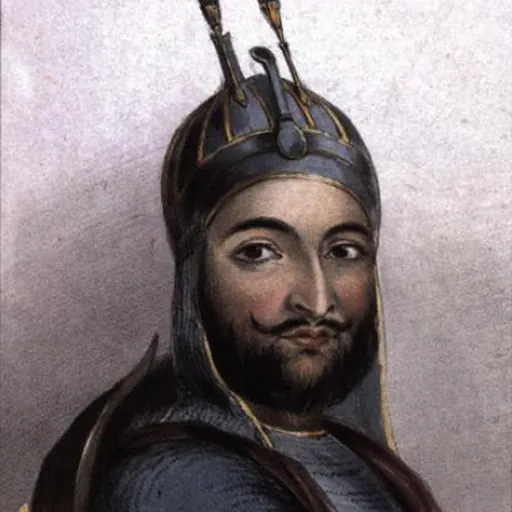
About Akbar Khan
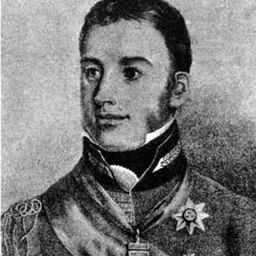
Lived 1816 – 1845 (aged 28–29). Akbar Khan was an Afghan military officer and monarch.
Early life Akbar Khan was born to an Afghan Barakzai Pashtun family as Mohammad Akbar Khan in 1816 to Dost Mohammad Khan, the future ruler of Afghanistan. His mother was Mermən (or Bibi) Khadija Begum, a Sadozai lady from the Popalzai clan, and thus Akbar Khan was a full-brother of the later Emir Sher Ali Khan. Dost Mohammad Barakzai had 16 wives, 27 sons (including Wazir Akbar Khan) and 25 daughters.
Adult life
in 1834, Akbar Khan partook in the campaign to Jalalabad, led by his father, Dost Mohammad Khan. Following this, in December 1834, he advanced into the Khyber pass, skirmishing with different Sikh outposts on a number of occasions before meeting Hari Singh Nalwa in battle. The Sikhs were defeated, suffering around 150 dead and wounded, forcing their withdrawal to Peshawar.
In 1837 Dost Mohammad Barakzai's Muslim forces, under the command of his son Wazir Akbar Khan, fought the Sikhs at the Battle of Jamrud, fifteen kilometers west of present-day Peshawar. In the heat of the Battle, Akbar Khan encountered Hari Singh. Without recognising each other, they exchanged hits and after much clashing and parrying, Akbar Khan won by, knocking Hari Singh Nalwa to the ground, and killing him. This Battle would mark the first great victory of Akbar Khan, Dost Mohammad Khan did not follow up by retaking Peshawar, but instead contacted Lord Auckland, the new British Governor-General of India (at the time under company rule) for help in fighting the Sikh Empire. With this letter, Dost Mohammad formally set the stage for British intervention in Afghanistan, which would lead to the so-called "Great Game" with Imperial Russia for control over influence in Afghanistan.
Akbar Khan led a revolt in Kabul against the British Indian mission of William McNaughten, Alexander Burnes and their garrison of 4,500 men. In November 1841, he besieged Major-General William Elphinstone's force in Kabul.
Elphinstone accepted a safe-conduct for his British force and about 12,000 Indian camp followers to Peshawar; they were ambushed and annihilated in January 1842. At least one set of British war memoirs bore witness to Akbar Khan’s double dealing, saying that, during the retreat, Akbar Khan could be heard alternately commanding his men, in Persian to desist from, and in Pashto to continue, firing.
In May 1842, Akbar Khan captured the Bala Hissar in Kabul and became the new emir of Afghanistan. When Dost Mohammad Khan returned and became the emir in 1843, Akbar Khan was in such a powerful position that he managed to become the wazir and heir apparent to Dost Mohammad. In September 1847 there was a cholera outbreak in Kabul. Akbar Khan contracted the disease and died shortly after.
In fiction The historical figure Akbar Khan plays a major role in George MacDonald Fraser's novel Flashman.
Don’t just read it —
keep it.
Full-length biographies made to live with: read them, listen on the way to work, watch them tonight.
- E-book
- Audio
- Video
Instant download · yours to keep · every purchase keeps this site free
Important facts
Family & relationships
People in Akbar Khan's life
Named in this biography and alive at the same time


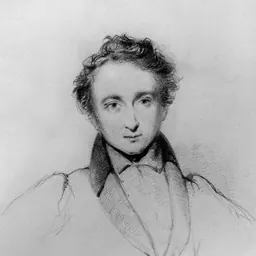
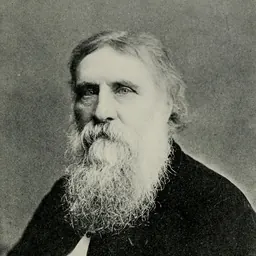
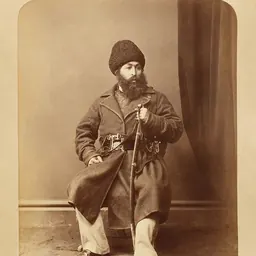
Related people
Same field, nearest in time

Contemporaries
People whose lives overlapped Akbar Khan's





Frequently asked questions
Who was Akbar Khan?
emir of Afghanistan (1842-1845)
When was Akbar Khan born?
Akbar Khan was born on 15 October 1816 in Durrani Empire.
When did Akbar Khan die?
Akbar Khan died in 1845 in Jalalabad.
What was Akbar Khan's occupation?
Akbar Khan was a military officer and monarch.
What nationality was Akbar Khan?
Akbar Khan was Afghan.
Sources & further reading
Cite this page
APA: Biography.guide. (2026). Akbar Khan. https://biography.guide/akbar-khan/
MLA: "Akbar Khan." Biography.guide, https://biography.guide/akbar-khan/.
Chicago: "Akbar Khan." Biography.guide. https://biography.guide/akbar-khan/.
Data last updated: 2026-09-21 · Spot an error? Report a correction.
Portrait: Wikimedia Commons · author & licence
Page generated 2026-09-27 05:01 UTC