
Ahmet Ağaoğlu
Azerbaijani-Turkish journalist and statesperson
About Ahmet Ağaoğlu
Lived 1869 – 1939 (aged 69–70). Ahmet Ağaoğlu was a Russian and Turkish politician, journalist, writer, university teacher, turkologist and translator.
Ahmet Ağaoğlu, also known as Ahmed Bey Aghaoghlu (; or Ahmed Akif Aghaoghlu (December 1869, publicist, educator, writer, Turkologist, and the founder of liberal Kemalism.
After studying in France, he returned and opened the first library and reading room in Shusha in 1896. In 1897, he moved to Baku at the invitation of H. Z. Taghiyev and wrote articles for the Kaspi newspaper. He also worked with A. Huseynzade as an editor for the Hayat newspaper and served as chief editor for Irshad, Taraqqi, Progres, Tercüman-ı Hakikat, Hakimiyet-i Milliye, and Akın newspapers.
In 1905, he secretly founded the Muslim Difai Party to fight against the Tsarist government and Dashnaks. After being persecuted by the Tsarist government, Ahmet Bey lived secretly in his friends' homes for months. To avoid arrest, he relocated to Istanbul at the end of 1908. As a prominent figure in the Turkish Hearths national movement, Ağaoğlu was elected president of a congress held by the movement. Later, he joined the Young Turks' Committee of Union and Progress. Alongside serving as the director of a library in Suleymaniye and an active contributor to the Türk Yurdu journal, he taught Turkic-Mongol history and Russian language at Istanbul University.
In 1918, he served as the political advisor to the commander of the Islamic Army of the Caucasus, which came to assist the Azerbaijan Democratic Republic. On December 26, 1918, he was elected as a member of the Parliament of the Azerbaijan Democratic Republic from the Zangezur district as a neutral representative. However, he later declined the membership. Aghaoghlu was also part of the delegation sent by the Republic to participate in the Paris Peace Conference. Upon reaching Istanbul, he was arrested along with other leaders of the Committee of Union and Progress by the British and exiled to the island of Malta.
After returning from exile, he led the Press Information Office in Ankara, served as the chief editor of the Hakimiyet-i Milliye newspaper, and, after being elected to the second and third terms of the Turkish Grand National Assembly, became Mustafa Kemal Atatürk's political advisor on foreign affairs.
On May 7, 2019, by Decision No. 211 of the Cabinet of Ministers of the Republic of Azerbaijan, Ahmet Ağaoğlu was included in the list of authors whose works are declared state property in Azerbaijan.
Life
Early life Ahmet Ağaoğlu was born in 1869 in the city of Shusha, Azerbaijan. His father, Mirza Hasan Bey, was from the Kurdlar clan of Karabakh. This tribe had migrated from Erzurum, which was predominantly inhabited by ethnic Azerbaijani Turks in the 18th century, to Ganja, and later settled in Karabakh. His father, Mirza Hasan Bey, was a wealthy cotton farmer. The title mirza granted to his father indicates that the family belonged to the intellectual class. His grandfather, Mirza Ibrahim, was one of the most renowned scholars of Shusha. He was a calligrapher and wrote poetry in the Turkish language. Additionally, his uncles were proficient in Turkish, as well as Persian, Arabic, and Russian. His mother, Taza Hanim, was the daughter of Rafi Bey from the Sarijali clan of Shusha and the sister of Zeynalabdin Bey Rafibeyov.
Raymond Kévorkian notes that Ağaoğlu was descended from a family of dönmes, Turkish-speaking Jews who had earlier converted to Islam.
Education
Secondary education Ahmet Ağaoğlu noted in his memoirs that his mother and uncle played a significant role in his education. His uncle, Mirza Mahammad, wanted Ahmet to become a mujtahid and hired teachers to teach him Persian and Arabic from the age of six. Initially, Agaoglu studied at a neighborhood school, but at his mother's initiative, he also secretly took Russian lessons. Despite being religious, his mother disliked clerics and mullahs. Agaoglu wrote that her views redirected his education from Najaf and Karbala to St. Petersburg and Paris.
In 1881, when a six-grade secondary school was opened in Shusha, the Karabakh governor gathered the local Muslim community at Khurshidbanu Natavan's house, urging them to enroll their children in the school. Ahmet's father promised the governor that he would send him to the Shusha Real School. Two of his teachers at this school—history teacher Shineyovski and mathematics teacher Palekarp—had a significant influence on him. Both were opponents of the Tsarist regime and promoted revolutionary ideas within the school. It was here that Agaoglu first encountered Western ideologies. In his memoirs, Ahmet Ağaoğlu wrote that the school was located in the Armenian neighborhood of the city, and among the 45 students, only five were Muslim. He falsely claimed that Armenian students were very hostile toward Turks, constantly harassing the Turkish pupils. Four of the Turkish students could not endure this environment and left the school, but Ahmet persevered and successfully completed his studies. He described these events in his memoirs as follows:
After completing the sixth grade of secondary school, Ahmet Ağaoğlu attended the seventh and final grades at Gymnasium No. 1 in Tiflis. According to his own writings, he was the only Turk at the Tiflis gymnasium. During his studies in Tiflis, he participated in secret meetings of the Narodnik Society at the insistence of his friends. These meetings left a profound impression on his thinking. After successfully graduating from the gymnasium in Tiflis, Agaoglu returned to Shusha with a distinction diploma and a prize of three hundred rubles. He spent the entire summer in the highlands with his uncle and then traveled to St. Petersburg to continue his education.
The Caucasian youth Agaoglu met in St. Petersburg took him to the dormitory of the Caucasian Students' Union, where he discovered that there were four other Turks. Among them was Alimardan Topchubashov, who would later represent Azerbaijan in Paris, and Ali Bey Huseynzade, the grandson of a former Caucasian Sheikh ul-Islam. The other two Turkish students were studying civil engineering. Agaoglu successfully passed all his exams at the Technological Institute. However, during his final exam in algebra, he solved the problem outside the standard program. The professor, assuming Agaoglu was Jewish, refused to accept his answer despite its correctness. This incident deeply disappointed Agaoglu and fostered a strong sense of hatred toward Russians. He described those days in his memoirs as follows:
Paris period On January 8, 1888, Ahmet Ağaoğlu arrived in Paris. During his train journey, a woman he met suggested that he stay at Hotel de Peterbourg, a place frequented by visitors from Russia. With no acquaintances in Paris and not knowing French, he headed to the hotel. However, it quickly became clear that the hotel expenses were high. An employee of the hotel introduced him to two Georgian students studying in Paris through mutual friends. The Georgian students helped him find a room to rent. After settling in a room rented from an elderly woman, he began learning French. However, after a while, he ran out of money and fell into debt. Later, with money sent from home, he paid off his debts and moved into a boarding house on Rue de Glacier. Here, he met two Iranians and three Egyptians. Following their advice, he started attending lectures at the College de France and the École des Hautes Études Pratiques. At the College de France, French philosopher and historian Ernest Renan delivered weekly lectures, while at the École des Hautes Études Pratiques, James Darmesteter gave lectures on The History of Eastern Peoples. Both figures played a significant role in shaping Ahmet Ağaoğlu's intellectual development. In the 1888–1889 academic year, he began studying law at the Sorbonne. However, his interests were not limited to law alone. He developed a fascination with the history of Eastern civilizations and religions and enrolled in the School of Oriental Languages. There, he took lessons from experts in Eastern languages, such as Charles Schefer and Barber de Meynard. Later, upon the advice of James Darmesteter, he joined the intellectual club organized by Juliette Adam, founder and editor of La Nouvelle Revue. This exclusive club gathered intellectuals in France who engaged in discussions on politics, science, history, and philosophy. Between 1891 and 1893, Ahmet Ağaoğlu published a series of articles titled Persian Society in La Nouvelle Revue. In 1892, he gave a lecture at the International Congress of Orientalists in London on Beliefs in Mazdakism in Shia Islam. The text of the lecture was later published in several Western languages at the expense of Cambridge University.
Activity Ahmet Ağaoğlu published his articles on social and political topics in French press outlets such as Journal de Débat, Revü Been, and Nouvye Revyü. The articles he wrote in France were sent to newspapers like Kavkaz and Sharki Rus. There, he began teaching French at the Shusha Real School and opened the first library and reading room in the city. For this reason, the people of Shusha started calling him "Firəng Əhməd" (French Ahmet). However, after he left Shusha, the reading room and library ceased their activities.
In 1896, Haji Zeynalabdin Taghiyev purchased the newspaper Kaspi and handed it over to the Azerbaijani intellectuals. The newspaper became a platform for the national intelligentsia, with articles written by prominent figures like Ali Mardan bey Topchubashov, Ali bey Huseynzadeh, Hasan bey Zardabi, and Firidun bey Kocherli. In 1897, at the invitation of Haji Zeynalabdin Taghiyev, Ahmet Ağaoğlu moved to Baku to work for Kaspi. After settling in Baku, his articles mostly addressed the issues of the Muslim society, focusing on women's problems. He believed that the path to national liberation lay through the cultural and educational advancement of society. He was one of the first intellectuals to call for equal rights for women in Azerbaijan, promoting the idea that women's freedom was a key factor in the struggle for liberation. His contributions to Kaspi led to the newspaper becoming more popular, with its circulation reaching up to 10,000 copies at certain times, a significant achievement for a daily newspaper. In his series of articles, Women in the Islamic World and Islam, Akhund and Hatif al-Ghayb, he criticized the religious establishment, particularly the imams and clerics, arguing that they had caused harm to Islam. The articles were not well received by religious leaders, and as a result, a fatwa was issued for his death. According to his son, Samet Ağaoğlu, he was confined to his home for six months, with police protection provided for his safety. It was only through Taghiyev's intervention that he was saved from this dangerous situation.
Ahmet Ağaoğlu considered the backwardness of women and the power of the clerics as the two main enemies and incurable wounds of the Muslim world. In his work Женщина по исламу и в исламе (Woman in the Islamic World), he stated that:
In 1905, Ahmet Ağaoğlu was elected as a member of the Baku City Duma and served there until 1909. During this period, he contributed to the resolution of many of the city's problems. He was a member of the education commission and a member of the Board of Trustees of the Baku Commercial School.
After the Russian Tsar's decree on February 18, 1905, to improve the living conditions of the population and strengthen state-building, Azerbaijani intellectuals gathered on March 15, 1905, at Haji Zeynalabdin Tağıyev's house to discuss their proposals. They formed a delegation to convey the demands and proposals of Azerbaijani Turks to St. Petersburg. The delegation included Ahmet Ağaoğlu, Alimardan bey Topchubashov, and Ali bey Huseynzade. Upon arriving in St. Petersburg, Ağaoğlu published an article titled The Truths about the Baku Events in the Sankt-Peterburgskie Vedomosti newspaper.
On April 16, 1905, Ahmet Ağaoğlu, Ali bey Hüseynzade, and Alimardan bey Topchubashov sent a letter to the Governor-General of the Caucasus requesting the publication of the Azerbaijani-language newspaper Hayat. On April 22, they received a positive response to their request. On June 7, 1905, with the support of Haji Zeynalabdin Tağıyev, the first issue of the Hayat newspaper was published. He led the newspaper from 1905 to 1908, and its circulation soon reached 3,000 copies. According to Tadeusz Svetokhovski, the newspaper addressed societal issues in a more radical manner compared to other newspapers published at the time. This is why the newspaper was banned by Sultan Abdulhamid II in the Ottoman Empire.
In 1905, after Illarion Vorontsov-Dashkov was appointed as the Viceroy of the Transcaucasus, he began a process to reconcile relations with the Armenians. With the backing of the governor, the Armenians proposed the relocation of the villages around Baku, which were located in the industrial region, arguing it was necessary to ensure the safety of the oil fields after a large fire broke out in the Baku oil fields in August 1905. The matter was even discussed by the Council of Ministers of the Russian Empire. To protect the interests of the local population, Ahmet Ağaoğlu and Alimardan bey Topchubashov traveled to St. Petersburg. As a result of their efforts, after 35 days of discussions, the relocation of the villages' populations was prevented.
In February 1906, a peace conference was held in Tiflis, initiated by Vorontsov-Dashkov in order to put an end to the Armenian-Muslim massacres. During the conference, Muslim representatives, including Ahmet Ağaoğlu, Alimardan bey Topchubashov, Adil khan Ziyadkhanov, and others, alleged that the Armenian Revolutionary Federation (Dashnaktsutyun) had been the initial organizer and executor of the massacres and terrorism committed in South Caucasus. They further alleged that the official government circles had turned a blind eye to the actions of this organization.
In his final speech, Ahmet Ağaoğlu said the following...
In August 1906, Ahmet Ağaoğlu came to Shusha and gathered Azerbaijani intellectuals to discuss the situation in the region. With his suggestion, the Difai Party was founded. The party's branches or commissions were established in almost all cities and districts of Azerbaijan and South Caucasus, even in Vladikavkaz. He personally participated in the creation of the party's district branches. For this purpose, he toured all of Karabakh and urged 'all Muslims to unite tightly around the party.' The organizers of the party also carried out propaganda among the Azerbaijani population in Dagestan. Due to his activities, Ahmet Ağaoğlu was persecuted and had to go into hiding for a while. He describes those days in his memoirs as follows:
Ağaoğlu was in turn accused by Armenians of having played a direct role in inciting Muslims to carry out massacres against Armenians in the 1905 disturbances.
Ottoman Empire Zanbur magazine (No. 14, 1909) about the beating of Ahmet Ağaoğlu
After months of living secretly in the homes of his friends, due to persecution and the threat of arrest, in the middle of 1909, he had to move to Istanbul. In October 1909, he began teaching Turkish-Mongolian history and Russian at the Istanbul University. After getting his affairs in order, he wrote a letter to his family, stating that he was considering staying in Turkey. His wife, Sitare Hanim, agreed to come to Turkey as well. In 1910, he moved his family to Istanbul.
After moving to Istanbul, Ahmet Ağaoğlu continued his journalistic activities and from 1909 onwards, he published a series of articles on topics such as Letters from Turkey and The National Question in Turkey in the Kaspi newspaper. In addition, he wrote articles for newspapers and journals in Istanbul such as Sırat-ı Müstakim, Sebilürreşad, Hikmet and Ateş. He also collaborated with newspapers such as Suruş, published in Persian for the Iranian population, and Le Jeune Turc, published in French. In 1912, after the death of Ahmet Mithat, the founder of the Tercüman-ı Hakikat newspaper, he briefly took over the leadership of this weekly publication. In the same year, he was arrested twice for his articles but was soon released.
Ahmet Ağaoğlu initially became a member of the Turkish Society, founded by Yusuf Akçura. Later, in 1911, he became one of the six founders of the Türk Ocağı society. The aim of the society was to open a boarding school for Turkish children and to increase the intellectual level among Turks by publishing a newspaper. In September 1911, the society began publishing a journal called Türk Yurdu.He started writing articles for the journal. As a result of the journal's propaganda, Turkism ideas began to spread within the society. In 1911, 190 students from the Military Medical School addressed a letter to Akçura requesting the creation of a new organization. Later, with the participation of student representatives from the school and intellectuals like Akçura and Ağaoğlu, the Turk Ocakı organization was founded. He was among the founding members of the organization. Türk Yurdu and Türk Ocağı organizations began to gain recognition throughout Turkey. While the Türk Ocakı organization had 3,000 members in 1914, by 1920, their number had exceeded 30,000. Both organizations played a significant role in the Turkish War of Independence.
Due to his political activities, Ahmet Ağaoğlu became a member of the Central Committee of the 'Union and Progress' party, consisting of 12 people, in 1912. In 1914, he was elected as a deputy to the Ottoman Parliament from the Afyonkarahisar region. In 1915, he actively participated in the establishment and activities of the Committee for the Protection of the Rights of Turkish-Tatar Muslims in Russia, based in Istanbul. In the same year, he represented Azerbaijan at the conference held in Lausanne, where the national minorities of Russia were discussed. During World War I, he was one of the signatories of the petition addressed to U.S. President Woodrow Wilson for the protection of the rights of Muslims in Russia.
In the Azerbaijan Democratic Republic On May 28, 1918, Azerbaijan declared the Declaration of Independence. To save the people from physical annihilation, the newly established government requested military support from the Ottoman state based on Article IV of the Batumi Treaty signed between the Azerbaijan Democratic Republic and the Ottoman Empire on June 4, 1918. Following this, the Caucasian Islamic Army was formed under the command of Nuru Pasha. Ağaoğlu was sent to Azerbaijan along with the Caucasian Islamic Army as Nuru Pasha's political advisor. Despite such tense circumstances, during his time in Ganja, Ahmet Ağaoğlu founded a newspaper called Türk Sözü. However, the newspaper only published two issues due to the army's movement to liberate Baku.
On December 26, 1918, Ağaoğlu was elected as a member of the Parliament of the Azerbaijan Democratic Republic from the Zangezur district as a neutral representative. Thus, he became both a representative of Qarahi̇sar-i Sahi̇b in the Ottoman Empire's Meclis-i Mebusan and a representative of Zangezur in the Parliament of the Azerbaijan Democratic Republic.
On December 28, 1918, the composition of the delegation formed by the Azerbaijan Democratic Republic to participate in the Paris Peace Conference was approved. Ağaoğlu was included in the delegation headed by Alimardan Bey Topchubashov. At the January 19, 1919, session of the Azerbaijan Democratic Republic Parliament, the Credential Commission confirmed the validity of Ahmet Ağaoğlu's documents and intended to put his full membership to a vote. However, by that time, Ağaoğlu had already renounced his membership. The delegation departed from Batumi and arrived in Istanbul on January 21, 1919. Upon reaching the Bosphorus, the ship carrying delegations from Azerbaijan, Georgia, and Armenia was not allowed to disembark for eight hours. Later, the delegation was transported ashore in small boats and taken in open-top trucks to the British Embassy in the Beyoğlu district. After being made to wait there for several hours, they were finally admitted late at night for document verification. However, they were instructed to return to the embassy the following day. On January 22, the Azerbaijani delegation held a meeting at Topchubashov's residence, where they addressed organizational matters and assigned roles to its members. Upon Ağaoğlu's arrival in Istanbul, Armenian newspapers such as La Renaissance and Le Stamboul, published in French, launched attacks against him. They accused him of Pan-Turkism, Pan-Islamism, and complicity in the deaths of Armenians. Moreover, during the propaganda campaign conducted by Armenians in Europe and America against Azerbaijan, it was either argued that a state called Azerbaijan did not exist or that Azerbaijan was aligned with defeated Turkey, which had fought against the Entente powers. These efforts sought to spread biased information about Azerbaijan and its leaders. Ağaoğlu did not remain silent in the face of these accusations. He published a strong rebuttal article in the French-language newspaper Kurie de Turki in Istanbul, countering all allegations. However, by that time, it was already too late. Ağaoğlu had been placed on a list of individuals to be arrested as a supporter of the Committee of Union and Progress. He was portrayed as a leader of the Committee, a fiery advocate for its members in the Turkish Parliament and press, and an active opponent of the Allied Powers. All the actions and alleged wrongdoings of the Committee of Union and Progress, particularly those of the Talat-Enver cabinet, were attributed to Ağaoğlu. Subsequently, the British and French representatives occupying Istanbul announced that...
Later, Topchubashov states in a letter to the Azerbaijani government that:
Malta exile At the end of February, Ahmet Ağaoğlu contracted the Spanish flu, which delayed his arrest. For two weeks, he lay gravely ill with a fever of 40°C. During this time, İttihadists such as Ziya Gökalp and Huseyin Cahit were arrested. The next day, the officers arrested him. Despite a doctor's assessment that his imprisonment would be life-threatening and unsuitable for his condition, he was taken to the Eminonu Police Station. On March 19, 1919, he was transferred to Bekirağa division, a military prison where the Ottoman Empire held highly dangerous political prisoners. Shortly after their arrests, the Ottoman Minister of Education, Ali Kamal, eager to appease the British, ordered the dismissal of Ağaoğlu and Ziya Gökalp from their positions as lecturers at Istanbul University. This left Ağaoğlu's wife, Sitare Hanim, and their five children—the eldest only 17 years old—deprived of their sole stable income. While the Azerbaijani delegation was in Turkey, it provided financial assistance of 150 Turkish lira to Ağaoğlu's family, who were living in hardship. Additionally, during his imprisonment, friends such as Haydar Rifat bey and Ali bey Huseynzade offered constant moral support to his family.
Samet Ağaoğlu recalls a conversation between his mother and father as follows:
Fifteen days after this event, on May 28, the British exiled Ahmed Bey along with other prominent Turkish figures to the island of Malta. Admiral Culthrop divided the 67 prisoners in the main group into three categories. The group consisting of 12 former government members, politicians, and public figures was classified as first-class. Ahmed Agaoglu and Ziya Gökalp were also part of this group, which included former grand viziers, ministers, and members of parliament, considered dangerous. They were all convicted of involvement with the Armenian genocide. The armored ship carrying the prisoners docked at the small island of Lemnos in the Aegean Sea on May 29. For reasons known only to the British, 12 prisoners, including Ahmed Bey, were disembarked there. They were placed in a detention camp where no prior preparations had been made for receiving prisoners. Those detained there were more commonly referred to by their numbers than their names. In all documents, Ahmed Agaoglu was recorded as prisoner number 2764. They were kept in an open area surrounded on all sides by barbed wire and guard towers. As there were no residential structures, they slept in large metal barrels. The members of the "first-class" group were only transferred to Malta after four months, in September 1919. During his exile, Agaoglu wrote articles criticizing the Ottoman government. In one of these writings, he stated:
Ahmet Ağaoğlu's right eye had been problematic since his youth, and due to not receiving proper treatment for a long time, he gradually lost his vision. While in exile, severe pain began in this eye. After some time, he started to notice that his left eye was also weakening. The doctor called in for treatment determined that the healthy eye was at risk and needed to be removed immediately, and for the operation, he requested fifty pounds sterling. This was an enormous sum for a prisoner who had no support. He turned to his colleague, Hüseyin Cahid Yalçın, who was considered one of the wealthier members of their group. After being exiled, Hüseyin Cahid had used his financial means to come to an agreement with the British, bringing his family to join him. He was also leading a relatively comfortable life in a villa, not much different from his former lifestyle in Istanbul, engaging in literary work and translating from Italian and English. Due to his different way of living, he did not seem to feel any remorse in front of his fellow prisoners. He even occasionally used the expression "He who pays the piper calls the tune!" Ahmet Ağaoğlu, finding himself in a desperate situation, approached Hüseyin Cahid, believing that as a colleague and an intellectual, his request would be met with sensitivity. As a former lawyer, he did not forget the conditions of the debt: "As soon as I get out of here, I will repay you at the first opportunity. If I die, my children will do so. If we both do not return, my children will pay your children the money." He tried to assure his colleague that he would not be at a loss. However, Hüseyin Cahid replied firmly without changing his demeanor, "No, Ahmet bey! In captivity, no one asks for or gives loans." Years later, in 1933, Hüseyin Cahid asked him for financial support to publish the Fikir Hareketleri journal. He who was also in financial need, sold the carpets from his home to provide financial aid to his former friend.
Ahmet Ağaoğlu was saved from a dire situation by Mehmet Esat Işık, an eye doctor with whom he had spent his youth in Paris, and one of the founders of the National Committee who opposed the Mudros Armistice, also exiled to Malta. Mehmet Esat had agreed to perform surgery if necessary medicines and medical tools were available. The British had obtained a paper from both the doctor and the patient, stating that they would not be responsible for the outcome of the operation. Mehmet Esat, who had established the first European-standard eye clinic in Istanbul, demonstrated true professionalism under difficult circumstances, saving him from the threat of blindness.
During his exile, Ahmet Ağaoğlu further improved his English, a language he had started learning 25 years earlier in Paris. At the same time, he was engaged in creative work. Due to strict censorship, he was cut off from journalistic activities. However, in return, he turned to philosophical research, and based on a comparative study of world religions and cultures, he completed his work Three Cultures during his exile. This work, which he later published in parts in the Türk Yurdu magazine after returning to Turkey, was significantly influenced by the environment in Malta. His group was to travel along the Çankırı-Kastamonu-İnebolu road, spreading propaganda among the population, and then continue on the Trabzon-Gümüşhane-Bayburt route to reach Kars. In Kars, a daily newspaper and a teachers' seminar were to be established. He was assigned to lead both the newspaper and the school. At the end of July 1921, he, along with two companions, left Ankara in a two-wheeled carriage and set off on their propaganda mission. Despite significant difficulties, over the course of four and a half months, they conducted active propaganda work in many cities and towns. At the end of 1921 and the beginning of 1922, Ağaoğlu accompanied Russian Ambassador S. Aralov from Batum to Ankara. Aralov wrote about this experience in his memoirs.
On October 29, 1921, while Ahmet Ağaoğlu was in Kars, he was appointed as the head of the Press and Information Directorate (Matbuat ve İstihbarat Umum Müdirliği) in Ankara.
On July 22, 1923, he was elected as a member of the Grand National Assembly of Turkey (TBMM) from Kars with 158 votes. He began his parliamentary work on August 11, 1923. During his time in the TBMM, he was a member of several important parliamentary commissions, including those on International Relations and Constitutional Reforms. As a member of the Constitutional Commission, he played a significant role in the preparation and adoption of the new Turkish constitution in 1924. On August 2, 1927, he was elected as a member of the TBMM for a second time from Kars. thumb The inauguration of the new building of the Hakimiyet-i Milliye newspaper in Ankara, 1926. From right: Mustafa Kemal Atatürk, Mahmut Soydan, Ahmet Ağaoğlu, Yakub Kadri and Ziya Gevher Etili
On December 29, 1922, Ahmet Ağaoğlu, along with his colleagues, succeeded in restoring the activities of the Turkish Hearths (Türk Ocaqları) society, of which he was one of the founders. Starting from March 1923, the society's publication, the Türk Yurdu journal, resumed its operations. In 1924, during the first post-war congress of the Turkish Hearths, he was elected as a member of the organization's Central Committee.
In 1925, he began teaching at the Ankara Higher Law School, which he had helped establish. It is said that after the ceremonial opening of the school, where speeches were delivered by Atatürk and Mahmud Asad Bozkurt, who was the Minister of Justice at the time, he was entrusted with giving the first lecture. On February 13, 1926, members of the Turkish Grand National Assembly (TBMM) debated the issue of whether it was appropriate for Ahmet Ağaoğlu and Yusuf Kamal to receive salaries both as parliamentarians and as teachers. In response to the criticisms, Yusuf Kamal, along with him, declared that they were willing to teach future lawyers without any financial interest. His lectures from the 1925–1926 and 1926–1927 academic years were compiled and published in book form in Arabic script. However, with the country's switch to the Latin alphabet in 1928, the accessibility of these works to a larger audience was restricted. In 2012, these lectures were republished in the Latin alphabet. He continued to teach at the Ankara Higher Law School until 1930.
Alongside his activities in Turkey, Ahmet Ağaoğlu also helped his fellow countrymen. He provided financial support for the publication of the journal Yeni Kafkasya, which was printed by Mahammad Amin Rasulzade in Istanbul. This is confirmed by a coded letter he wrote on March 14, 1924, in which he mentioned sending 350 lira to Rasulzade for the journal's publication. Furthermore, when Mahammad Amin Rasulzade met with him in Istanbul, he asked for his help in finding work for Jeyhun Hajibeyli, who was considering moving from Paris to Istanbul.
Based on a letter he wrote on March 17, 1925, he successfully arranged for a monthly allowance of 75 lira for political émigrés, including Mahammad Amin Rasulzade, Khosrov bey Sultanov, and Abdulali bey Amircanov, through the Central Committee of the Turkish Hearths organization. Additionally, on his initiative, 130 branches of the Turkish Hearths across the country subscribed to Yeni Kafkasya, which helped rescue these Azerbaijani political émigrés from financial ruin. Due to these activities, he came under surveillance by Turkish intelligence agencies. In a report by military intelligence, there were concerns about the possibility that the 12,000 lira allocated by Atatürk for his trip to Izmir might be used to support émigrés of the Müsavat Party residing in the country. As a result, he tried to conceal his connections with Azerbaijani political émigrés and preferred to engage in covert correspondence.
As the new regime in Turkey strengthened, authoritarianism grew in the country's political, social, economic, and cultural spheres. However, he was unwilling to reconcile with this situation. In 1926, he sent a sharply critical report to Atatürk regarding the ruling Republican People's Party (Cumhuriyet Halk Fırkası). In this letter, he pointed to the decline in the party's reputation and the abuse of power by government officials, attributing these issues to the one-party rule in the country. He emphasized the necessity of transitioning to a multi-party system for the future development of democratic processes in the nation. Additionally, he opposed the practice of parliamentarians from the ruling party simultaneously holding leadership positions in various state-run companies. He wrote this report after being offered a position on the board of directors of the State Sugar Company. This marked another instance of his resistance to the concentration of power within the ruling elite, which he felt hindered both political accountability and economic development.
Atatürk, the founding leader of modern Turkey, aimed to organize and manage the country's open and covert opposition forces. He proposed to Fethi Okyar, Turkey's ambassador to Paris, to lead a newly created opposition party. This party, known as the Serbest Fırka''' (Free Party), was established with Atatürk's direct involvement. Ahmet Ağaoğlu, at Atatürk's request, joined the party alongside Atatürk's sister, Makbule Hanım. In August 1930, He authored and published the party's program and drafted its charter. The Free Party sought to provide a controlled platform for opposition and alternative ideas within the political system. However, the party faced challenges and ceased its activities after just 100 days, officially dissolving on November 17, 1930. After its dissolution, most members, including the party's leader Fethi Okyar, returned to the ruling Republican People's Party (Cumhuriyet Halk Fırkası). Fethi Okyar was later appointed as Turkey's ambassador to the United Kingdom in 1931. He was an exception. Prior to the party's dissolution, he had a personal meeting with Atatürk, during which he pledged that if the party were to disband, he would no longer engage in politics. Instead, he committed to focusing exclusively on educational and pedagogical endeavors. True to his word, he refrained from re-entering the political arena after the Free Party's closure.
Ahmet Ağaoğlu's alignment with the opposition was not forgiven by the government, leading to constant surveillance by authorities. In their home in Keçiören, plainclothes police officers were stationed outside the house 24 hours a day. They meticulously recorded the names of visitors and the license plates of their vehicles. According to Surayya Ağaoğlu's memoirs, during one cold winter day, he invited one of the policemen stationed outside into the house so he wouldn't suffer from the cold. From that moment on, the surveillance was conducted from inside the house. When the family later moved to Istanbul, his wife, Sitare Hanim, even suggested to the Minister of the Interior that the same policeman be sent to Istanbul to continue his duty, humorously highlighting the absurdity of the situation.
Ahmet Ağaoğlu decided to move from Ankara to Istanbul in 1932. After selling their house in Keçiören, he commissioned architect Sedat Çetintaş to build a new home in Istanbul. The house included a library and a circular room, a feature Ahmet Ağaoğlu specifically requested. Every Monday evening, he hosted intellectual gatherings in this circular room, engaging in discussions on social and cultural topics. After withdrawing from active politics, he dedicated himself to scholarly and historical research. He was the first to propose the idea that the Etruscans had Turkic roots, theorizing that they originated from the East and arrived in the Apennine Peninsula via Anatolia.
In 1933, he founded the newspaper Akın to promote liberal values in Turkish society. These values clashed with the country's prevailing one-party system, leading to government-backed press and state structures frequently targeting both him and his newspaper. The ongoing polemics occasionally led to lawsuits. In one of the court hearings, after receiving permission from the judge to speak, he delivered a remarkable statement.
The newspaper wins this trial. However, since the newspaper opposed the state's official propaganda, exposed the abuses of power, instances of bribery among the upper echelons of authority, and monopolies in various sectors of the economy, it was clear that it could not operate for long. Atatürk invites Ahmet Bey Ağaoğlu to a meal at the Dolmabahçe Palace. Later, he expresses his dissatisfaction with the critical articles published in the Akın newspaper. He then states that it is not possible for him to simultaneously be a professor at the state university and an editor at the newspaper, requesting him to cease the newspaper's publication. Ağaoğlu firmly responds that he will never voluntarily halt the publication of the newspaper. Atatürk, angered by this response, reminds him not to forget that he is a dependent. In reply, Ağaoğlu says to him:
After this incident, the Axın newspaper was shut down by the government in September 1933. In its final issue, published on September 24, the government-affiliated newspaper Hakimiyet-i Milliye was harshly criticized. Additionally, Ahmed Bey was stripped of his professorship under the guise of university reforms and was sent into retirement. For someone who was always active, this was a tragedy. In a letter to his friend Fethi Okyar regarding these events, he wrote:
Death and Burial
In the last days of his life, when Ahmet Ağaoğlu was bedridden. He died on May 19, 1939, in Istanbul due to liver inflammation and heart failure. His funeral was brought from his house in Nişantaşı to the Teşvikiye Mosque. After the funeral prayer, he was buried next to his wife in the Feriköy cemetery. The farewell ceremony was attended by the governor, mayors, Lütfü Kırdar, Bolu MP Recep Peker, many MPs, representatives from the province, party and municipality, students and professors from universities, press workers, teachers and students from girls' schools, friends, and students he mentored. At his grave, Dr. Fethi Edib, Ismail Habib, and writer Peyami Safa delivered speeches, praising his contributions to science, Turkism, and the education of the younger generation. Wreaths were placed on his grave from various universities, Anadolu Agency, Galatasaray Sports Club, the press office, Ankara University's law faculty, and his friends. From May 19 to 22, 1939, all Turkish newspapers published reports, memories, and various details about the life of Ahmet Ağaoglu.
Family After returning to Shusha, Ahmet Ağaoğlu becomes a guest of Farrukh Bey Vezirov, with whom he studied in Petersburg. There, he meets Farrukh Bey's cousin, Sitare Hanim, a member of the famous Vazirov family, and falls in love with her. It is said that he goes against the customs of the time and proposes to her himself. This, however, displeases Sitare Hanim's mother, who refuses to give her daughter to him. Ahmet Bey and Sitare Hanim are able to marry only in 1902, after her mother's death. Their first child, Sürayya Ağaoglu, is born in Shusha in 1903. In 1909, the family moves to Istanbul to escape political persecution, and their hard times begin. After their baby son, Bashir, dies, and in 1918, when he arrives in Azerbaijan as an advisor to Nuru Pash a, their newly built house in Istanbul is burned down. After completing her education, she became the first female lawyer and legal expert in the East and the Turkish world. Süreyya Ağaoğlu actively participated in Turkey's political life and was one of the founders of the New Turkey Party, leading its Istanbul organization. She pioneered many firsts in Turkey's social and public life: she was a founder of the Turkish Women Lawyers Association, University Women's Association, Free Thought Dissemination Association, Soroptimist Istanbul Club, Turkish-American Universities Association, and Children's Friends Association, and led many of these associations. She represented Turkey at international events multiple times. She was a member of the International Lawyers Association (1952) and later became the second secretary of the Federation of Women Lawyers. In 1960, she was elected as the representative of the Women Lawyers Association at the UN Geneva Organization.
Ahmet Ağaoğlu's second daughter, Tezer Taşkıran, was born in 1907 in Baku. Although her real name was Tezekhanim, after moving to Turkey, she officially became known as Tezer. After completing her university education, Tezer worked as a philosophy teacher at both boys' and girls' high schools in Ankara. She became the first female teacher to teach at a boys' school. Later, she served as the principal of both the Ankara Girls' High School and Istanbul Girls' Teacher Training School. In 1944, she was elected as a member of the Turkish Grand National Assembly from Kastamonu, and in 1946 and 1950, she was elected from Kars. She is the author of hundreds of articles and 12 books.
Samet Ağaoğlu, the youngest son of Ahmet Ağaoğlu, was born in Baku in 1909. After completing his law degree in Ankara, he worked for a while in Strasbourg. Upon returning to Turkey, he served as a member of the Turkish Grand National Assembly from 1950 to 1960. After the Democratic Party's victory, he held significant positions in Prime Minister Adnan Menderes's government, including Deputy Prime Minister, Minister of Labor, and Minister of Industry.
Following the May 27, 1960 coup, Samet Ağaoğlu, like Menderes and other government members, was arrested and sentenced to life imprisonment. However, he was released in 1964 after receiving a general amnesty. In 1967, he visited his ancestral homeland, Azerbaijan. Upon his return, he wrote a book titled Soviet Russian Empire, based on his observations. He also authored several other books, including Strasbourg Memories, Freedom, Teacher Qafur, The Big Family, The Man in the Cell, The Death of the Donkey, Familiar Tracks, and My Friend Menderes.
His youngest child, Gultekin Agaoglu, became one of Turkey's renowned pediatricians.
Publications
Женщина по исламу и в исламе (Woman in the Islamic World; 1901, Tiflis) İslam, axund və hatifülqeyb (Islam, Akhund and Hatif al-Ghayb; 1902, Baku) Türk Teşkilat-ı Esasiyesi Şerhi (Commentary on the Turkish Constitution of 1924; 1925, Ankara) Hukuk-ı Esasiye Ders Notları (Lecture Notes of the Principles of Law; 1926-1927, Ankara) Üç Medeniyet (Three Civilizations; 1927, İstanbul) İngiltere ve Hindistan (England and India; 1929, İstanbul) Serbest İnsanlar Ülkesinde (In the Land of Free People; 1930, İstanbul) Hukuk Tarihi (History of Law; 1931-1932, İstanbul) Etrüsk medeniyeti ve bunların Roma medeniyeti üzerine tesiri (Etruscan Civilization and Their Influence on Roman Civilization; 1932, Ankara) Devlet ve Fert (State and Person; 1933, İstanbul) 1550 ile 1900 arasında İran (Iran between 1550 and 1900; 1934, Ankara) Ben Neyim (What's Me; 1939, İstanbul) İran ve İnkılabı (Iran and Its Revolution; 1941, Ankara) Gönülsüz Olmaz (Can't Be Unwillingly; 1941, Ankara) İhtilal mi, İnkılap mı (Is It a Revolution or a Reformation; 1942, Ankara) Serbest Fırka Hatıraları (Memories of the Free [Republican] Party; 1949, İstanbul)
Literature Tadeusz Swietotochwksi: Russian Azerbaijan, 1905-1920. The Shaping of National Identity in a Muslim Community, New York 1985. François Georgeon: "Les débuts d'un intellectuel azerbaidjanais: Ahmed Ağaoğlu en France (1888-1894)", in Passé turco-tatar, présent soviétique: études offertes à Alexandre Bennigsen, Paris 1986. Audrey L. Altstadt: The Azerbaijani Turks. Power and Identity under Russian Rule, Stanford 1992. Adeeb Khalid: The Politics of Muslim Cultural Reform: Jadidism in Central Asia, Berkeley 1998. Charles Kurzman: Modernist Islam, 1840-1940. A Sourcebook, New York 2002. A. Holly Shissler: Between Two Empires: Ahmet Ağaoğlu and the New Turkey, London 2002. Ufuk Özcan. Ahmet Ağaoğlu ve Rol Değişikliği: Yüzyıl Dönümünde Batıcı Bir Aydın, İstanbul, 2010 Ali Kalirad: Az jāmʻe-ye Īrānī tā mīhan-e Turkī: zendegīnāme-ye fekrī va siyāsī-ye Aḥmad Āqāyef (1869-1939) [in Persian], Tehran 2013. Ali Kalirad: "From Iranism to Pan-Turkism: A Less-known Page of Ahmet Ağaoğlu's Biography", Iran and the Caucasus'', Volume 22, Issue 1 (2018), pp. 80–95.
Don’t just read it —
keep it.
Full-length biographies made to live with: read them, listen on the way to work, watch them tonight.
- E-book
- Audio
- Video
Instant download · yours to keep · every purchase keeps this site free
Important facts
more
Ahmed BeyFamily & relationships
People in Ahmet Ağaoğlu's life
Named in this biography and alive at the same time

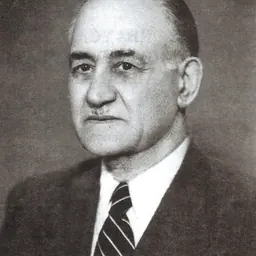


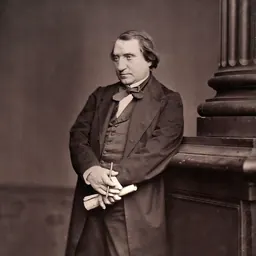

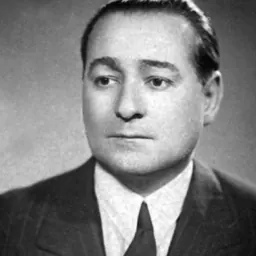
Related people
Same field, nearest in time





Contemporaries
People whose lives overlapped Ahmet Ağaoğlu's
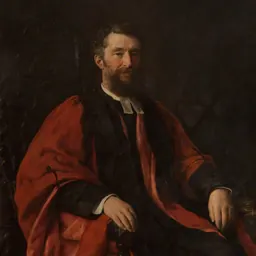

Frequently asked questions
Who was Ahmet Ağaoğlu?
Azerbaijani-Turkish journalist and statesperson (1869–1939)
When was Ahmet Ağaoğlu born?
Ahmet Ağaoğlu was born in 1869 in Shusha.
When did Ahmet Ağaoğlu die?
Ahmet Ağaoğlu died on 19 May 1939 in Istanbul.
What was Ahmet Ağaoğlu's occupation?
Ahmet Ağaoğlu was a politician, journalist, writer, university teacher, turkologist and translator.
What nationality was Ahmet Ağaoğlu?
Ahmet Ağaoğlu was Russian and Turkish.
Sources & further reading
Cite this page
APA: Biography.guide. (2026). Ahmet Ağaoğlu. https://biography.guide/ahmet-agaoglu/
MLA: "Ahmet Ağaoğlu." Biography.guide, https://biography.guide/ahmet-agaoglu/.
Chicago: "Ahmet Ağaoğlu." Biography.guide. https://biography.guide/ahmet-agaoglu/.
Data last updated: 2026-09-20 · Spot an error? Report a correction.
Page generated 2026-09-27 05:26 UTC