
About Ahmed Shah I
Lived 1389 – 1442 (aged 52–53). Ahmed Shah I was a monarch.
Early life Ahmad Shah was born on 17 November 1391 to Muhammad Shah I alias Tatar Khan who was a son of Muzaffar Shah I. Muhammad Shah I was probably killed by his uncle Shams Khan in favour of his father Muzaffar Shah when he imprisoned him.
According to Mirat-i-Ahmadi, he abdicated the throne in favour of his grandson Ahmad Shah in 1410 due to his failing health. He died five months and 13 days later. According to Mirat-i-Sikandari, Ahmad Shah was going to an expedition to quell the rebellion of Kolis of Ashawal. After leaving Patan, he convened an assembly of Ulemas and asked a question that should he took retribution of his father's unjust death. Ulemas replied in favour and he got the written answers. He returned to Patan. Ahmad Shah succeeded him with the title of Nasir-ud-dunya Wad-din Abul fateh Ahmad Shah at the age of 19 in 1411.
Reign War of succession
Soon after assuming power, his cousin Moid-ud-din Firuz Khan, governor of Vadodara, allying himself with Hisam or Nizam-ul-Mulk Bhandari and other nobles, collected an army at Nadiad, and, laying claim to the crown, defeated the king's followers. Jivandas, one of the insurgents, proposed to march upon Patan, but as the others refused a dispute arose in which Jivandas was slain, and the rest sought and obtained Ahmad Shah's forgiveness. Moid-ud-din Firuz Khan went to Khambhat and was there joined by Masti Khan, son of Muzaffar Shah, who was governor of Surat; on Ahmad Shah's advance they fled from Khambhat to Bharuch, to which fort Ahmad Shah laid siege. As soon as the king arrived, Moid-ud-din's army went over to the king, and Masti Khan also submitted. After a few days Ahmad Shah sent for and forgave Moid-ud-din, and returned to Asawal (future Ahmedabad). Moid-ud-din was moved from Vadodara to Navsari. Ahmad Shah laid the foundation of the city at the site of Asawal on 26 February 1411 (at 1:20 pm, Thursday, the second day of Dhu al-Qi'dah, Hijri year 813 ) at Manek Burj. He chose it as the new capital on 4 March 1411. Ahmad Shah named it Ahmedabad, in honour of four Ahmads: himself, his religious teacher Shaikh Ahmad Khattu Ganj Baksh, and two others, Kazi Ahmad and Malik Ahmad.
Partially damaged Rudra Mahalaya Temple of Sidhpur was destroyed and western part of it was converted in congregational mosque by Ahmad Shah in 1415. Surviving ruins in 1874. The partially damaged Rudra Mahalaya Temple of Siddhpur was further destroyed and the western part of it converted into a congregational mosque (Jami mosque) by him in 1415. From Siddhpur, he advanced to Dhar in Malwa. Hindu kings believed that he is attacking Hindu pilgrimage places to bolster his image. So they formed an alliance in 1416 which included Idar, Champaner, jhalawar prant and Nandod. Sultan Hushang Shah of Malwa also agreed to help them. He also married Raniba, a daughter of Rawal Satrasalji of Matar. According to Ras Mala, Ahmed Shah I also married Lala Baghela, a sister of Warhoji and Jitoji Baghela of Patan, who was his favorite wife. According to seventeenth century Portuguese historian Manuel de Faria e Sousa, Ahmed Shah had forty sons. Among them, the known sons are: Karim Khan, his oldest son, who succeeded him as Muhammad Shah II. Daud Khan, who was enthroned as Sultan Daud Shah after the death of his oldest nephew, Ahmad Shah II. He had appointed lowborn men to high offices, and as such he was deposed soon after in favor of his younger nephew Fateh Khan, who succeeded him as Mahmud Begada. Daud afterwards became a religious ascetic. Habib Khan, whom the nobles tried to enthrone as sultan soon after Mahmud Begada's ascension, but the coup attempt failed.
Death
Ahmed died on 12 August 1442 at the age of 50 and the 33rd year of his reign. He was buried in the mausoleum, Badshah no Hajiro, near Manek Chowk, Ahmedabad.
His after-death title is Khudaigan-i-Maghfur the Forgiven Lord. His queens were buried at Rani no Hajiro, just opposite his mausoleum.
Legacy
He is honoured for his bravery, skill, and success as a war leader as well as for his piety and his justice. His piety showed itself in his respect for three great religious teachers: Sheikh Rukn-ud-din, the representative of Sheikh Moinuddin Chishti, Khwajah of Ajmer; Sheikh Ahmed Khattu who is buried at Sarkhej Roza, Ahmedabad; and the Bukharan Sheikh Burhan-ud-din known as Kutbi Alam the father of the more famous Shah Alam.
Of Ahmed's justice two instances are recorded. Sitting in the window of his palace watching the Sabarmati River in flood Ahmed saw a large earthen jar float by. The jar was opened and the body of a murdered man was found wrapped in a blanket. The potters were called and one said the jar was his and had been sold to the headman of a neighbouring village. On inquiry the headman was proved to have murdered a grain merchant and was hanged. The second case was the murder of a poor man by Ahmed's son-in-law. The Kazi found the relations of the deceased willing to accept a blood fine and when the fine was paid released the prince. Ahmed hearing of his son-in-law's release said in the case of the rich fine is no punishment and ordered his son-in-law to be hanged.
Don’t just read it —
keep it.
Full-length biographies made to live with: read them, listen on the way to work, watch them tonight.
- E-book
- Audio
- Video
Instant download · yours to keep · every purchase keeps this site free
Important facts
Family & relationships
People in Ahmed Shah I's life
Named in this biography and alive at the same time
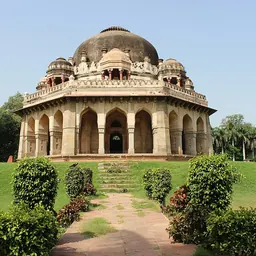


Related people
Same field, nearest in time
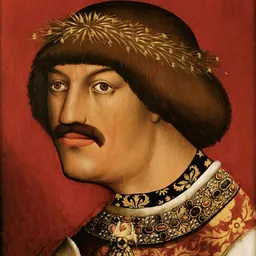
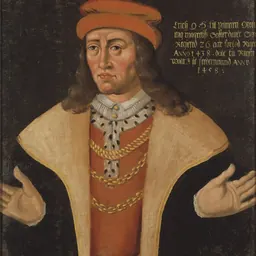

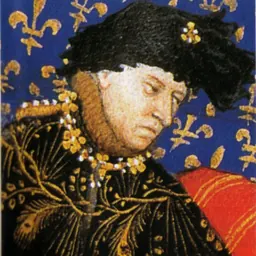


Contemporaries
People whose lives overlapped Ahmed Shah I's


Frequently asked questions
Who was Ahmed Shah I?
Sultan of Gujarat from 1411–1442
When was Ahmed Shah I born?
Ahmed Shah I was born in 1389.
When did Ahmed Shah I die?
Ahmed Shah I died in 1442.
What was Ahmed Shah I's occupation?
Ahmed Shah I was a monarch.
What nationality was Ahmed Shah I?
Ahmed Shah I's recorded nationality: Gujarat Sultanate.
Sources & further reading
Cite this page
APA: Biography.guide. (2026). Ahmed Shah I. https://biography.guide/ahmed-shah-i/
MLA: "Ahmed Shah I." Biography.guide, https://biography.guide/ahmed-shah-i/.
Chicago: "Ahmed Shah I." Biography.guide. https://biography.guide/ahmed-shah-i/.
Data last updated: 2026-09-20 · Spot an error? Report a correction.
Page generated 2026-09-27 05:11 UTC