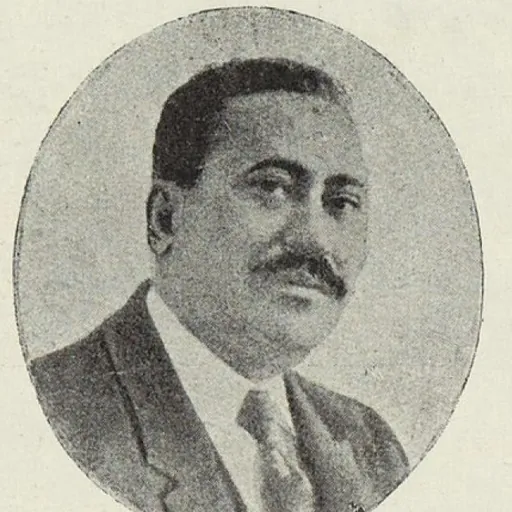
About Aḥmad Ḥāfiẓ ʿAwaḍ
Lived 1870 – 1950 (aged 79–80). Aḥmad Ḥāfiẓ ʿAwaḍ was an Egyptian journalist, translator, writer, journal editor and interpreter.
Ahmed Hafiz Awad (; ;1874–1950) was an Egyptian journalist who worked as an editor for the Al Liwa newspaper (1898–1906). He was a Member of Parliament, as well as a member of the Arabic Language Academy in 1942. He founded several newspapers, including Al-Adab, Al-Ahali, and Kawkab Al-Sharq, and was a private and close secretary to Khedive Abbas Helmy II. He authored some well-known books, including The Modern Conquest of Egypt: Napoleon Bonaparte in Egypt.
Life He was born in the city of Damanhur, Beheira Governorate, in 1874. He began his education in a Kuttab and later completed it at the honorable Al-Azhar. He graduated from Al-Tawfikiya Secondary School and then from the Higher Teachers' College.
During World War I, Awad withdrew from public life. He later became involved with the Wafd Party following the Egyptian Revolution of 1919.
He was appointed a member of the Egyptian Parliament and was also a member of the Fuad I Academy for the Arabic Language. Following the end of World War I and the adoption of the 1923 Constitution, Awad, then editor of Al-Mahrousa, joined Amin Al-Rafi'i (owner of Al-Akhbar) and Leon Castro (founder of Liberté magazine) in a meeting with Prime Minister Saad Zaghloul. They collectively demanded the enactment of a law to establish a syndicate for journalists.
Ahmed Hafiz Awad held several prominent positions. He served as a private secretary to Khedive Abbas Helmy II, accompanied him on the Hajj pilgrimage, and became privy to his political secrets, particularly his dealings with Evelyn Baring, 1st Earl of Cromer. In addition to his work as the Khedive's translator in Egypt, he also acted as his press delegate. Awad was described as having "a pen devoted to serving the Khedive."
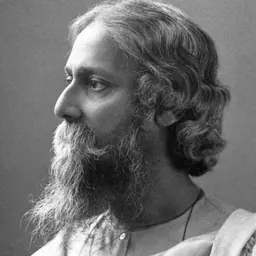
This loyalty was noted by Mohamed Farid in his memoirs, where he wrote that "Othman, Hafiz Awad, and others sought to persuade students in Paris to align themselves with the Khedive." During his career, Awad also met the Indian poet Rabindranath Tagore.
Later life In his later years, Awad fell ill, which led him to cease publication of his newspaper, Kawkab Al-Sharq. He was confined to his home for several years and passed away in Cairo in 1950.
Don’t just read it —
keep it.
Full-length biographies made to live with: read them, listen on the way to work, watch them tonight.
- E-book
- Audio
- Video
Instant download · yours to keep · every purchase keeps this site free
Important facts
People in Aḥmad Ḥāfiẓ ʿAwaḍ's life
Named in this biography and alive at the same time

Related people
Same field, nearest in time

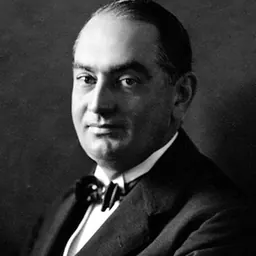

Contemporaries
People whose lives overlapped Aḥmad Ḥāfiẓ ʿAwaḍ's

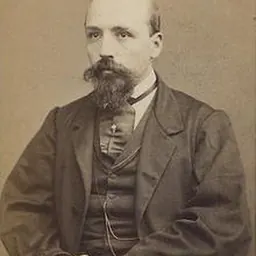
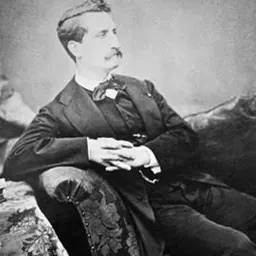


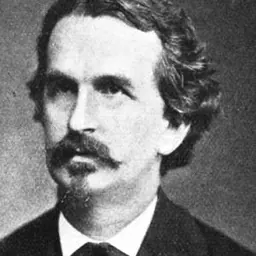
Frequently asked questions
Who was Aḥmad Ḥāfiẓ ʿAwaḍ?
Egyptian journalist
When was Aḥmad Ḥāfiẓ ʿAwaḍ born?
Aḥmad Ḥāfiẓ ʿAwaḍ was born in 1870 in Damanhur.
When did Aḥmad Ḥāfiẓ ʿAwaḍ die?
Aḥmad Ḥāfiẓ ʿAwaḍ died in 1950 in Cairo.
What was Aḥmad Ḥāfiẓ ʿAwaḍ's occupation?
Aḥmad Ḥāfiẓ ʿAwaḍ was a journalist, translator, writer, journal editor and interpreter.
What nationality was Aḥmad Ḥāfiẓ ʿAwaḍ?
Aḥmad Ḥāfiẓ ʿAwaḍ was Egyptian.
Sources & further reading
· Wikipedia: Aḥmad Ḥāfiẓ ʿAwaḍ
Cite this page
APA: Biography.guide. (2026). Aḥmad Ḥāfiẓ ʿAwaḍ. https://biography.guide/ahmad-hafiz-awad/
MLA: "Aḥmad Ḥāfiẓ ʿAwaḍ." Biography.guide, https://biography.guide/ahmad-hafiz-awad/.
Chicago: "Aḥmad Ḥāfiẓ ʿAwaḍ." Biography.guide. https://biography.guide/ahmad-hafiz-awad/.
Data last updated: 2026-09-20 · Spot an error? Report a correction.
Portrait: Wikimedia Commons · author & licence
Page generated 2026-09-27 04:57 UTC