
About Ahmad al-Tayyeb
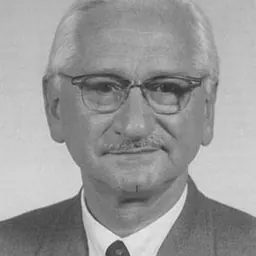
Born 1946. Ahmad al-Tayyeb is an Egyptian philosopher, theologian, university teacher, translator, islamic jurist and politician.
Ahmed Mohamed Ahmed El-Tayeb (; born 6 January 1946) is an Egyptian Islamic scholar and the current Grand Imam of al-Azhar, al-Azhar al-Sharif and former president of al-Azhar University. He was appointed by the Egyptian President, Hosni Mubarak, following the death of Mohamed Sayed Tantawy in 2010. He is from Kurna, Luxor Governorate in Upper Egypt, and he belongs to a Sunni Muslim family.
Early life and education Ahmed Mohamed Ahmed El-Tayeb was born on 6 January 1946 in Kurna, Luxor Governorate, Kingdom of Egypt. El-Tayeb studied Doctrine and Philosophy at Al-Azhar University, where he graduated in 1969, after that he had a master's degree and Ph.D. in Islamic philosophy in 1971 and 1977 respectively. Later on, he went to study at the University of Paris for six months, from December 1977 to 1978. Afterwards, he held academic posts at Al-Azhar University, then administrative roles in Qena and Aswan, and worked at the International Islamic University, Islamabad in Pakistan in 1999–2000.
Between 2002 and 2003, El-Tayeb served as Grand Mufti of Egypt. El-Tayeb is a hereditary Sufi shaykh from Upper Egypt and has expressed support for a global Sufi league. He was president of Al-Azhar University from 2003 until 2010.
National Democratic Party Prior to his appointment as the Grand Imam of Al-Azhar and president of al-Azhar University, he was a member of Mubarak's National Democratic Party's Policies Committee.
In April 2010, he resigned from his post in the party.
Views Muslim Brotherhood In an article published shortly after his appointment as president of Al-Azhar University, he was described as "a regime loyalist and member of Mr. Mubarak's ruling National Democratic Party [who] takes a firm stance against the Muslim Brotherhood".
El-Tayeb was quoted as saying that Al-Azhar University would "never be an open field for the Brotherhood".
In 2011, following the Egyptian revolution, the Muslim Brotherhood held a rally at the Al-Azhar mosque to oppose what it described as the Judaization of Jerusalem. He said at the rally that "the al-Aqsa Mosque is currently under an offensive by the Jews" and "we shall not allow the Zionists to Judaize al-Quds [Jerusalem]". He also alleged that Jews around the world were trying to prevent Islamic and Egyptian unity.
He backed the military coup against Egyptian President Mohamed Morsi.
Opposition to sectarianism He has strongly rebuked the Sunni anti-Shi'a preaching, which has increased since the Syrian Bashar al-Assad regime cracked down on the Sunni Muslim rebels in the Syrian Civil War.
Islamic State of Iraq and the Levant He has strongly condemned the Islamic State of Iraq and the Levant and stated that it is acting "under the guise of this holy religion and have given themselves the name 'Islamic State' in an attempt to export their false Islam" and (citing the Quran).
"The punishment for those who wage war against God and his Prophet and who strive to sow corruption on earth is death, crucifixion, the severing of hands and feet on opposite sides or banishment from the land. This is the disgrace for them in this world and in the hereafter they will receive grievous torment".
He has been criticized for not expressly stating that Islamic State was heretical. The Ash'ari school of Islamic theology – to which El-Tayeb belongs – does not allow calling a person who follows the shahada an apostate.
Wahhabism and Salafism In late 2016, at a conference of over a hundred Sunni scholars in Chechnya, El-Tayeb defined orthodox Sunnism as "the Ash'arites and Maturidites (adherents of the theological systems of Imam Abu Mansur al-Maturidi and Imam Abul Hasan al-Ash'ari) ... followers of any of the four schools of thought (Hanafi, Shafi'i, Maliki or Hanbali) and ... also the followers of the Sufism of Imam Junaid al-Baghdadi in doctrines, manners and [spiritual] purification." Having said that, Sheikh Ahmad el-Tayeb excluded the “Salafis” from the term of Ahluls Sunna (Sunnis) stating that Salafis – also known as Wahhabis – are not from among the Sunnis. In February 2019, they met again in Abu Dhabi during the Pope's visit to the United Arab Emirates, where he also signed the Document on Human Fraternity. On 15 November 2019, they met again in the Vatican, to reflect further on the goals of the signed document. This text later inspired the UN resolution that designated February 4 as the International Day of Human Fraternity.
Women He wrote that Islam forbids Muslim women from marrying non-Muslims, because the latter do not believe in Muhammad and his religion, meanwhile Muslim men would allow their non-Muslim women to practice their religion freely.
In May 2021, he wrote on Twitter: "A woman is permitted to assume senior positions such as in the judiciary or the issuing of fatwas and is also allowed to travel without a guardian", then he added, "there is “no such as thing" as 'Bait Al-Ta’a' (House of Obedience) in Islam, and that guardians have "no right" to prevent women from marrying without adequate reasons."
Awards In 2005, he received the Order of Independence by King of Jordan, Abdullah II of Jordan, during his participation in the International Islamic Conference which was held in Jordan that year. The Muslim 500 Mention In March 2020 at the initiative of the President of Uzbekistan Shavkat Mirziyoyev, Imam Ahmad el-Tayyeb has been awarded the title of Honorary Citizen of Samarkand at the International Conference "Imam Abu Mansur Maturidi and the Teachings of Maturidiyya: The Past and the Present" in Samarkand. The Governor of Samarkand, Babur Applakulov, granted Ahmad el-Tayyeb, the status of honorary citizen of the city of Samarkand, after the decision was ratified by the House of Representatives and the President of the Republic of Uzbekistan. The honor comes in recognition of el-Tayyeb's efforts to propagate moderate thoughts of Islam worldwide and strengthen the Egyptian-Uzbek ties.
Books
Don’t just read it —
keep it.
Full-length biographies made to live with: read them, listen on the way to work, watch them tonight.
- E-book
- Audio
- Video
Instant download · yours to keep · every purchase keeps this site free
Important facts
People in Ahmad al-Tayyeb's life
Named in this biography and alive at the same time



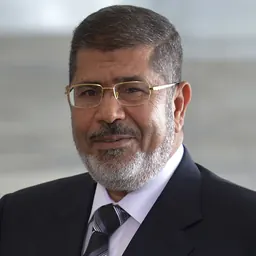
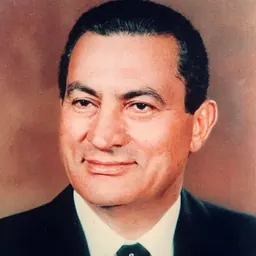


Related people
Same field, nearest in time


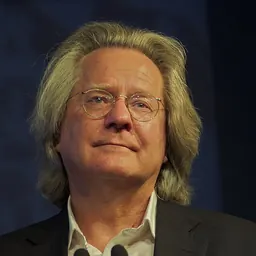
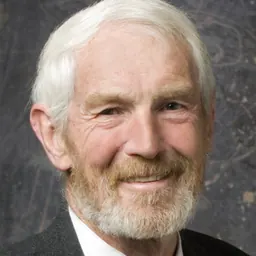
Contemporaries
People whose lives overlapped Ahmad al-Tayyeb's





Frequently asked questions
Who is Ahmad al-Tayyeb?
Imam of al-Azhar Mosque in Egypt
When was Ahmad al-Tayyeb born?
Ahmad al-Tayyeb was born on 6 January 1946 in Luxor.
What is Ahmad al-Tayyeb's occupation?
Ahmad al-Tayyeb is a philosopher, theologian, university teacher, translator, islamic jurist and politician.
What nationality is Ahmad al-Tayyeb?
Ahmad al-Tayyeb is Egyptian.
Sources & further reading
Cite this page
APA: Biography.guide. (2026). Ahmad al-Tayyeb. https://biography.guide/ahmad-al-tayyeb/
MLA: "Ahmad al-Tayyeb." Biography.guide, https://biography.guide/ahmad-al-tayyeb/.
Chicago: "Ahmad al-Tayyeb." Biography.guide. https://biography.guide/ahmad-al-tayyeb/.
Data last updated: 2026-09-20 · Spot an error? Report a correction.
Page generated 2026-09-27 05:26 UTC