
Agustín Carstens
Governor of the Bank of Mexico and former Mexican Secretary of Finance
About Agustín Carstens
Born 1958. Agustín Carstens is a Mexican economist, civil servant and politician.
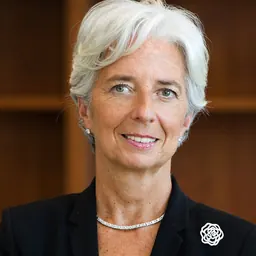
Agustín Guillermo Carstens Carstens (born 9 June 1958 in Mexico City) is a Mexican economist who has served as the general manager of the Bank for International Settlements from 1 December 2017 to 30 June 2025. He served as governor of the Bank of Mexico from 1 January 2010 to 30 November 2017. In 2011, Carstens, along with Christine Lagarde, was one of the two final candidates to become the managing director of the International Monetary Fund. He previously served as secretary of finance in the cabinet of Felipe Calderón (2006–09), as deputy managing director of the International Monetary Fund (2003–06)
Early years
Carstens graduated with a bachelor's degree in economics from the Mexico Autonomous Institute of Technology (ITAM). After working as an intern in the Bank of Mexico he received a scholarship and completed both a master's degree (1983) and a doctorate in economics (1985) at the University of Chicago. His thesis advisor was Michael Mussa, former economic counselor and director of the Department of Research at the International Monetary Fund from 1991 to 2001.
He is married to Catherine Mansell, an American academic, writer and economist who has authored several books on finance and on literary fiction and nonfiction under the pen name C. M. Mayo.
In the mid-1980s Carstens returned to Mexico and rejoined the Bank of Mexico. Before turning thirty he was appointed treasurer, effectively taking charge of the national reserves. Rising through the ranks in the early 1990s, he was appointed chief of staff of chairman Miguel Mancera, and served as Director General of Economic Research at the end of the 1990s, in charge of designing the Bank's economic policy with Governor Guillermo Ortiz Martínez in the aftermath of the Tequila Crisis and the Russian default crisis. While at the bank he produced several research articles on the Mexican economy and, in particular, co-authored an analysis of the Mexican Crisis along with then Deputy Governor Francisco Gil Díaz, which suggests the Mexican crisis was to a large extent an avoidable run on the Mexican peso brought about by external circumstances and political problems.
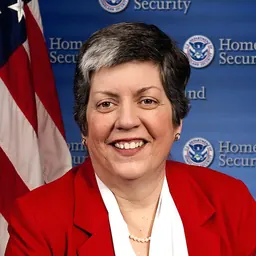
International Monetary Fund Sitting between the minister of finance and the president of the Bank of Guatemala after an official visit to the country, on 8 July 2005. U.S. Secretary Janet Napolitano and Secretary of Finance and Public Credit Agustín Carstens signing a Letter of Intent that aimed to increase security in both countries and facilitate the flow of legal travel and trade, June 2009
After many years at the Bank of Mexico, Carstens took a position at the IMF and served as the deputy managing director – one of three deputies reporting to the director and the board— from 1 August 2003 to 16 October 2006.
Secretary of Finance On 26 March 2007, Carstens was additionally appointed new chairman of the joint World Bank/IMF Development Committee, a position customarily occupied by a developing country finance minister.
As secretary, Carstens took the unconventional decision to hedge Mexico's oil earnings for 2009 against possible price falls, leading to an $8 billion profit for the country.
In the aftermath of the 2007 popular protests against rising food prices, Carstens regarded high food prices as a positive driver for investment in agriculture.
Bank of Mexico
Carstens was nominated to the Bank of Mexico on 9 December 2009 by President Felipe Calderón, replacing 12-year veteran Guillermo Ortiz, who reduced inflation from double digits to 4 percent by the end of 2009. He was confirmed by the Senate on 15 December 2009 with 81 votes in favor and 19 votes against. Business cycles in emerging economies are strongly tied to those in industrialized nations. Cycles in emerging economies are more volatile Volatility of emerging economies can be affected by additional factors that don't affect industrialized economies, such as price fluctuations Rapid capital outflows made possible under corporate globalization can have severely harmful effects on emerging economies Emerging economies are subject to the problems associated with exchange-rate regimes
Carstens claims that the solution to these problems is for emerging nations to:
Other activities Carstens currently serves as the International Advisory Board Member of the Global Finance & Technology Network.
Don’t just read it —
keep it.
Full-length biographies made to live with: read them, listen on the way to work, watch them tonight.
- E-book
- Audio
- Video
Instant download · yours to keep · every purchase keeps this site free
Important facts
People in Agustín Carstens's life
Named in this biography and alive at the same time



Related people
Same field, nearest in time





Contemporaries
People whose lives overlapped Agustín Carstens's





Frequently asked questions
Who is Agustín Carstens?
Governor of the Bank of Mexico and former Mexican Secretary of Finance (2006–2009)
When was Agustín Carstens born?
Agustín Carstens was born on 9 June 1958 in Mexico City.
What is Agustín Carstens's occupation?
Agustín Carstens is an economist, civil servant and politician.
What nationality is Agustín Carstens?
Agustín Carstens is Mexican.
Sources & further reading
Cite this page
APA: Biography.guide. (2026). Agustín Carstens. https://biography.guide/agustin-carstens/
MLA: "Agustín Carstens." Biography.guide, https://biography.guide/agustin-carstens/.
Chicago: "Agustín Carstens." Biography.guide. https://biography.guide/agustin-carstens/.
Data last updated: 2026-09-25 · Spot an error? Report a correction.
Page generated 2026-09-27 05:11 UTC