
About Agnes Mary Clerke
Lived 1842 – 1907 (aged 64). Agnes Mary Clerke was a British astronomer, science writer and writer.
Agnes Mary Clerke (10 February 1842 – 20 January 1907) was an Irish astronomer and writer. She published a number of books on the history of astronomy and on the then-nascent field of astrophysics.
Family Agnes Clerke was the daughter of John William Clerke (c. 1814–1890) who was, at the time, a bank manager in Skibbereen, County Cork, and his wife Catherine Mary Deasy (born circa 1819) whose father was a judge's registrar. She had two siblings; her older sister, Ellen Mary (1840–1906) and her younger brother, Aubrey St. John (1843–1923). Her elder sister Ellen also wrote about astronomy. All of the Clerke children were entirely home schooled.
Life and work Following in her father's footsteps—while studying classics, he had also taken courses in astronomy—she developed an interest in astronomy from an early age. Using her father's 4-inch telescope in her observations, she had begun to write a history of astronomy at the age of 15. together with her elder sister Ellen, she went to Italy where she stayed until 1877, chiefly at Florence, studying science, languages, and other subjects that would be useful in their later lives. In 1877, she settled in London.
This led to a number of other commissions, including the publication of the article on astronomy for the Catholic Encyclopedia. In 1885, she published her best known work, A Popular History of Astronomy during the Nineteenth Century.
Clerke is best known for her work as a scientific writer and historian who documented "new astronomy", now known as astrophysics, for both general and specialist readers. She did this by reading journals and observatory publications, carefully compiling dates and data and engaging with scientific communities in London, including attending lectures at the Royal Institution. Her decade in Florence gave Clerke access to major libraries making the period formative for her best-known book A Popular History of Astronomy during the Nineteenth Century. The book was published in 1885 and Clerke revised it through four editions throughout her lifetime. The book compiled research from many astronomers, explained such research clearly and organized developments in astronomy. It was seen as a leading survey of 19th century astronomy and highlighted Clerke for explaining the increasing importance of spectroscopic methods. In a twentieth-century memoir by the British Astronomical Association, the book was described as a "classic", and Clerke was credited with keeping it current through subsequent editions.
In 1893, Clerke was awarded the Actonian Prize of 100 guineas by the Royal Institution. As a member of the British Astronomical Association she attended its meetings regularly, as well as those of the Royal Astronomical Society. In 1903, with Margaret Lindsay Huggins, she was elected an honorary member of the Royal Astronomical Society, a rank previously held only by three other women, Caroline Herschel and Mary Somerville (in 1835), and Anne Sheepshanks (in 1862).
She died of pneumonia in 1907 at her home in South Kensington.
Legacy The lunar crater Clerke is named after her.
In 2002, Mary Brück wrote Agnes Mary Clerke and the Rise of Astrophysics.
In 2017, the Royal Astronomical Society established the Agnes Clerke Medal for the History of Astronomy or Geophysics, which is awarded to individuals who have achieved outstanding research into the history of astronomy or geophysics. The first recipient was Clive Ruggles.
In 2022 Jessie Kennedy and the Celestial Quartet performed a concert in Skibbereen in honour of Clerke. The performance included songs specially composed by Jessie Kennedy and by Tess Leak, using words of Agnes and her sister, Ellen, and a cello trio, the Agnes Clerke Cello Trio, composed by Diana Llewellyn.
Selected writings A Popular History of Astronomy during the Nineteenth Century. Edinburgh, 1885 (4th rev. ed. London, 1902) The System of the Stars. London, 1890 (2nd ed. London, 1905) The Herschels and Modern Astronomy. London, 1895 The Concise Knowledge Astronomy (co-authored with John Ellard Gore and Alfred Fowler). London, 1898 Problems in Astrophysics. London, 1903 "Modern Cosmogonies". London, Adam and Charles Black, 1905.
She also wrote 55 articles for the Edinburgh Review, mainly on subjects connected with astrophysics, and articles for the Dictionary of National Biography, the Encyclopædia Britannica and the Catholic Encyclopedia, and several other periodicals. Her articles in the ninth edition (1875–89) of the Britannica included Galileo Galilei, Alexander von Humboldt, Johannes Kepler, Antoine Lavoisier and the zodiac.
Don’t just read it —
keep it.
Full-length biographies made to live with: read them, listen on the way to work, watch them tonight.
- E-book
- Audio
- Video
Instant download · yours to keep · every purchase keeps this site free
Important facts
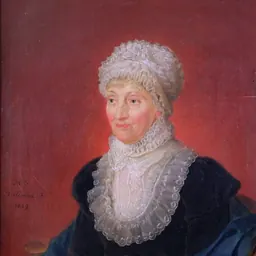
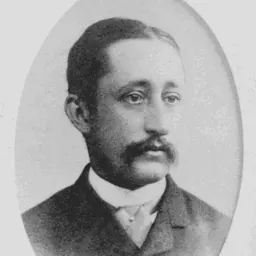
People in Agnes Mary Clerke's life
Named in this biography and alive at the same time



Related people
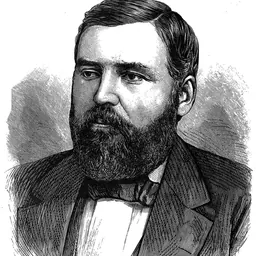
Same field, nearest in time
Contemporaries
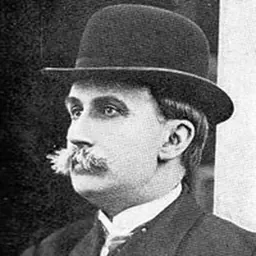
People whose lives overlapped Agnes Mary Clerke's

Frequently asked questions
Who was Agnes Mary Clerke?
Irish astronomer and writer (1842–1907)
When was Agnes Mary Clerke born?
Agnes Mary Clerke was born on 10 February 1842 in Skibbereen.
When did Agnes Mary Clerke die?
Agnes Mary Clerke died on 20 January 1907 in London.
What was Agnes Mary Clerke's occupation?
Agnes Mary Clerke was an astronomer, science writer and writer.
What nationality was Agnes Mary Clerke?
Agnes Mary Clerke was British.
Sources & further reading
· Wikipedia: Agnes Mary Clerke
Cite this page
APA: Biography.guide. (2026). Agnes Mary Clerke. https://biography.guide/agnes-mary-clerke/
MLA: "Agnes Mary Clerke." Biography.guide, https://biography.guide/agnes-mary-clerke/.
Chicago: "Agnes Mary Clerke." Biography.guide. https://biography.guide/agnes-mary-clerke/.
Data last updated: 2026-09-20 · Spot an error? Report a correction.
Page generated 2026-09-27 05:18 UTC