
About Agnes Dollan
Lived 1887 – 1966 (aged 79). Agnes Dollan was a British suffragette.
Agnes Johnston Dollan MBE ( Moir; 16 August 1887 – 16 July 1966), also known as Agnes, Lady Dollan, was a Scottish suffragette and political activist. She was a leading campaigner during the Glasgow Rent Strikes, and a founding organiser of the Women's Peace Crusade. In 1919, she was the first woman selected by the Labour party to stand for election to Glasgow Town Council, and later became Lady Provost of Glasgow. She was one of eleven children.
Dollan attended school locally until the age of eleven before being forced to leave due to family poverty.
On leaving school, Dollan went first to work in a factory before becoming a Post Office telephone operator. During this latter job, Dollan joined the Women's Labour League and assisted Mary Reid Macarthur in creating a women's post office trade union.
Dollan had met Patrick Dollan, a journalist and member of the Independent Labour Party, via the Clarion Scouts. Dollan was married on 20 September 1912, and her only child, James, was born in 1913, and she was exempted from religious instruction at school. James Dollan also became a journalist.
Rent strikes and Red Clydeside Agnes Dollan became politically active during the Red Clydeside period of Glasgow's history as an organiser of the 1915 Glasgow Rent Strikes alongside Mary Barbour, Helen Crawfurd, Mary Burns Laird and Mary Jeff. Dollan worked to link the rent strikes movement with peace campaigns, Dollan was jailed briefly in 1917 for protesting against high rents. thumb
Dollan became a prominent figure in Glasgow politics and spoke at the 1917 May Day demo in Glasgow Green. On 13 December 1921, Dollan was elected in a by-election as the councillor for Springburn. Dollan successfully stood again for Council in 1922 and held the position until 1928. Dollan became a Justice of the Peace in 1928.
During 1924, Dollan wrote in The Sunday Post about the amendment of the Representation of the People Act 1918, clearly linking domestic interests as a good reason for all women to have the franchise (as this Act gave the vote to certain women only).
Dollan was the first Labour candidate to contest Dumfriesshire in the United Kingdom general election of 1924, however she was unsuccessful.
She served on the Labour Party National Executive from 1922 to 1928 and resumed her seat in the 1930s after a period of illness prevented her from participating in political activities. In 1933, she spoke at the National Conference of Labour Women, arguing that there should be more women candidates for the Labour Party. Dollan fought against the removal of the ILP from the Labour Party, however following the split she was appointed the first president of the Scottish Socialist Party's women's council in 1933. The election was ultimately contested by David Cleghorn Thomson.
Dollan's husband Patrick served as Lord Provost of Glasgow from 1938 to 1941 however when she attended events with him, Agnes retained her own identity.
Harry McShane wrote in his autobiography:
Anti-war activism Alongside Helen Crawfurd and others, Dollan established both the Women's Peace Crusade in 1916 Both noted speakers, Dollan and Crawfurd travelled around Scotland spreading the word about the League.
She took exception to the defence of women being used as a reason for war.
In 1918, Dollan spoke on behalf of the ILP on 'Russian intervention' at a meeting in Hamilton. And in 1922, Dollan and Mary Barbour spoke in Langside, discussing "the Citizenship of women and bearing on world peace, disarmament, and international justice and freedom".
Dollan later modified her anti-war stance in response to World War II, stating that: ''It was all very well to theorise under normal conditions but we were not living under such conditions today - we were facing a crisis which might mean general mobilisation.
Death Agnes Dollan died of heart failure on 16 July 1966, aged 78, in Glasgow's Victoria Infirmary.
Don’t just read it —
keep it.
Full-length biographies made to live with: read them, listen on the way to work, watch them tonight.
- E-book
- Audio
- Video
Instant download · yours to keep · every purchase keeps this site free
Important facts
Family & relationships
People in Agnes Dollan's life
Named in this biography and alive at the same time
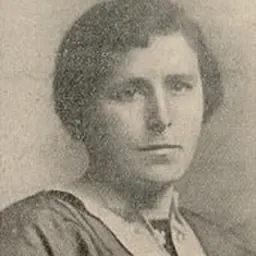



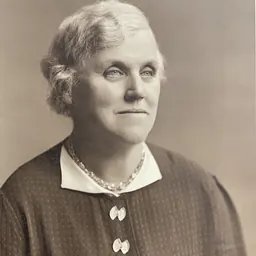


Related people
Same field, nearest in time
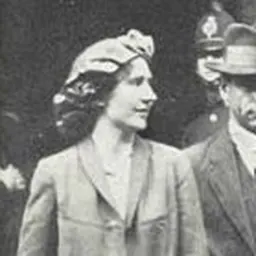

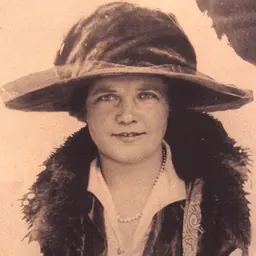
Contemporaries
People whose lives overlapped Agnes Dollan's



Frequently asked questions
Who was Agnes Dollan?
Scottish suffragette and socialist (1887–1966)
When was Agnes Dollan born?
Agnes Dollan was born on 17 January 1887 in Springburn.
When did Agnes Dollan die?
Agnes Dollan died on 17 January 1966 in Glasgow, Glasgow Victoria Infirmary, Scotland.
What was Agnes Dollan's occupation?
Agnes Dollan was a suffragette.
What nationality was Agnes Dollan?
Agnes Dollan was British.
Sources & further reading
Cite this page
APA: Biography.guide. (2026). Agnes Dollan. https://biography.guide/agnes-dollan/
MLA: "Agnes Dollan." Biography.guide, https://biography.guide/agnes-dollan/.
Chicago: "Agnes Dollan." Biography.guide. https://biography.guide/agnes-dollan/.
Data last updated: 2026-09-20 · Spot an error? Report a correction.
Page generated 2026-09-27 05:05 UTC