
About Afonso I of Portugal
Lived 1109 – 1185 (aged 76). Afonso I of Portugal was a Spanish sovereign, writer, warrior and revolutionary.
Dom Afonso I (born Afonso Henriques; 1106/1109/11116 December 1185) nicknamed "the Conqueror" , "the Founder" and "the Great" (O Magno) by the Portuguese, was the first king of Portugal, from 26 July 1139 until his death on 6 December 1185. He achieved the independence of the County of Portugal, establishing a new kingdom and doubling its area with the , an objective that he pursued until his death.
Afonso was the son of Theresa of León and Henry of Burgundy, rulers of the County of Portugal. Henry died in 1112, leaving Theresa to rule alone. Unhappy with Theresa's romantic relationship with Galician Fernando Pérez de Traba and his political influence, the Portuguese nobility rallied around Afonso, who revolted and defeated his mother at the Battle of São Mamede in 1128 and became sole Count of Portugal soon afterwards. In 1139, Afonso renounced the suzerainty of the Kingdom of León and established the independent Kingdom of Portugal.
Afonso actively campaigned against the Moors in the south. In 1139 he won a decisive victory at the Battle of Ourique, and in 1147 he seized Santarém and Lisbon from the Moors, with help from men on their way to the Holy Land for the Second Crusade. He secured the independence of Portugal following a victory over León at Valdevez and received papal approval through Manifestis Probatum. Afonso died in 1185 and was succeeded by his son, Sancho I.
Early life Afonso was the son of Theresa, the illegitimate daughter of King Alfonso VI of León, and her husband, Henry of Burgundy. He was the youngest of 3 children, with the oldest being Urraca Henriques and Sancha Henriques being the middle child. Historians have also come to a consesus that a fourth illegitimate child was born from Henry of Burgundy, namely Pedro Afonso, who followed on his half-brother's conquests and later settled as a monk in Alcobaça Monastery.
His place of birth has been highly disputed between scholars and historians, with four distinct possibilities: 1) he was born in Guimarães, which was an important fortified position in the County of Portugal; 2) he was born in Viseu, which was an important economic hub for the County; 3) he was born in Coimbra, an immensely important city where he would later spent the most time in and be buried in; or 4) he was born elsewhere, either Tierra de Campos, Sahagún or Braga.
According to the the future Portuguese king was born in Viseu, which was at the time the most important political centre of his parents. This was accepted by most Portuguese scholars until 1990, when Torquato de Sousa Soares proposed Coimbra, the centre of the county of Coimbra and another political centre of Afonso's progenitors, as his birthplace, which caused outrage in Guimarães and a polemic between this historian and José Hermano Saraiva. Almeida Fernandes later proposed Viseu as the birthplace of Afonso based on the , which states Afonso was born in 1109, a position followed by historian José Mattoso in his biography of the king, regardless of this, it is still widely accepted in popular conscience that Afonso was born in Guimarães. Abel Estefânio has suggested a different date and thesis, proposing 1106 as the birth date and the region of Tierra de Campos or even Sahagún as likely birthplaces based on the known itineraries of Henry and Theresa.
His place of baptism is also under suspicion: according to tradition the place is indicated as being in the Church of São Miguel do Castelo, in Guimarães, however, recent scholarship, backed by architectural and archeological evidence, have cast doubts on this claim. It has been calculated that the date of the consecration of the Church took place in 1239, therefore putting the construction of the church an entire century after his birth. There are those who argue that the baptism actually took place in the Cathedral of Braga where he was baptised by the Primate Archbishop Saint Gerald of Braga, which was a politically sound move for Count Henry to have the highest-ranking clergy in his fiefdom baptise his heir.
Henry and Theresa reigned jointly as count and countess of Portugal until his death on 22 May 1112 during the siege of Astorga, after which Theresa ruled Portugal as a widow. Both women, Countess Theresa and Queen Urraca, ruled alone after the deaths of their immigrant husbands, ostensibly in defence of their young children, but also in their own right. Theresa would proclaim herself queen (a claim recognised by Pope Paschal II in 1116) but was captured and forced to reaffirm her vassalage to her half-sister, Urraca of León.
In an effort to pursue a larger share in the Leonese inheritance, his mother Theresa joined forces with Fernando Pérez de Trava, the most powerful count in Galicia. He also conquered an important part of the land south of the Tagus River, although this was lost again to the Moors in the following years.
Meanwhile, King Alfonso VII of León regarded the independent ruler of Portugal as nothing but a rebel. Conflict between the two was constant and bitter in the following years. Afonso became involved in a war, taking the side of the Aragonese king, an enemy of Castile. To ensure the alliance, his son Sancho was engaged to Dulce of Aragon. Finally after winning the Battle of Valdevez, the Treaty of Zamora (1143) established peace between the cousins and the recognition by the Kingdom of León that Portugal was a fully independent kingdom.
In 1169 the now old King Afonso was possibly disabled in an engagement near Badajoz, by a fall from his horse and slamming against the castle gate, and made prisoner by the soldiers of King Ferdinand II of León, his son-in-law. He spent months at the hot springs of São Pedro do Sul, but never recovered and from this time onward the Portuguese king never rode a horse again. However, it is not certain if this was because of the disability: according to the later Portuguese chronistic tradition, this happened because Afonso would have to surrender himself again to Ferdinand or risk war between the two kingdoms if he ever rode a horse again. Portugal was obliged to surrender as his ransom almost all the conquests Afonso had made in Galicia (north of the Minho River) in the previous years.
Family In 1146, Afonso married Matilda, daughter of Amadeus III, Count of Savoy and Mahaut of Albon, both appearing together for the first time in May of that year confirming royal charters. They had the following issue:
(5 March 1147 – 1155) named after his paternal grandfather, Henry, Count of Portugal, he died when he was only eight years old. Despite being just a child he represented his father at a council in Toledo at the age of three; Urraca (1148–1211), married King Ferdinand II of León and was the mother of King Alfonso IX. The marriage was subsequently annulled in 1171 or 1172 and she retired in Zamora, one of the villas that she had received as part of her arras, and later at the Monastery of Santa María in Wamba, Valladolid where she was buried; Teresa (1151–1218), countess consort of Flanders due to her marriage to Philip I and duchess consort of Burgundy through her second marriage to Odo III; Mafalda (1153after 1162). In January 1160, her father and Ramón Berenguer IV, Count of Barcelona, negotiated the marriage of Mafalda to Alfonso, future King Alfonso II of Aragon who at that time was three or four years old. After the death of Ramón Berenguer IV in the summer of 1162, King Ferdinand II of León convinced his widow, Queen Petronilla, to cancel the infante's wedding plans with Mafalda and for Alfonso to marry instead Sancha, daughter of Alfonso VII of León and his second wife Queen Richeza of Poland. Mafalda died in her childhood at an unrecorded date. Sancho, the future King of Portugal (11 November 115426 March 1211). He was baptised with the name of Martin for having been born on the saint's feast day; (1156–25 August 1164); and (1157–14 February 1166/67), born ten days before the death of her mother, Sancha died before reaching the age of ten on 14 February according to the death registry at the Monastery of Santa Cruz (Coimbra) where she was buried.
Before his marriage to Matilda, King Afonso fathered his first son with Chamoa Gómez, daughter of Count Gómez Núñez and Elvira Pérez, sister of Fernando and Bermudo Pérez de Traba:
Afonso (1140–1207). Born around 1140, according to recent investigations, he is the same person as the one often called Fernando Afonso who was the alferes-mor of the king and later Grand Master of the Knights Hospitaller. His presence in the court is first recorded in 1159. In 1169 he succeeded as alferes-mor his half-brother, Pedro Pais da Maia, the legitimate son of his mother and Paio Soares da Maia.
The extramarital offspring by Elvira Gálter were: Urraca Afonso. In 1185, her father gave her Avô, stipulating that this villa was to be inherited only by the children that she had with her husband Pedro Afonso de Ribadouro (also known as Pedro Afonso Viegas), grandson of Egas Moniz, which could indicate another previous or subsequent marriage. In 1187, she exchanged with her half-brother, King Sancho, this villa for Aveiro. She died after 1216, the year she made a donation to the Monastery of Tarouca. Teresa Afonso. In some genealogies she appears as the daughter of Elvira Gálter, and in others as the daughter of Chamoa Gómez. Her first marriage was with Sancho Nunes de Barbosa with whom she had a daughter, Urraca Sanches, who married Gonçalo Mendes de Sousa, the father of Mendo Gonçalves de Sousa known as "Sousão". Her second husband was Fernando Martins Bravo, Lord of Bragança and Chaves, with no issue from this marriage.
King Afonso was also the father of: Pedro Afonso (died after 1183), Lord of Arega and Pedrógão, mayor of Abrantes in 1179, alferes of King Afonso I between 1181 and 1183, and Master of the Order of Aviz.
Don’t just read it —
keep it.
Full-length biographies made to live with: read them, listen on the way to work, watch them tonight.
- E-book
- Audio
- Video
Instant download · yours to keep · every purchase keeps this site free
Important facts
Family & relationships
People in Afonso I of Portugal's life
Named in this biography and alive at the same time
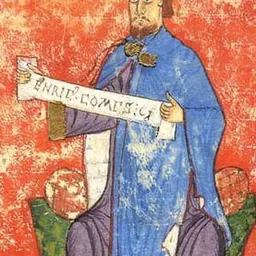



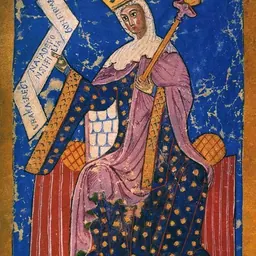


Related people
Same field, nearest in time
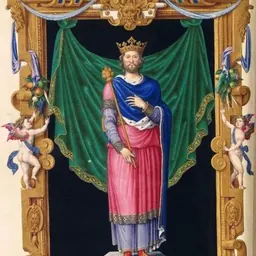


Contemporaries
People whose lives overlapped Afonso I of Portugal's



Frequently asked questions
Who was Afonso I of Portugal?
king of Portugal from 1139 to 1185
When was Afonso I of Portugal born?
Afonso I of Portugal was born on 25 July 1109 in Guimarães, Viseu.
When did Afonso I of Portugal die?
Afonso I of Portugal died on 6 December 1185 in Coimbra.
What was Afonso I of Portugal's occupation?
Afonso I of Portugal was a sovereign, writer, warrior and revolutionary.
What nationality was Afonso I of Portugal?
Afonso I of Portugal was Spanish.
Sources & further reading
· Wikipedia: Afonso I of Portugal
· DBpedia: Afonso I of Portugal
Cite this page
APA: Biography.guide. (2026). Afonso I of Portugal. https://biography.guide/afonso-i-of-portugal/
MLA: "Afonso I of Portugal." Biography.guide, https://biography.guide/afonso-i-of-portugal/.
Chicago: "Afonso I of Portugal." Biography.guide. https://biography.guide/afonso-i-of-portugal/.
Data last updated: 2026-09-20 · Spot an error? Report a correction.
Page generated 2026-09-27 05:19 UTC