
About Adrian Raine
Born 1954. Adrian Raine is a British psychologist, criminologist and university teacher, known for Genetics of crime and Neurocriminology.
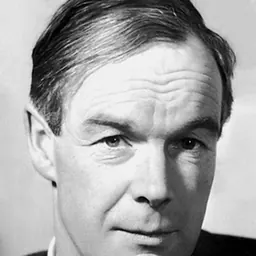
Adrian Raine (born 27 January 1954) is a British psychologist. He currently holds the chair of Richard Perry University Professor of Criminology & Psychiatry in the Department of Criminology of the School of Arts and Sciences and in the Department of Psychiatry of the School of Medicine at the University of Pennsylvania. He is noted for his research on the neurobiological and biosocial causes of antisocial and violent behavior in children and adults. He was the first scientist to use neuroimaging to study the brains of murderers.
Early life and education
Raine received his bachelor's degree in experimental psychology from Oxford University in 1977. He received his D.Phil. in psychology from the University of York in 1982.
Career Raine spent four years in two high-security prisons in England working as a prison psychologist. He was appointed lecturer in Behavioural Sciences in the Department of Psychiatry at Nottingham University in 1984 and in 1986 became director of the Mauritius Child Health Project, a continuing longitudinal study of child mental health following a group of 1795 people form Mauritius from the age of three onward. Raine moved to the United States in 1987 to become an assistant professor in psychology at the University of Southern California (USC). His motives for moving from Britain to the United States were twofold: first, he believed that American scientists were more open-minded about the potential role of genetics in crime than their British counterparts, and second, there were more murderers in the United States for him to study. He was promoted to tenured associate professor there in 1990. In 1999, he was given the endowed chair of Robert G. Wright Professor of Psychology at USC. In 2007, he made the move to serve as Richard Perry University Professor of Criminology & Psychiatry at the University of Pennsylvania. He also serves as the university's fourth Penn Integrates Knowledge professor.
He frequently gives public lectures about his work, for example, at events like TEDxVienna.
Awards and honors Raine has received the Young Psychologist of the Year Award from the British Psychological Society (1980), a Research Scientist Development Award from the National Institute of Mental Health (1993), an Independent Scientist Award from the National Institute of Mental Health (1999), the Joseph Zubin Memorial Award (1999), and USC's Associate's Award for Creativity in Research (2003). He has been a fellow of the Academy of Experimental Criminology since 2007 and of the American Psychological Society since 2011. The Anatomy of Violence: The Biological Roots of Crime (2013). Psychopathy: An Introduction to Biological Findings and Their Implications (2014) https://nyupress.org/books/9780814745441/
Don’t just read it —
keep it.
Full-length biographies made to live with: read them, listen on the way to work, watch them tonight.
- E-book
- Audio
- Video
Instant download · yours to keep · every purchase keeps this site free
Important facts
People in Adrian Raine's life
Named in this biography and alive at the same time


Related people
Same field, nearest in time






Contemporaries
People whose lives overlapped Adrian Raine's




Frequently asked questions
Who is Adrian Raine?
British psychologist
When was Adrian Raine born?
Adrian Raine was born on 27 January 1954 in Darlington.
What is Adrian Raine's occupation?
Adrian Raine is a psychologist, criminologist and university teacher.
What is Adrian Raine known for?
Adrian Raine is known for Genetics of crime and Neurocriminology.
What nationality is Adrian Raine?
Adrian Raine is British.
Sources & further reading
Cite this page
APA: Biography.guide. (2026). Adrian Raine. https://biography.guide/adrian-raine/
MLA: "Adrian Raine." Biography.guide, https://biography.guide/adrian-raine/.
Chicago: "Adrian Raine." Biography.guide. https://biography.guide/adrian-raine/.
Data last updated: 2026-09-20 · Spot an error? Report a correction.
Page generated 2026-09-27 05:09 UTC