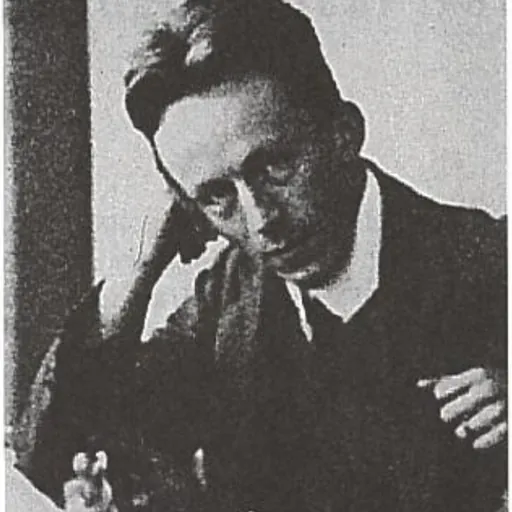
About Adolf Naef
Lived 1883 – 1949 (aged 66). Adolf Naef was a Swiss zoologist, university teacher, malacologist, paleontologist, ordinary professor and biologist.
Adolf Naef (1 May 1883 – 11 May 1949) was a Swiss zoologist and palaeontologist who worked on cephalopods and systematics. Although he struggled with academic politics throughout his career and difficult conditions during World War I and II, his work had lasting influences on the fields of phylogenetics, morphology, and embryology.
Life
Naef was born in Herisau, Switzerland, to parents Martin and Berta. In 1904, he began studying philosophy and literature at the University of Zurich, but soon switched to natural sciences. He graduated in 1908 and went on to pursue a PhD under the guidance of Arnold Lang (1855–1914), a former professor of Jena University and close friend of Ernst Haeckel as well as a long-time associate of Anton Dohrn.
Naef visited Dohrn's Zoological Station in Naples, Italy in 1908. Although initially planning to collect eggs from a variety of animals, he ended up studying the embryology of the squid Loligo vulgaris. He published his dissertation one year later.
In 1910, Naef accepted a position of a permanent visiting scientist at the Zoological Station, where he began work on a cephalopod monograph that had been started by Giuseppe Jatta. He took a concurrent teaching position at the University of Zurich, working remotely from Naples. During World War I, conditions in Italy deteriorated until finally Naef decided to return to Zurich. Naef described his approach as Systematische Morphologie, the details of which he sketched out as early as 1913:
"Phylogenetic and natural systematics deal with the same factual material, and although each has different basic concepts, both disciplines can be united in a single concept because their objects are so similar. I have therefore proposed the name 'systematic morphology' for this concept ... It is intended to show that there is an inner relationship between natural systematics and (comparative) morphology.”
Naef's concern was with the discovery of natural, as opposed to artificial, classification, a problem examined in detail by A. P. de Candolle. Naef expressed it so:
"For decades, phylogenetics lacked a valid methodological basis and developed on the decayed trunk of a withering tradition rooted in the idealistic morphology and the systematics of pre-Darwinian times. There was talk of systematic 'tact' and morphological 'instinct', terms which were felt rather than understood and consequently insufficient to form the frame of a science which required sound definitions and clearly formulated principles." including a succinct summary in the widely read 2nd edition of the Handwörterbuch der Naturwissenschaften. This work strongly influenced Willi Hennig, who developed a similar philosophy but disagreed with Naef on the primacy of direct observation in favor of pursuing the metaphysical "true nature" of phylogenetics. and he was the first to propose that modern squids evolved directly from belemnites. After a period of skepticism, this idea has recently been gathering traction. Naef's suggestion that argonauts could have evolved from ammonoids, however, has been refuted.
In 1930, the extinct spirulid genus Naefia was named in his honor by paleontologist Walter Wetzel.
Works
Naef, A. (1909). Die Organogenese des Cölomsystems und der zentralen Blutgefässe von Loligo. Jenaische Zeitschrift für Naturwissenschaft, 45, N.F. 38:221—266. Naef, A. (1909). Die Organogenese des Cölomsystems und der zentralen Blutgefässe von Loligo. Inaugural-Dissertation, Univers. Zurich, 46pp. Naef, A. (1917). Die individuelle Entwicklung organischer Formen als Urkunde ihrer Stammesgeschichte: (Kritische Betrachtungen über das sogenannte “biogenetische Grundgesetz”). Verlag von Gustav Fischer, Jena. Naef, A. (1919). Idealistische Morphologie und Phylogenetik (zur Methodik der systematischen). Verlag von Gustav Fischer, Jena. Naef, A. (1972). Cephalopoda. Fauna and Flora of the Bay of Naples (Fauna und Flora des Golfes von Neapel und der Angrenzenden Meers-Abschitte), Monograph 35, Part I, [Vol. I], Fascicle I. Smithsonian Institution Libraries, Washington. Naef, A. (2000). Cephalopoda. Embryology. Fauna and Flora of the Bay of Naples [Fauna und Flora des Golfes von Naepel]. Monograph 35. Part I, Vol. II [Final part of the Monograph No. 35], pp. 3–461. Washington, Smithsonian.
Don’t just read it —
keep it.
Full-length biographies made to live with: read them, listen on the way to work, watch them tonight.
- E-book
- Audio
- Video
Instant download · yours to keep · every purchase keeps this site free
Important facts
People in Adolf Naef's life
Named in this biography and alive at the same time


Related people
Same field, nearest in time

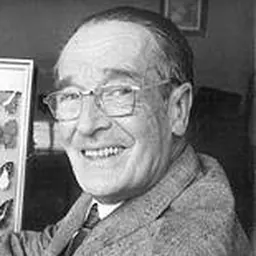


Contemporaries
People whose lives overlapped Adolf Naef's

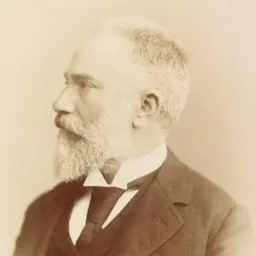
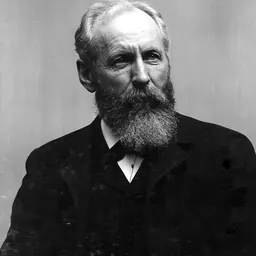

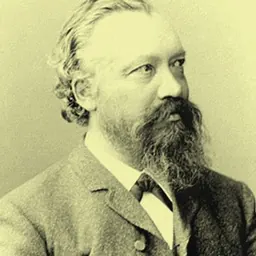
Frequently asked questions
Who was Adolf Naef?
Swiss scientist (1883–1949)
When was Adolf Naef born?
Adolf Naef was born on 1 May 1883 in Herisau.
When did Adolf Naef die?
Adolf Naef died on 11 May 1949 in Zurich.
What was Adolf Naef's occupation?
Adolf Naef was a zoologist, university teacher, malacologist, paleontologist, ordinary professor and biologist.
What nationality was Adolf Naef?
Adolf Naef was Swiss.
Sources & further reading
Cite this page
APA: Biography.guide. (2026). Adolf Naef. https://biography.guide/adolf-naef/
MLA: "Adolf Naef." Biography.guide, https://biography.guide/adolf-naef/.
Chicago: "Adolf Naef." Biography.guide. https://biography.guide/adolf-naef/.
Data last updated: 2026-09-20 · Spot an error? Report a correction.
Portrait: Wikimedia Commons · author & licence
Page generated 2026-09-27 04:58 UTC