
About Ado Bayero
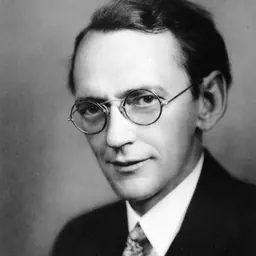
Lived 1930 – 2014 (aged 83). Ado Bayero was a Nigerian diplomat, politician and monarch.
Ado Bayero CFR, LLD, JP (25 July 1930 – 6 June 2014) was the Emir of Kano from 1963 to 2014. Early life
Lineage Ado Bayero was born on 25 July 1930 into the royal family of the Fulani Sullubawa clan that has ruled over the Emirate of Kano since 1819. His father was Abdullahi Bayero and his mother was Hajiya Hasiya. He was the eleventh child of his father and the second of his mother. At the age of seven, he was sent to live with Maikano Zagi.
Early life and education Bayero started his education in Kano studying Islam, after which he attended Kano Middle School (now Rumfa College, Kano). He spent around three years at the Kano School for Arabic Studies but did not complete the course. He then worked as a bank clerk for the Bank of British West Africa until 1949, when he joined the Kano Native Authority. He attended Zaria Clerical College in 1952.
Shortly after his resignation, he was appointed chief of the Kano Native Authority Police.
1960s Bayero became emir during the first republic, at a time when Nigeria was going through rapid social and political changes and regional, sub-regional and ethnic discord was increasing. In his first few years, two pro-Kano political movements gained support among some Kano elites. The Kano People's Party emerged during the reign of Muhammadu Inuwa and supported the deposed Emir Sanusi, but it soon evaporated. The Kano State Movement emerged towards the end of 1965 and favored more economic autonomy for the province.
The death in 1966 of many political agitators from northern Nigeria, and the subsequent establishment of a unitary state, consolidated a united front in the northern region but also resulted in a spate of violence there, including in Kano. Bayero's admirers credit him with bringing calm and stability during this and later crises in Kano.
1970s The constitutional powers of the emir were whittled down by the military regimes between 1966 and 1979. The Native Authority Police and Prisons Department was abolished, the emir's judicial council was superseded by another body, and local government reforms in 1968, 1972, and 1976 reduced the powers of the emir.
1980s Inside the Emir's reception roomDuring the second republic, he witnessed hostilities from the People's Redemption Party led government of Abubakar Rimi.
In 1984, a travel ban was placed on the emir and his friend Okunade Sijuwade. Although the military regimes were then seen as relying on traditional rulers for support, many military regimes in the past reduced the powers of traditional rulers such as Bayero.
Later years As emir, he became a patron of Islamic scholarship and embraced Western education as a means to succeed in a modern Nigeria. He was a vocal critic of the terrorist group Boko Haram and strongly opposed their campaign against western education. On 19 January 2013, he survived an assassination attempt blamed on the Islamist group which left two of his sons injured and his driver and bodyguard dead, among others. A prime suspect confessed to have participated in the attack on the Emir's motorcade and so many other co-ordinated attacks in the state which led to the arrest of six others.
Death and succession On 6 June 2014, after fifty-one years on the throne, Ado Bayero died in his palace Gidan Rumfa. His eldest son and heir, Sanusi Ado Bayero was considered the natural successor and initial reports announced him as Emir. On 8 June 2014, his grand nephew Sanusi Lamido Sanusi was crowned Emir of Kano. His son, Sanusi Ado in protest decided to leave Kano and in 2015, he was stripped of all his titles, after refusing to pay allegiance to Emir Sanusi Lamido Sanusi.
Legacy Bayero was the longest-serving emir in Kano's history. He was seen as one of Nigeria's most prominent and revered Muslim leaders who was a successful businessman and had worked as a banker, police officer, MP and diplomat. Ado Bayero was the 13th Fulani Emir since the Fulani War of Usman dan Fodio, when the Fulani took over the Hausa city-states. He was one of the strongest and most powerful emirs in the history of the Hausa land. He was renowned for his abundant wealth, maintained by means of stock market investments and large-scale agricultural entrepreneurship both at home and abroad.
Don’t just read it —
keep it.
Full-length biographies made to live with: read them, listen on the way to work, watch them tonight.
- E-book
- Audio
- Video
Instant download · yours to keep · every purchase keeps this site free
Important facts
Family & relationships
People in Ado Bayero's life
Named in this biography and alive at the same time



Related people
Same field, nearest in time

Contemporaries
People whose lives overlapped Ado Bayero's


Frequently asked questions
Who was Ado Bayero?
Nigerian king (1930–2014)
When was Ado Bayero born?
Ado Bayero was born on 25 July 1930 in Kano State, Kano.
When did Ado Bayero die?
Ado Bayero died on 6 June 2014 in Kano, Kano State.
What was Ado Bayero's occupation?
Ado Bayero was a diplomat, politician and monarch.
What nationality was Ado Bayero?
Ado Bayero was Nigerian.
Sources & further reading
Cite this page
APA: Biography.guide. (2026). Ado Bayero. https://biography.guide/ado-bayero/
MLA: "Ado Bayero." Biography.guide, https://biography.guide/ado-bayero/.
Chicago: "Ado Bayero." Biography.guide. https://biography.guide/ado-bayero/.
Data last updated: 2026-09-20 · Spot an error? Report a correction.
Page generated 2026-09-27 05:27 UTC