
Adelbert Theodor Wangemann
German assistant to Thomas Edison, early audio recording technician
About Adelbert Theodor Wangemann
Lived 1855 – 1906 (aged 51). Adelbert Theodor Wangemann was a German record producer, composer and audio engineer, known for Helmuth von Moltke the Elder, Johannes Brahms and Otto von Bismarck.
Adelbert Theodor Edward Wangemann (February 13, 1855 – June 1906), known as Theo, was a German who emigrated to the United States. In 1888, he began working for Thomas Edison as an assistant at his laboratory in West Orange, New Jersey. In 1889, Edison sent Wangemann to keep the phonograph at the 1889 Paris Expo in good working condition. The trip was extended and Wangemann made numerous early sound recordings on wax cylinders, some of which were lost for more than 100 years. Found in 1957, but not revealed until 2012, they include the only known recording of Otto von Bismarck.
Early years Wangemann was born in Berlin, Germany to Adalbert Theodor Wangemann (1815–1878) and Theodosia Sophie Ottilie Wangemann (née Rhenius) (died 1878). He and his older brother, born September 23, 1852, were named after their father. To distinguish them, he was called "Theo"; his first name also had a slight spelling change. He and his brothers later added third names, he added the name Edward; and his brother, Emil. |group=note By 1900, his brother had also changed his first name to Albert. His uncle, Otto's father, was also an organist.
Wangemann composed music, played and occasionally performed at the piano. Wangemann's father had a business selling paper goods and a factory where he manufactured envelopes and embossed monograms on writing paper. experimenting to find the best ways of recording music and voice. Recordings were made individually on wax cylinders, with no means of duplicating them. By December 1888, Wangemann had tried recording several originals at once, but this was insufficient to meet the request for the recordings, which were not yet being sold. ending with a brief seven-note "trademark" improvisation that annoyed some who heard these recordings. While he was in Europe, more than 2,000 blank cylinders were sent to Wangemann for this purpose and he recorded a number of prominent individuals, musicians, comedians, singers and statesmen, Beginning with artists who were at the Paris Expo, Wangemann recorded pianist Édouard Risler, the popular French café-concert singer Paulus, and Charles-Marie Widor, an organist, among others. of prominent musicians and individuals. He also demonstrated the phonograph and recordings to different groups. On September 18, he gave a demonstration to scientists and professors in Heidelberg and two days later, to a group of electrotechnicians in Frankfurt. Wangemann's behavior at both of these events provoked some criticism from the audience. In Heidelberg, where Edison was the guest of honor, he took over the address, during which some of his comments were viewed as out of turn. In Frankfurt, where he spoke to a wider audience in a packed hall, he condescendingly made them look unsophisticated and feel unworthy of his time. Wangemann met with Czar Alexander III on October 12. After weeks of postponements, this invitation that had meant so much to Wangemann found the Czar little interested in the phonograph and not interested in making a recording.
Wangemann was killed in a train accident in Brooklyn in early June 1906. Many of his recordings, in particular, the one of Bismarck, were considered lost for over 100 years. The wax cylinders were found in 1957, when Edison's home and laboratory were donated to the United States' National Park Service a section of Berlin, an Adelbert Theodor Wangemann was born on February 13, 1855, and christened on April 13, 1855.
Don’t just read it —
keep it.
Full-length biographies made to live with: read them, listen on the way to work, watch them tonight.
- E-book
- Audio
- Video
Instant download · yours to keep · every purchase keeps this site free
Important facts
People in Adelbert Theodor Wangemann's life
Named in this biography and alive at the same time
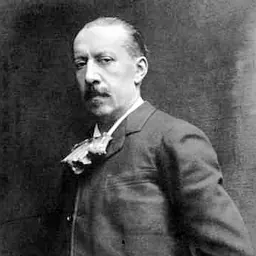
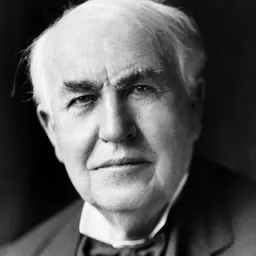
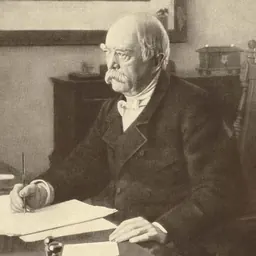

Related people
Same field, nearest in time




Contemporaries
People whose lives overlapped Adelbert Theodor Wangemann's




Frequently asked questions
Who was Adelbert Theodor Wangemann?
German assistant to Thomas Edison, early audio recording technician (1855–1906)
When was Adelbert Theodor Wangemann born?
Adelbert Theodor Wangemann was born on 13 February 1855 in Berlin.
When did Adelbert Theodor Wangemann die?
Adelbert Theodor Wangemann died on 1 June 1906 in Brooklyn.
What was Adelbert Theodor Wangemann's occupation?
Adelbert Theodor Wangemann was a record producer, composer and audio engineer.
What was Adelbert Theodor Wangemann known for?
Adelbert Theodor Wangemann was known for Helmuth von Moltke the Elder, Johannes Brahms and Otto von Bismarck.
What nationality was Adelbert Theodor Wangemann?
Adelbert Theodor Wangemann was German.
Sources & further reading
· Wikipedia: Adelbert Theodor Wangemann
· DBpedia: Adelbert Theodor Wangemann
Cite this page
APA: Biography.guide. (2026). Adelbert Theodor Wangemann. https://biography.guide/adelbert-theodor-wangemann/
MLA: "Adelbert Theodor Wangemann." Biography.guide, https://biography.guide/adelbert-theodor-wangemann/.
Chicago: "Adelbert Theodor Wangemann." Biography.guide. https://biography.guide/adelbert-theodor-wangemann/.
Data last updated: 2026-09-22 · Spot an error? Report a correction.
Page generated 2026-09-27 05:24 UTC