
About Adarsh Sein Anand
Lived 1936 – 2017 (aged 81). Adarsh Sein Anand was an Indian judge and jurist.
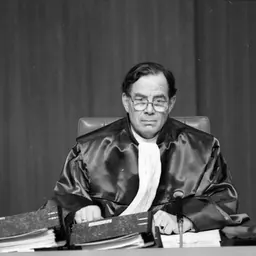
Adarsh Sein Anand (1 November 1936 – 1 December 2017) was the 29th Chief Justice of India, serving from 10 October 1998 to 31 October 2001.
Early life and education He was born in the state of Jammu & Kashmir on 1, November, 1936, and received his early education from Model Academy at Jammu. Anand completed his studies from GGM Science College (erstwhile Prince of Wales College), Jammu in 1958. He pursued L.L.B with First Class and Diploma in Labour Laws from the University of Lucknow in 1960 and was awarded Degree of Doctor of Philosophy in Laws (Constitutional Law of the Commonwealth) from the University of London in 1963. He passed the Bar Exam at the Inner Temple, London in 1964. Thereafter, he practiced in Criminal Law, Constitutional Law and Election Law at the Punjab and Haryana High Court in Chandigarh.
Enrolled as an Advocate at the Bar Council on 9 November 1964. Having practised in Criminal Law, Constitutional Law, Election Law at the Punjab and Haryana High Court. At the age of 38 years and six months, he was appointed Additional Judge, Jammu and Kashmir High Court from 26 May 1975 and confirmed as a permanent Judge of the same Court in February, 1976. He became the Chief Justice, Jammu and Kashmir High Court on 11 May 1985 and transferred to the Madras High Court on 1 November 1989. He was appointed a Judge of the Supreme Court of India, on 18 November 1991.
Over the course of his Supreme Court tenure, Anand authored 196 judgments and sat on 911 benches.
On 17 February 2003, he took over as the Chairperson of the National Human Rights Commission and was succeeded by Justice Rajendra Babu on 2 April 2007.
In February 2010, he was appointed chairman of a five-member committee set up to examine the safety aspects of the Mullaperiyar Dam in Kerala. The panel submitted the report on 25 April 2012.
Honours
The President, Smt. Pratibha Devisingh Patil presenting the Padma Vibhushan to Justice (Dr.) Adarsh Sein Anand at Civil Investiture-II Ceremony, at Rashtrapati Bhavan, in New Delhi on 10 May 2008
Anand was unanimously elected President of the International Institute of Human Rights Society in 1996. In 1997, he became the first Indian to be awarded the Fellowship of University College London, his alma mater. Anand was nominated as the Executive Chairman of the National Legal Services Authority, a statutory body, with effect from July 1997 in recognition of his contribution to legal aid for the poor. He was also unanimously elected Honorary Bencher of the Inner Temple this year. He is the author of the book, The Constitution of Jammu and Kashmir – Its Development and Comments. Anand held that public bodies and officials are expected to perform public duties properly and refrain from unlawful actions that are likely to violate individual rights under Article 21 of the Constitution. In the D.K. Basu case (1996), he laid down important safeguards against custodial torture. These safeguards are considered valuable in protecting the rights of prisoners. Anand's commitment to judicial discipline is also highlighted in his judgment in the V.C. Mishra case. The Supreme Court first sentenced the Chairman of the Bar Council of India, V.C. Mishra, for contempt of court and suspended him from practising. Later, a Bench headed by Anand ruled that the Supreme Court did not have the power to debar any advocate from practising even if it held him guilty of contempt.
Corruption allegations Anand had a controversial tenure as Chief Justice of India. Activists have made four serious charges of corruption and abuse of office against Anand. No probe, however, was conducted on any of the allegations.
Don’t just read it —
keep it.
Full-length biographies made to live with: read them, listen on the way to work, watch them tonight.
- E-book
- Audio
- Video
Instant download · yours to keep · every purchase keeps this site free
Important facts
People in Adarsh Sein Anand's life
Named in this biography and alive at the same time

Related people
Same field, nearest in time





Contemporaries
People whose lives overlapped Adarsh Sein Anand's






Frequently asked questions
Who was Adarsh Sein Anand?
29th Chief Justice of India (1936–2017)
When was Adarsh Sein Anand born?
Adarsh Sein Anand was born on 1 November 1936 in Jammu and Kashmir.
When did Adarsh Sein Anand die?
Adarsh Sein Anand died on 1 December 2017 in Uttar Pradesh.
What was Adarsh Sein Anand's occupation?
Adarsh Sein Anand was a judge and jurist.
What nationality was Adarsh Sein Anand?
Adarsh Sein Anand was Indian.
Sources & further reading
· Wikipedia: Adarsh Sein Anand
Cite this page
APA: Biography.guide. (2026). Adarsh Sein Anand. https://biography.guide/adarsh-sein-anand/
MLA: "Adarsh Sein Anand." Biography.guide, https://biography.guide/adarsh-sein-anand/.
Chicago: "Adarsh Sein Anand." Biography.guide. https://biography.guide/adarsh-sein-anand/.
Data last updated: 2026-09-20 · Spot an error? Report a correction.
Page generated 2026-09-27 05:30 UTC