
About Adam Exner
Lived 1928 – 2023 (aged 94). Adam Exner was a Canadian catholic priest and catholic bishop.
Adam Joseph Exner, OMI (December 24, 1928 – September 5, 2023) was a Canadian bishop of the Catholic Church. He was the Archbishop of Vancouver from 1991 until 2004, having previously served as the Bishop of Kamloops and Archbishop of Winnipeg. Prior to his appointment as bishop, he was a professor at seminaries run by his religious order.
Exner was born and raised in Saskatchewan, where he completed his secondary education. He entered the Oblate novitiate outside Winnipeg, before studying for the priesthood at the Pontifical Gregorian University in Rome. He was ordained a priest in 1957. Upon returning to Canada, he completed a doctoral degree in moral theology and went on to teach at seminaries in his home province and Alberta. He was appointed Bishop of Kamloops in 1974 and was consecrated that same year. Eight years later, he became Archbishop of Winnipeg, a position he held for nearly a decade before being transferred to Vancouver in 1991. Exner was noted for calling the first diocesan synod in Vancouver that allowed for the laity to participate.
Early life Adam Joseph Exner was born in Killaly, Saskatchewan, on Christmas Eve of 1928. His parents were Bukovina Germans who moved to Canada as children. His father was originally from Molodiia, while his mother came from Derelui. Both families lived on a homestead in Mariahilf, outside Killaly, having emigrated from Eastern Europe at the turn of the 20th century. This was the result of a population boom combined with a scarcity of land in the area. Exner completed his primary education at Flegel School, Exner left school temporarily after eighth grade, in order to work on the family farm. by Luigi Faveri, the Bishop of Tivoli at the time. Exner later recounted how he had no intention of becoming a bishop. He cited his lack of pastoral and administrative experience as reasons why he would be unsuitable for the position. His sojourn in Kamloops was the first time in his life that he lived by himself. He had previously always resided in a community, either with his fellow Oblates or in the seminaries where he taught. He remarked that this change was "not easy", but he eventually "got used to it".
Archbishop of Winnipeg (1982–1991) St. Mary's Cathedral in Downtown Winnipeg was renovated from 1987 to 1988, during Exner's tenure as archbishop. The Holy See's selection of Exner as the fourth Archbishop of Winnipeg was announced on April 8, 1982. #tag:ref|The Roman Catholic Archdiocese of Winnipeg lists Exner's date of appointment as April 8, 1982. The date used is from the article by The Canadian Press, which states that "is appointment was announced Wednesday" (i.e. April 7, 1982). #tag:ref|The Roman Catholic Archdiocese of Winnipeg lists Exner's date of installation as June 24, 1982. During his tenure as ordinary of that archdiocese, the cathedral underwent large-scale restoration work. These repairs – which were intended to be finished by September 1987 in order to coincide with the centenary of the cathedral's consecration – were only completed in early 1988. He also directed the cessation of a monthly Tridentine Mass in late 1986, pointing to declining attendance as the reason for abandoning the 22-month long trial run within the archdiocese.
In 1990, Exner established a church committee with the archbishop of Saint Boniface Antoine Hacault and the Assembly of Manitoba Chiefs to respond to complaints about the treatment of Indigenous children in the Canadian Indian residential school system.
Archbishop of Vancouver (1991–2004) Exner was appointed the Archbishop of Vancouver on May 25, 1991, and installed at Holy Rosary Cathedral on August 15 of that year. Although he was billed as "Canada's most outspoken conservative prelate" by Joel Connelly of the Seattle Post-Intelligencer, Exner eschewed the use of such categorizations, considering himself as "middle-of-the-road". On June 16, 1996, he wrote a letter that described contreception as repressing sexuality and "bogus freedom"; this letter was read to all the congregations in his archdiocese. After Wiesner's predecessor, Hubert O'Connor, was convicted in July 1996 of the rape and indecent assault of two Indigenous women at a residential school where he was principal, Exner offered assistance to the victims in their healing process and asked that O'Connor be forgiven. He emphasized that he was not asking for anyone to condone what O'Connor did, adding that "there's a big difference between condoning and forgiveness". However, Exner's observation that O'Connor had "already suffered enough, to the point where his health has suffered and deteriorated" He also made a formal apology for O'Connor's actions. O'Connor's convictions were later quashed by the British Columbia Court of Appeal in March 1998. He was the only bishop from Canada to be invited to that meeting. Exner reckoned that this was in recognition of Vancouver's sizable immigrant population from Asia that is apparent in its parishes. In October of that same year, he called a local diocesan synod. It was the first to be held in nearly four decades and the first synod in the history of the Archdiocese to allow the lay faithful to participate in the process.
Less than one month after the September 11 attacks, Exner hosted a gathering of religious leaders at the cathedral's church hall. They issued a collective statement denouncing violence committed in the name of religion, and underlining their dedication to work together for the public good in "brave new works of peace". The statement was ultimately read out in the House of Commons and the Senate.
Later life After almost 13 years of serving as Archbishop of Vancouver, Exner reached the mandatory retirement age of 75 in December 2003. His resignation was accepted by Pope John Paul II less than one month later on January 10 of the following year. He subsequently remained in Vancouver, moving into the Oblate Provincial House, before returning to Saskatchewan shortly before his death. He revealed in court testimony that he suffered a stroke in 2015 that had "shattered [his] memory".
Measures Maintaining Catholic institutions Exner worked with other religious groups involved in healthcare in obtaining a legal agreement with Michael Harcourt, the Premier of British Columbia, in 1995. It ensures that healthcare establishments with a religious affiliation are able to continue adhering to their founding mission and values.
Vancouver College was one of two Catholic high schools in the Greater Vancouver area to be saved from liquidation in 2002. Exner was closely involved with the efforts to prevent the closure of Vancouver College and St. Thomas More Collegiate at the turn of the millennium. Consequently, the two high schools faced closure and liquidation in order to pay the victims of the Mount Cashel Orphanage sexual and physical abuse scandal. The issue was resolved when the Archdiocese of Vancouver paid $19 million to the liquidator of the order in July 2002, without the educational institutions having to be sold. The school boards were thereafter supervised by the archbishop and other Catholics in the Archdiocese. This was the first ever systemic study conducted by an episcopal conference that delved into stopping sexual abuse, looking after victims, and instituting administrative procedures to be employed in the event of sexual abuse by clergy. Although he admitted that he could not make any promises, Exner surmised that the report would result in "action right across the country".
Views Abortion and euthanasia Exner was noted as a staunch opponent of the practice and legalization of abortion in Canada, standing at the forefront of many anti-abortion marches. At the same time, he spoke out against anti-abortion violence, This eclipsed the conclusion that the killing of Slepian was wrong because "sin produces more sin". He was strongly critical of the practice, stating how "we must certainly make every effort to kill the pain without, however, killing the patient". He added that the group's regard was founded on "the unswerving belief that human life and dignity must be respected and protected without exception".
LGBT issues The Catholic Civil Rights League sought and obtained intervenor status during litigation in the late 1990s involving Trinity Western University (TWU), in relation to its training policies. This was done at Exner's direction and with his backing. The British Columbia Court of Appeal found in favour of TWU in 1998,
"e preach against adultery. But that doesn't mean we are phobic about people who commit adultery. We also teach fornication is wrong. But that doesn't mean we reject or become phobic about young people who don't always abide by that teaching." — — Archbishop Adam Exner, refuting Tim Stevenson's aspersion that he is a "homophobic individual" (July 1998) Ujjal Dosanjh, the province's attorney general, was warm to Exner's idea but cautioned that it would be "highly expensive" and potentially "open to abuse". Tim Stevenson, a United Church of Canada minister and the first openly gay member of the Legislative Assembly of British Columbia, lambasted Exner as "a homophobic individual". attempted to strike a more conciliatory tone by noting how "Catholic teaching is rigorously logical" and is "able to separate doctrine from its emotional content in such a way that I think it's quite possible for a Roman Catholic to express doctrine and not have personally negative feelings to homosexual people". However, in a letter to the Vancouver Sun explaining the reasoning behind the decision, Exner wrote that it boiled down to Vancity's "support for causes opposed to Catholic morals [that] went far beyond ads featuring same-sex couples". with one message sent to the Archdiocese linking Exner (who is of German descent) to Nazism. At one point, protesters gathered outside Exner's residence late at night, shouting obscenities and making threats against him.
In addition to being made Knight Grand Cross of the Order of the Holy Sepulchre, Exner was also named the inaugural Grand Prior of the Order's Lieutenancy of Canada–Vancouver. This encompasses British Columbia, Alberta, as well as the territory of Yukon.
On the occasion of Exner's retirement as Archbishop of Vancouver in 2004, the Catholic Civil Rights League created the Archbishop Adam Exner Award for Catholic Excellence in Public Life in his honour. It is presented annually to give recognition to "outstanding achievement in advocacy, education, life issues, media and culture, and philanthropy".
Don’t just read it —
keep it.
Full-length biographies made to live with: read them, listen on the way to work, watch them tonight.
- E-book
- Audio
- Video
Instant download · yours to keep · every purchase keeps this site free
Important facts
People in Adam Exner's life
Named in this biography and alive at the same time




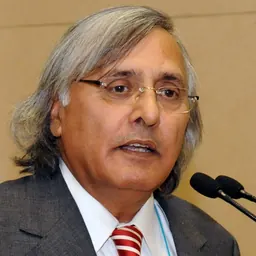

Related people
Same field, nearest in time
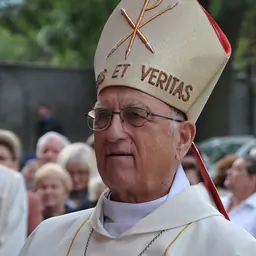
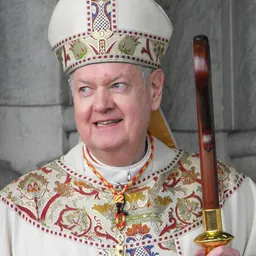

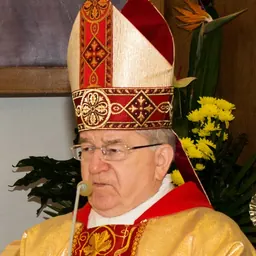
Contemporaries
People whose lives overlapped Adam Exner's


Frequently asked questions
Who was Adam Exner?
Roman Catholic archbishop
When was Adam Exner born?
Adam Exner was born on 24 December 1928 in Killaly.
When did Adam Exner die?
Adam Exner died on 5 September 2023 in Grayson.
What was Adam Exner's occupation?
Adam Exner was a catholic priest and catholic bishop.
What nationality was Adam Exner?
Adam Exner was Canadian.
Sources & further reading
Cite this page
APA: Biography.guide. (2026). Adam Exner. https://biography.guide/adam-exner/
MLA: "Adam Exner." Biography.guide, https://biography.guide/adam-exner/.
Chicago: "Adam Exner." Biography.guide. https://biography.guide/adam-exner/.
Data last updated: 2026-09-20 · Spot an error? Report a correction.
Page generated 2026-09-27 05:07 UTC