
About Ada Lois Sipuel Fisher
Lived 1924 – 1995 (aged 71). Ada Lois Sipuel Fisher was an American lawyer and jurist.
Ada Lois Sipuel Fisher (February 8, 1924 – October 18, 1995) was an American lawyer and civil rights activist who was a key figure in the Civil Rights Movement in Oklahoma. She applied for admission into the University of Oklahoma law school in order to challenge the state's segregation laws and to become a lawyer, leading to a landmark US Supreme Court ruling in 1948.
Early life Fisher was born six years before the lynching of Henry Argo in Chickasha, Oklahoma, to Rev. Travis Bruce Sipuel (1877–1946) and Martha Belle Smith (; 1885–1971). She graduated from Lincoln High School in 1941 as valedictorian. She enrolled in the Arkansas Agricultural, Mechanical & Normal College (now University of Arkansas at Pine Bluff), but transferred to Langston University in 1942. Ada Lois Sipuel, on March 2, 1944, in Chickasha, married Warren Washington Fisher (1916–1987). On May 21, 1945, she graduated from Langston, with honors.
Supreme Court case Her brother, Lemuel Travis Sipuel (1921–1961), had planned to challenge segregationist policies of the University of Oklahoma, but went to Howard University Law School in Washington, D.C., to not delay his career further by protracted litigation.
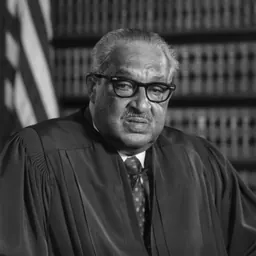
Fisher, however, was willing to delay her legal career in order to challenge segregation. In 1946, she applied at the University of Oklahoma and was denied because of race. Two years later, in 1948, the United States Supreme Court ruled in Sipuel v. Board of Regents of the University of Oklahoma that the state of Oklahoma must provide instruction for Blacks equal to that of whites. Thurgood Marshall acted as the head NAACP lawyer for this case and the justices ruled unanimously. The case was also a precursor for Brown v. Board of Education.
Legal education To comply with the US Supreme Court ruling, Oklahoma created the Langston University School of Law, located at the state capital. Further litigation was necessary to prove that this law school was inferior to the University of Oklahoma College of Law. Finally, on June 18, 1949, Sipuel was the first African American admitted to the University of Oklahoma's law school. By this time, she was married and pregnant with the first of her two children. The law school gave her a chair marked "colored," and roped it off from the rest of the class. Despite this, her classmates and teachers welcomed her, shared their notes and studied with her, helping her to catch up on the materials she had missed. Sipuel had to dine in a separate chained-off guarded area of the law school cafeteria. Years later, she recalled that some white students would duck under the chain and eat with her when the guards were not present.
The Ada Lois Sipuel Fisher Garden located on the north part of the main campus in honor of the first African-American to be admitted to the OU College of Law in 1948. Her lawsuit and tuition were supported by hundreds of small donations.
Later career She graduated in 1951 with a Bachelor of Laws degree and began practicing law in her hometown of Chickasha in 1952.
In 1992, Oklahoma governor David Walters appointed her to the Board of Regents of the University of Oklahoma, which she noted in an interview, "completes a forty-five-year cycle." She further stated, "Having suffered severely from bigotry and racial discrimination as a student, I am sensitive to that kind of thing," and she planned to bring a new dimension to university policies.
Before her death in 1995, Fisher was a member of Alpha Kappa Alpha sorority and also was a professor at Langston University. She died of cancer, in Oklahoma City in October 1995.
In 1996 she was inducted posthumously in the Oklahoma Women's Hall of Fame. The University of Oklahoma dedicated the Ada Lois Sipuel Fisher Garden in her honor.
Family Ada Lois Sipuel, on March 2, 1944, in Chickasha, married Warren Washington Fisher (1916–1987), who was born in Paris, Texas, four years before the lynching of Irving and Herman Arthur. Her parents, Rev. Travis Bruce Sipuel and Martha Belle Sipuel, were survivors of the 1921 Tulsa Race Massacre. He was and she was . Their house was burned to the ground. They had moved from Dermott, Arkansas, to Tulsa around 1918 to help develop a congregation for the Church of God in Christ (COGIC) (Pentecostal). Sipuel rented a house in the Greenwood District on North Greenwood and leased a building for the North Greenwood COGIC. The building was located at 700 N. Greenwood (presently OSU Tulsa), on the North end of the thriving Black Wall Street. Sipuel helped grow the congregation to 40 during his time there.
Don’t just read it —
keep it.
Full-length biographies made to live with: read them, listen on the way to work, watch them tonight.
- E-book
- Audio
- Video
Instant download · yours to keep · every purchase keeps this site free
Important facts
People in Ada Lois Sipuel Fisher's life
Named in this biography and alive at the same time


Related people
Same field, nearest in time



Contemporaries
People whose lives overlapped Ada Lois Sipuel Fisher's

Frequently asked questions
Who was Ada Lois Sipuel Fisher?
American civil rights activist (1924–1995)
When was Ada Lois Sipuel Fisher born?
Ada Lois Sipuel Fisher was born on 8 February 1924 in Chickasha.
When did Ada Lois Sipuel Fisher die?
Ada Lois Sipuel Fisher died on 18 October 1995 in Oklahoma, Oklahoma City.
What was Ada Lois Sipuel Fisher's occupation?
Ada Lois Sipuel Fisher was a lawyer and jurist.
What nationality was Ada Lois Sipuel Fisher?
Ada Lois Sipuel Fisher was American.
Sources & further reading
· Wikipedia: Ada Lois Sipuel Fisher
· DBpedia: Ada Lois Sipuel Fisher
Cite this page
APA: Biography.guide. (2026). Ada Lois Sipuel Fisher. https://biography.guide/ada-lois-sipuel-fisher/
MLA: "Ada Lois Sipuel Fisher." Biography.guide, https://biography.guide/ada-lois-sipuel-fisher/.
Chicago: "Ada Lois Sipuel Fisher." Biography.guide. https://biography.guide/ada-lois-sipuel-fisher/.
Data last updated: 2026-09-22 · Spot an error? Report a correction.
Page generated 2026-09-27 05:22 UTC