
About Ada Hitchins
Lived 1891 – 1972 (aged 80). Ada Hitchins was a British chemist and researcher.
Ada Florence Remfry Hitchins (26 June 18914 January 1972) was the principal research assistant of British chemist Frederick Soddy, who won the Nobel prize in 1921 for work on radioactive elements and the theory of isotopes. Hitchins isolated samples from uranium ores, taking precise and accurate measurements of atomic mass that provided the first experimental evidence for the existence of different isotopes. The family lived for a time in Campbeltown, Scotland, where Hitchins attended high school, graduating in 1909. From there, she went to the University of Glasgow, obtaining her bachelor's degree in science, with honors, in 1913. Hitchins was drafted to work in the Admiralty Steel Analysis Laboratories in 1916.
Atomic weight of "thorium" lead
Hitchins helped to determine the atomic weight of lead based on measurements of radioactive ores, work that was important in developing an understanding of isotopes. This work proved that atomic weight was not a constant. Chemically pure elements could be mixtures of isotopes with differing atomic weights.
Actinium and protactinium
John A. Cranston, who had also come from Glasgow to Aberdeen with Soddy as a research assistant, was drafted in March 1915. Hitchins continued Cranston's research before she herself was drafted for war work in 1916. This research resulted in the successful identification of a new element in the decay chain between uranium-235 and actinium, later named protactinium. The discovery of protactinium completed the early version of the periodic table proposed by Dmitri Mendeleev, who predicted the existence of an element between thorium and uranium in 1871. The same isotope, 231Pa, was independently discovered around the same time by Otto Hahn and Lise Meitner.
Soddy and Cranston published their paper in 1918. Although Hitchins was not included as a co-author, Soddy gave Hitchins significant credit for the contributions she had made to the research: The experiments were undertaken when the course of the disintegration of uranium and its connection with radium was quite obscure, but the experiments afford valuable data, which has never been properly discussed in the light of recent discoveries, on the possible modes of origin of actinium. With regard to the new work, in the absence of one of us on military service since 1915, the experiments were continued for a time by Miss Ada Hitchens, [sic] B.Sc, Carnegie Research Scholar, until she also left to engage in war duties. Her valuable assistance has contributed very materially to the definiteness of the conclusions that it has been possible to arrive at.
Measuring radioactivity
In her early work with Soddy, Hitchins helped to prepare radium standards for the calibration of gold-leaf electroscopes, used to measure radioactivity. (also spelled Rees ).
Hitchins died in Bristol, England, on January 4, 1972.
Don’t just read it —
keep it.
Full-length biographies made to live with: read them, listen on the way to work, watch them tonight.
- E-book
- Audio
- Video
Instant download · yours to keep · every purchase keeps this site free
Important facts
People in Ada Hitchins's life
Named in this biography and alive at the same time
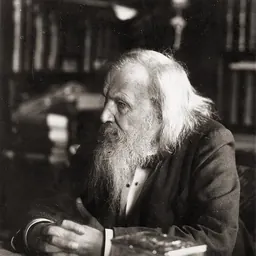



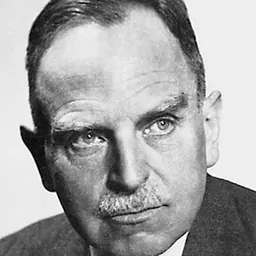
Related people
Same field, nearest in time




Contemporaries
People whose lives overlapped Ada Hitchins's


Frequently asked questions
Who was Ada Hitchins?
English nuclear research assistant
When was Ada Hitchins born?
Ada Hitchins was born on 26 June 1891 in Tavistock.
When did Ada Hitchins die?
Ada Hitchins died on 4 January 1972 in Bristol.
What was Ada Hitchins's occupation?
Ada Hitchins was a chemist and researcher.
What nationality was Ada Hitchins?
Ada Hitchins was British.
Sources & further reading
Cite this page
APA: Biography.guide. (2026). Ada Hitchins. https://biography.guide/ada-hitchins/
MLA: "Ada Hitchins." Biography.guide, https://biography.guide/ada-hitchins/.
Chicago: "Ada Hitchins." Biography.guide. https://biography.guide/ada-hitchins/.
Data last updated: 2026-09-20 · Spot an error? Report a correction.
Page generated 2026-09-27 05:06 UTC