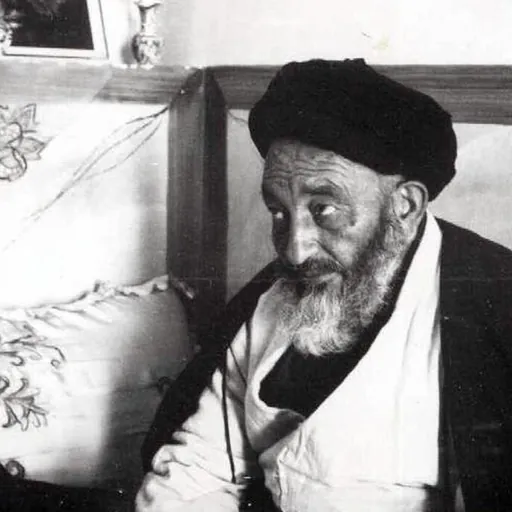
About Abulhassan Shamsabadi
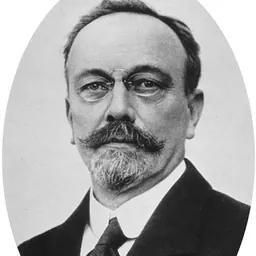
Lived 1907 – 1976 (aged 68–69). Abulhassan Shamsabadi was an Iranian scientist and politician.
Seyed Abolhassan Ale Rasoul known as Shams Abadi Mazandarani (1907 – 7 April 1976) was an Iranian cleric and lawyer.
Life Seyed Abolhassan Shams Abadi was the son of Mohammad Ebrahim Mousavi Shams Abadi Mazandarani, one of the clerics of Isfahan, and a lawyer of Abu al-Qasim al-Khoei. His grandfather, Seyed Mohammad Larijani, the son of Seyed Abdollah Mazandarani, had forty children, all of whom were nobles and owners of Larijan farms, and had left Amol for Isfahan. Seyed Abolhassan Shams Abadi was the son-in-law of Ali Meshkat Sedei, master of Ruhollah Khomeini. Seyed Abolhassan Shams Abadi was one of the mujtahids of Isfahan, who performed congregational prayers in the Sarpol Mosque of Khozan neighborhood in the Khomeyni Shahr city.
Social and cultural activities After returning from Najaf, Shams Abadi participated in activities such as helping orphans and the poor, and in the establishment and expansion of charitable institutions, such as the Imam Zaman Helping Association, the establishment of Esfahani Pilgrimage Building in Mashhad and Karbala, and the Aba Basir School for the Blind.
Clergies conflict The conflict between religious groups in Isfahan had very long roots, but at the same time with the politicization of the society and seminaries, this conflict became more visible. One of the important issues of the Isfahan clergy society in contemporary history was the conflict between the scholars who were in two factions; Some were supporters of Rahim Arbab and others were supporters of Morteza Shams Ardakani, Mohammad Ali Movahed Abtahi and Shams Abadi. This contradiction became more visible especially after the 1953 Iranian coup d'état.
The scholars of Isfahan seminary were more inclined to Najaf seminary and under the influence of Abu al-Qasim al-Khoei, they interfered less in political issues. But the scholars of Najafabad seminary were inclined towards Qom seminary and were influenced by the thoughts of Ruhollah Khomeini and Hussein-Ali Montazeri. Some of the elders of Isfahan, such as Shams Abadi, Hossein Khademi, Ali Qadiri Kafrani, Abdol Javad Sedehi, Fayazi and Abbas Ali Adib, believed that Khoei's opinions had priority over Khomeini's opinions and ordered to imitate him. His body was later discovered near Isfahan in the city of Dorcheh Piaz. A mosque named after him was built in the place where his body was found. He was buried in Takht-e Foulad cemetery in Isfahan.
Don’t just read it —
keep it.
Full-length biographies made to live with: read them, listen on the way to work, watch them tonight.
- E-book
- Audio
- Video
Instant download · yours to keep · every purchase keeps this site free
Important facts
People in Abulhassan Shamsabadi's life
Named in this biography and alive at the same time




Related people
Same field, nearest in time

Contemporaries
People whose lives overlapped Abulhassan Shamsabadi's



Frequently asked questions
Who was Abulhassan Shamsabadi?
Iranian Grand Ayatollah (1907–1976)
When was Abulhassan Shamsabadi born?
Abulhassan Shamsabadi was born in 1907 in Amol.
When did Abulhassan Shamsabadi die?
Abulhassan Shamsabadi died in 1976.
What was Abulhassan Shamsabadi's occupation?
Abulhassan Shamsabadi was a scientist and politician.
What nationality was Abulhassan Shamsabadi?
Abulhassan Shamsabadi was Iranian.
Sources & further reading
· Wikipedia: Abulhassan Shamsabadi
· DBpedia: Seyed Abolhassan Shams Abadi
Cite this page
APA: Biography.guide. (2026). Abulhassan Shamsabadi. https://biography.guide/abulhassan-shamsabadi/
MLA: "Abulhassan Shamsabadi." Biography.guide, https://biography.guide/abulhassan-shamsabadi/.
Chicago: "Abulhassan Shamsabadi." Biography.guide. https://biography.guide/abulhassan-shamsabadi/.
Data last updated: 2026-09-21 · Spot an error? Report a correction.
Portrait: Wikimedia Commons · author & licence
Page generated 2026-09-27 04:59 UTC