
About Abu Sa'id Bahadur Khan
Lived 1305 – 1335 (aged 30). Abu Sa'id Bahadur Khan was a politician and governor.
Abu Sa'id Bahadur Khan (June 2, 1305 – December 1, 1335; ), also spelled Abusaid Bahador Khan, Abu Sa'id Behauder (Modern , Abu sayid Baghatur Khan, in modern Mongolian), was the ninth ruler (c. 1316 – 1335) of the Ilkhanate, a division of the Mongol Empire that encompassed the present day countries of Iran, Azerbaijan, Georgia, and Armenia, as well as parts of Iraq, Turkey, Afghanistan, and Pakistan. After his death in 1335, the Ilkhanate disintegrated.
Early life He was born on 2 June 1305, near Ujan, Tabriz to Öljaitü and Hajji Khatun. He became his father's heir after the deaths of his elder brothers. He was assigned to govern Khorasan and Mazandaran in 1315 with the Uyghur noble Amir Sevinch as his guardian.
Reign He was brought back to Soltaniyeh by Sevinch in December 1316; his coronation was delayed until spring or summer 1317 due to a conflict between the emir Chupan and Sevinch. Abu Said employed Rashid-al-Din Hamadani and Taj Al-Din Ali Shah Gilani as his viziers. However, the viziers were at odds and it led to Hamadani's dismissal in October 1317. Amir Sevinch died in January 1318, leaving young Abu Sa'id in the hands of Chupan. Although Chupan recalled Hamadani to serve in court, Gilani accused Hamadani (and his son Ibrahim Izzaddin, the cupbearer) of poisoning the late Ilkhan Öljaitü, near Abhar. This left Chupan as the de facto ruler of Ilkhanate. The following years were tumultuous for Abu Sa'id's reign.
Golden Horde invasion and rebellion of emirs
Golden Horde khan Özbeg invaded Azerbaijan in 1319 in coordination with Chagatayid prince Yasa'ur who had pledged loyalty to Öljaitü earlier but revolted in 1319. Prior to that, he had Amir Yasaul, governor of Mazandaran, killed by his subordinate Begtüt. Abu Sa'id was forced to send Amir Husayn Jalayir to face Yasa'ur while he himself marched against Özbeg. Özbeg was defeated shortly after thanks to reinforcements by Chupan, while Yasa'ur was killed by Kebek in 1320. Several umara ( plural of amir ) did not come to the aid of Abu Sa'id, therefore they were subject to punishment by Chupan. Yet another revolt started in 1319, this time by Keraite emirs Irinjin, a former governor of Diyarbakir, and Qurumishi, governor of Georgia ; all were among the emirs who had been rebuked by Chupan. Irinjin was the father of Öljaitü's widow Qutluqshah Khatun and a son-in-law to Tekuder, while Qurumshi's father Alinaq Noyan was also a son-in-law of Tekuder. Now ruling personally, Abu Sa'id invited Ghiyas al-Din, son of Rashid al-Din to be his vizier. Narin Taghai (a nephew of Taghachar and grandson of Kitbuqa ) who was responsible for Chupan's downfall
Death Abu Sa'id had to face another invasion by Özbeg in 1335 and left to face him, but died on his way in Karabakh on the night of 30 November 1335. His body was taken to Soltaniyeh and buried there. According to Ibn Battuta (1304 – 1368), Abu Sa'id was poisoned by Baghdad Khatun on the grounds of jealousy.
Abu Sa'id died without an heir or an appointed successor, thus leaving the Ilkhanate vulnerable. This led to clashes between the major families, such as the Chupanids, the Jalayirids, and new movements like the Sarbadars, Muzzafarids. Ibn Battuta wrote of his amazement that, upon his own return to Persia after a twenty-year absence, the realm which had seemed to be so mighty had dissolved so quickly. The Ilkhanate lost cohesion after the deaths of Abu Sa'id and his successor Arpa Ke'un, and became a collection of small kingdoms ruled by Mongols, Turks, Persians, and Arabs.
Viziers Rashid-al-Din Hamadani (1317) Taj Al-Din Ali Shah (1317–1323) Rukn al-Din Sa'in (1323–1327) Ghiyas al-Din ibn Rashid al-Din (1327–1335)
Family Consorts Abu Sa'id married six times from different clans including Borjigin, Oirat and Suldus: Uljay Qutlugh Khatun (m. 5 July 1317), daughter of Ghazan and Bulughan Khatun, and widow of his elder brother Bastam; Baghdad Khatun (m. 1327 – div. 1333, executed December 16, 1335), daughter of Amir Chupan, and former wife of Hasan Buzurg; Malika Khatun, daughter of Tuq b. Sulaimish b. Tengiz Güregen; Dilshad Khatun (m. 1333, died 27 December 1351), daughter of Demasq Kaja and Tursin Khatun, daughter of Irinjin Kurkan and Konchak Khatun, daughter of Tekuder; Adil Shah Khatun (died 7 May 1332, near Ujan ), daughter of Tukal ibn Essen Qutlugh (Governor of Khorasan, d. 10 October 1318); Sarqadaq Khatun, daughter of Dawlat Shah Suldus, relative of Amir Chupan;
Children Abu Sa'id had two daughters A daughter – with Uljay Qutlugh Khatun; A daughter (born 18 May 1336) – with Dilshad Khatun;
Personality According to Ibn Battuta, Abu Sa'id was one of "the most beautiful of God's creatures". He was the only Il-Khan to compose poetry as well as music.
Ancestry
Don’t just read it —
keep it.
Full-length biographies made to live with: read them, listen on the way to work, watch them tonight.
- E-book
- Audio
- Video
Instant download · yours to keep · every purchase keeps this site free
Important facts
Family & relationships
People in Abu Sa'id Bahadur Khan's life
Named in this biography and alive at the same time

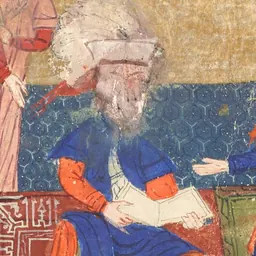

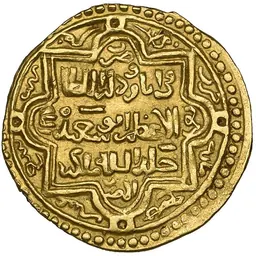
Related people
Same field, nearest in time

Contemporaries
People whose lives overlapped Abu Sa'id Bahadur Khan's



Frequently asked questions
Who was Abu Sa'id Bahadur Khan?
the ninth and last Ilkhan of Mongol Ilkhanate (1316–1335)
When was Abu Sa'id Bahadur Khan born?
Abu Sa'id Bahadur Khan was born on 2 June 1305 in Tabriz.
When did Abu Sa'id Bahadur Khan die?
Abu Sa'id Bahadur Khan died on 30 November 1335 in Karabakh.
What was Abu Sa'id Bahadur Khan's occupation?
Abu Sa'id Bahadur Khan was a politician and governor.
What nationality was Abu Sa'id Bahadur Khan?
Abu Sa'id Bahadur Khan's recorded nationality: Ilkhanate.
Sources & further reading
· Wikipedia: Abu Sa'id Bahadur Khan
· DBpedia: Abu Sa'id Bahadur Khan
Cite this page
APA: Biography.guide. (2026). Abu Sa'id Bahadur Khan. https://biography.guide/abu-sa-id-bahadur-khan/
MLA: "Abu Sa'id Bahadur Khan." Biography.guide, https://biography.guide/abu-sa-id-bahadur-khan/.
Chicago: "Abu Sa'id Bahadur Khan." Biography.guide. https://biography.guide/abu-sa-id-bahadur-khan/.
Data last updated: 2026-09-20 · Spot an error? Report a correction.
Page generated 2026-09-27 05:18 UTC