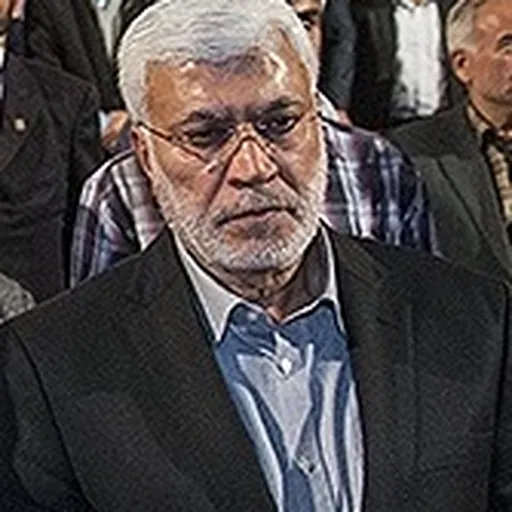
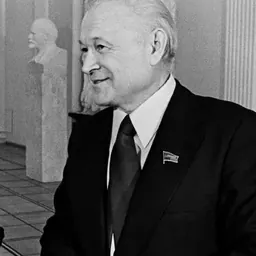
Abu Mahdi al-Muhandis
Iraqi politician and Army commander
About Abu Mahdi al-Muhandis
Lived 1954 – 2020 (aged 65). Abu Mahdi al-Muhandis was a politician, civil engineer and military leader.
Jamal Ja'far Muhammad Ali Al Ibrahim ( , 16 November 1954 – 3 January 2020), better known by his kunya Abu Mahdi al-Muhandis , was an Iraqi paramilitary leader and former chief of staff of the Popular Mobilization Forces (PMF). At the time of his death, he was deputy chairman of the PMC.
From 1977, he was an opponent of Saddam Hussein. He became the commander of volunteer militias that grew from the need to combat ISIS, including the Kata'ib Hezbollah paramilitary group, which is designated a terrorist group by the governments of Japan, the United States and the United Arab Emirates; and prior to that worked with the Iranian Revolutionary Guards (IRGC) against Saddam's regime. by a court in Kuwait for his involvement in the 1983 Kuwait bombings. The organisations he oversaw, such as the Popular Mobilization Forces, have been reported to have close links to the IRGC's Quds Force. Al-Muhandis was held responsible for planning the attack on the American embassy in Baghdad in late December 2019.
On 3 January 2020, Al-Muhandis was traveling with the head of Iran's expeditionary Quds Force Qasem Soleimani near Baghdad International Airport. Soleimani was the primary target of a targeted U.S. drone strike which killed Al-Muhandis as well.
Early life and education His birth name was Jamal Ja'far Muhammad Ali Al Ibrahim. He was born on 16 November 1954 in Abu Al-Khaseeb District, Basra Governorate, Iraq, to an Iraqi father and an Iranian mother. His family was said to have migrated to Iraq from Iran decades earlier, and his wife was Iranian. He was fluent in Persian. He was also a dual citizen. He finished his studies in engineering in 1977 and in the same year joined the Iraq-based Shi'te Dawa Party, which opposed the Ba'athist government. Al-Muhandis fled, across the border to Ahvaz in Iran, where the Iranians had set up a camp to train Iraqi dissidents, with the aim of undermining Saddam. Hours after the December 1983 bomb attacks on U.S. and French embassies in Kuwait, he fled to Iran.
He returned to Iraq following the withdrawal of US troops (December 2011) to head the Kata'ib Hezbollah militia;
On 31 December 2019, U.S. Secretary of State Mike Pompeo named al-Muhandis, along with Qais Khazali, Hadi al-Amiri, and Falih Alfayyadh, as responsible for the attack on the United States embassy in Baghdad.
War against ISIL in Iraq After the formation of the Popular Mobilization Forces (PMF) as a group in 2014 that originated to help Iraq defeat ISIL, The PMF group was composed of some 40 militias that fought in nearly every major battle against ISIL.
Sanctions In 2009, al-Muhandis was sanctioned by the United States Department of the Treasury for allegedly helping the IRGC. Muhandis was also accused of being linked to the IJO who participated in 1983 United States embassy bombing in Beirut.
Death
Abu Mahdi was killed on 3 January 2020 around 1:00a.m. local time (22:00 UTC 2January), by the U.S. drone strike which targeted Qasem Soleimani and his convoy near Baghdad International Airport. BBC News, NBC News, DW News, Time, The Guardian, Euronews, Al Jazeera and other media outlets have described the killing as an assassination.
Reaction Palestinian Islamic Jihad (PIJ) group mentioned him as one of the symbols of Iraqi liberation from the US occupation and also condolences to the Iraqi for the death of Abu Mahdi al-Muhandis.
Funeral and burial
On 4 January, a funeral procession for Abu Mahdi al-Muhandis and Soleimani was held in Baghdad with thousands of mourners in attendance, waving Iraqi and militia flags and chanting "death to America, death to Israel". The procession started at the Al-Kadhimiya Mosque in Baghdad. Iraq's prime minister, Adil Abdul-Mahdi, and leaders of Iran-backed militias attended the funeral procession. They were taken to the holy Shia cities of Najaf and Karbala were held funeral prayers on them.
He was transferred to Iran for the DNA test. On 7 January, his body was returned to Iraq and transferred to his hometown of Basra. His burial was delayed because of the huge crowd at the funeral.
First anniversary On 3 January 2021, the first anniversary of Qassem Soleimani and Abu Mahdi al-Muhandis' deaths was observed in Baghdad. Tens of thousands of Iraqis marched on the highway leading to the airport while chanting anti-American slogans.
Don’t just read it —
keep it.
Full-length biographies made to live with: read them, listen on the way to work, watch them tonight.
- E-book
- Audio
- Video
Instant download · yours to keep · every purchase keeps this site free
Important facts
People in Abu Mahdi al-Muhandis's life
Named in this biography and alive at the same time


Related people
Same field, nearest in time



Contemporaries
People whose lives overlapped Abu Mahdi al-Muhandis's



Frequently asked questions
Who was Abu Mahdi al-Muhandis?
Iraqi politician and Army commander (1954-2020)
When was Abu Mahdi al-Muhandis born?
Abu Mahdi al-Muhandis was born on 1 July 1954 in Abu Al-Khaseeb District.
When did Abu Mahdi al-Muhandis die?
Abu Mahdi al-Muhandis died on 3 January 2020 in Baghdad Airport Road.
What was Abu Mahdi al-Muhandis's occupation?
Abu Mahdi al-Muhandis was a politician, civil engineer and military leader.
What nationality was Abu Mahdi al-Muhandis?
Abu Mahdi al-Muhandis's recorded nationality: Kingdom of Iraq, First Republic of Iraq, Ba'athist Iraq.
Sources & further reading
· Wikipedia: Abu Mahdi al-Muhandis
· DBpedia: Abu Mahdi al-Muhandis
Cite this page
APA: Biography.guide. (2026). Abu Mahdi al-Muhandis. https://biography.guide/abu-mahdi-al-muhandis/
MLA: "Abu Mahdi al-Muhandis." Biography.guide, https://biography.guide/abu-mahdi-al-muhandis/.
Chicago: "Abu Mahdi al-Muhandis." Biography.guide. https://biography.guide/abu-mahdi-al-muhandis/.
Data last updated: 2026-09-21 · Spot an error? Report a correction.
Portrait: Wikimedia Commons · author & licence
Page generated 2026-09-27 04:59 UTC